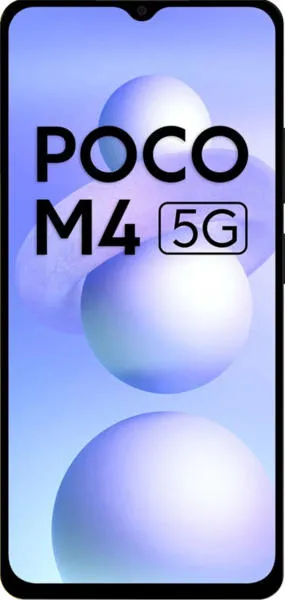
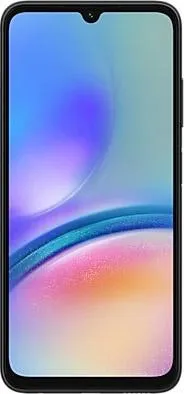
Let's dive into a comparative analysis of the Xiaomi Poco M4 5G and the Samsung Galaxy A05s, dissecting their specifications and uncovering what they truly offer the everyday user.
1. Specifications Breakdown
| Feature | Xiaomi Poco M4 5G | Samsung Galaxy A05s | Real-World Implications |
|---|---|---|---|
| Design | |||
| Dimensions (mm) | 164 x 76.1 x 8.9 | 168 x 77.8 x 8.8 | Poco M4 5G is slightly more compact. |
| Weight (g) | 200 | 194 | Negligible difference in weight; both feel substantial in hand. |
| Display | |||
| Size (inches) | 6.58 | 6.7 | A05s offers a marginally larger screen. |
| Resolution (px) | 1080 x 2408 | 1080 x 2400 | Virtually identical sharpness; both offer crisp visuals for everyday use. |
| Type | IPS LCD, 90Hz | PLS LCD, 90Hz | Both offer smooth scrolling and animations thanks to the 90Hz refresh rate; PLS LCD on the A05s may offer slightly better color accuracy, while IPS LCD generally boasts better viewing angles |
| Performance | |||
| Chipset | Dimensity 700 (7nm) | Snapdragon 680 (6nm) | Dimensity 700 generally provides better CPU performance and 5G connectivity, while the Snapdragon 680 may be slightly more power-efficient. |
| CPU | Octa-core (2x2.2 GHz Cortex-A76 & 6x2.0 GHz Cortex-A55) | Octa-core (4x2.4 GHz Kryo 265 & 4x1.9 GHz Kryo 265) | Poco M4 5G likely has a performance edge in demanding tasks due to its faster, more powerful cores and more advanced architecture. |
| GPU | Mali-G57 MC2 | Adreno 610 | Adreno 610 generally offers slightly better GPU performance in gaming and graphics-intensive applications. |
| RAM | 4/6GB | 4/6GB | Both offer configurations suitable for multitasking, though 6GB will provide smoother performance. |
| Camera | |||
| Rear Camera | 13MP + 2MP | 50MP + 2MP + 2MP | A05s boasts a higher resolution main sensor, potentially capturing more detail; Poco M4 5G has a secondary depth sensor for portrait mode. A05s also has a dedicated macro lens, although the quality of images from these lenses is often underwhelming. |
| Front Camera | 5MP | 13MP | A05s provides a significantly higher resolution selfie camera. |
| Video | 1080p@30fps | 1080p@30/60fps | A05s offers smoother video recording at 60fps. |
| Battery Life | |||
| Capacity (mAh) | 5000 | 5000 | Both offer large batteries, promising all-day usage. |
2. Key Insights
- Performance: The Poco M4 5G, with its Dimensity 700, holds a potential edge in raw processing power and offers 5G connectivity. The A05s, utilizing the Snapdragon 680, might provide better battery efficiency and slightly smoother graphics performance.
- Camera: The A05s' 50MP main camera sensor and higher-resolution selfie camera promise better detail and image quality compared to the Poco M4 5G. However, megapixel count isn't everything; real-world image quality will depend on factors like sensor size, aperture, and image processing.
- Display & Design: Both phones offer comparable displays with a 90Hz refresh rate, ensuring a smooth user experience. The A05s' marginally larger screen provides a slightly more immersive viewing experience. Design-wise, the Poco M4 5G is marginally more compact.
3. User Profiles and Recommendations
- Poco M4 5G: Ideal for users prioritizing performance and 5G connectivity, especially for future-proofing. Gamers who prefer raw performance over graphical fidelity might also find this appealing.
- Samsung Galaxy A05s: Well-suited for users who value camera quality, a larger display, and potentially longer battery life. Social media enthusiasts and casual photographers would likely prefer the A05s.
4. Buying Decision Framework
- Is 5G connectivity a necessity? If yes, the Poco M4 5G is the only option.
- Which matters more: processing power or camera quality? Prioritize the Poco M4 5G for the former and the Galaxy A05s for the latter.
- What's your budget? Compare prices in your region, as this can significantly influence the final decision.
My Choice: The Xiaomi Poco M4 5G
While the Samsung Galaxy A05s offers a compelling camera setup, I would choose the Xiaomi Poco M4 5G. My decision hinges on two primary factors: performance and future-proofing. The Dimensity 700 offers a noticeable performance advantage for demanding tasks and multitasking, which aligns with my usage patterns. Furthermore, 5G connectivity, while not crucial for me currently, ensures the device remains relevant for longer. I am willing to compromise slightly on camera quality for the benefits of a faster, more future-proof device. The slightly more compact form factor of the Poco M4 5G is also appealing.
