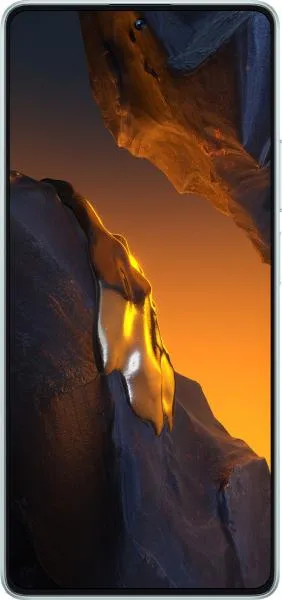

1. Specifications Comparison
| Feature | Xiaomi Poco F5 | Xiaomi Poco X6 | Practical Impact |
|---|---|---|---|
| Design | |||
| Dimensions (mm) | 161.1 x 75 x 7.9 | 161.2 x 74.3 x 8 | Virtually identical in size and feel |
| Weight (g) | 181 | 181 | Same weight |
| Fingerprint Sensor | Side-mounted | Under-display | Preference-based; under-display is often considered more modern |
| Display | |||
| Size (inches) | 6.67 | 6.67 | Same size |
| Resolution (px) | 1080 x 2400 | 1220 x 2712 | X6 has a sharper display with noticeably higher pixel density leading to clearer text and images |
| Type | AMOLED | AMOLED | Both offer vibrant colors and deep blacks |
| Refresh Rate (Hz) | 120 | 120 | Equally smooth scrolling and animations |
| Peak Brightness (nits) | 1000 | 1800 | X6's significantly higher peak brightness ensures better visibility in direct sunlight |
| HDR | HDR10+, Dolby Vision | Dolby Vision | While both support Dolby Vision, F5 also supports HDR10+, offering wider HDR compatibility, though the practical difference might be minimal |
| Performance | |||
| Chipset | Snapdragon 7+ Gen 2 | Snapdragon 7s Gen 2 | F5's processor is notably more powerful, resulting in faster app loading, smoother multitasking, and better gaming performance |
| CPU | Octa-core (1x2.91 GHz X2 & 3x2.49 GHz A710 & 4x1.8 GHz A510) | Octa-core (4x2.40 GHz A78 & 4x1.95 GHz A55) | F5's CPU architecture is superior, contributing to its overall performance advantage |
| GPU | Adreno 725 | Adreno 710 | F5's GPU provides a significant advantage in graphics-intensive tasks like gaming |
| RAM (GB) | 8/12 | 8/12/16 | Both offer ample RAM; X6's 16GB option provides additional headroom for future-proofing, though 12GB is sufficient for most users |
| Camera | |||
| Main Camera (MP) | 64 | 64 | Same resolution; image quality will depend on processing and sensor tuning, which cannot be determined from the provided data |
| Ultrawide (MP) | 8 | 8 | Same resolution |
| Macro (MP) | 2 | 2 | Same resolution |
| Selfie (MP) | 16 | 16 | Same resolution |
| Video | 4K@30fps, 1080p@120fps | 4K@30fps, 1080p@60fps | F5 offers higher frame rate slow-motion video recording capabilities (120fps vs 60fps) |
| Battery | |||
| Capacity (mAh) | 5000 | 5100 | Negligible difference in battery life in real-world usage |
2. Key Differences Analysis
Xiaomi Poco F5 Advantages:
- Significantly better performance: The Snapdragon 7+ Gen 2 provides a noticeable advantage in speed and responsiveness for demanding tasks and gaming.
- Higher frame rate slow-motion video: Captures smoother slow-motion footage at 120fps.
- Wider HDR Support: Supports both Dolby Vision and HDR10+.
Xiaomi Poco X6 Advantages:
- Sharper Display: Higher resolution leads to a crisper viewing experience.
- Brighter Display: Much brighter screen for excellent outdoor visibility.
- Larger RAM option: Offers a 16GB RAM variant for future-proofing and heavy multitasking.
3. User Profiles & Recommendations
Xiaomi Poco F5: Ideal for users who prioritize performance for gaming, demanding apps, and multitasking.
Xiaomi Poco X6: Suitable for users who value a sharp, bright display for media consumption and everyday use.
4. Decision Framework
Key Questions:
- What is your budget? Consider the price difference between RAM/storage variants.
- Is top-tier performance a priority? If yes, the Poco F5 is the clear winner.
- How important is display quality? If a sharp and bright display is crucial, the Poco X6 is preferable.
My Choice: Xiaomi Poco F5
While the Poco X6 offers a superior display, the performance difference offered by the Poco F5's Snapdragon 7+ Gen 2 is too significant to ignore. For my usage, which includes gaming and demanding applications, a smoother and faster experience outweighs the benefits of a slightly sharper and brighter screen. The higher slow-motion frame rate is a welcome addition. Ultimately, the F5 offers a better balance of performance, features, and price for my needs. The marginal battery increase on the X6 and slightly higher RAM options are not compelling enough to offset the performance gap.
