
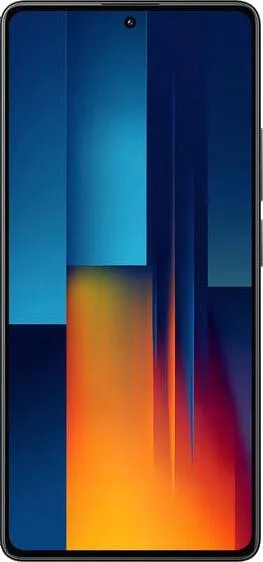
1. Specifications Comparison
| Feature | Xiaomi Poco F5 | Xiaomi Poco M6 Pro | Practical Impact |
|---|---|---|---|
| Design | |||
| Dimensions (mm) | 161.1 x 75 x 7.9 | 161.1 x 75 x 8 | Virtually identical dimensions |
| Weight (g) | 181 | 179 | Negligible weight difference |
| Fingerprint Sensor | Side-mounted | Under-display | Preference-based; under-display is modern but can be less reliable |
| Display | |||
| Size (inches) | 6.67 | 6.67 | Same size |
| Resolution (pixels) | 1080 x 2400 | 1080 x 2400 | Same resolution |
| Panel Type | AMOLED | AMOLED | Same vibrant colors and deep blacks |
| Refresh Rate (Hz) | 120 | 120 | Equally smooth scrolling and animations |
| Peak Brightness (nits) | 1000 (typical), 1000 (peak) | 1000 (HBM), 1300 (peak) | Poco M6 Pro can be slightly brighter in direct sunlight |
| HDR Support | Dolby Vision, HDR10+ | Unspecified | Poco F5 offers superior HDR support for compatible content |
| Performance | |||
| Chipset | Snapdragon 7+ Gen 2 | Helio G99 Ultra | F5 significantly more powerful, better for demanding games and multitasking |
| CPU | Octa-core (1x2.91 GHz X2 & 3x2.49 GHz A710 & 4x1.8 GHz A510) | Octa-core (2x2.2 GHz A76 & 6x2.0 GHz A55) | F5's newer architecture and higher clock speeds provide a substantial performance advantage |
| GPU | Adreno 725 | Mali-G57 MC2 | F5 offers much better graphics performance for gaming |
| RAM (GB) | 8/12 | 6/8/12 | Both offer ample RAM options, but F5's faster processor utilizes it more effectively |
| Camera | |||
| Main Camera (MP) | 64 (Omnivision OV64B) | 64 (Omnivision OV64B) | Potentially similar image quality from the main sensor |
| Ultrawide (MP) | 8 (Sony IMX355) | 8 (Sony IMX355) | Potentially similar image quality from the ultrawide sensor |
| Macro (MP) | 2 | 2 | Likely negligible difference in macro photography |
| Video Recording | 4K@30fps with EIS | 1080p@60fps with EIS | F5 can record higher resolution video |
| Battery | |||
| Capacity (mAh) | 5000 | 5000 | Same battery capacity, but real-world usage may vary due to chipset efficiency |
2. Key Differences Analysis
Xiaomi Poco F5 Advantages:
- Significantly better performance: The Snapdragon 7+ Gen 2 offers a substantial leap in processing and graphics power compared to the Helio G99. This translates to smoother gaming, faster app loading, and better multitasking.
- Superior video recording: 4K recording capability provides higher resolution and detail compared to the M6 Pro's 1080p limit.
- Confirmed HDR support: Dolby Vision and HDR10+ ensure a better viewing experience for compatible content.
Xiaomi Poco M6 Pro Advantages:
- Slightly Brighter Display: Higher peak brightness for better outdoor visibility.
- Potentially Lower Price: Depending on configuration, the M6 Pro might offer a lower entry price. (More storage options available)
3. User Profiles & Recommendations
Xiaomi Poco F5: Users who prioritize performance, enjoy mobile gaming, need excellent video recording capabilities, and appreciate high-quality displays with HDR support.
Xiaomi Poco M6 Pro: Users on a tighter budget who primarily use their phone for everyday tasks like social media, browsing, and casual photography. Users who prioritize large amounts of storage space.
4. Decision Framework
Key Questions for Buyers:
- What is your budget? The Poco M6 Pro likely offers a lower starting price.
- What is your primary phone usage? For demanding tasks, gaming, and high-quality video, the F5 is superior. For casual usage, the M6 Pro might suffice.
- How important is display quality and brightness? While both have AMOLED, the M6 Pro might offer slightly better outdoor visibility due to higher peak brightness.
My Choice: Xiaomi Poco F5
While the Poco M6 Pro offers a compelling price, the significant performance advantage of the Poco F5 is the deciding factor for me. The Snapdragon 7+ Gen 2 provides a much better user experience for demanding tasks and future-proofs the device. The superior video recording capabilities and confirmed HDR support further solidify the F5 as the better overall choice. The slightly dimmer display and potential price premium are acceptable trade-offs for the substantial gains in performance and features. A phone's core performance greatly impacts daily usability and longevity, making the F5 a more worthwhile investment in my opinion.
