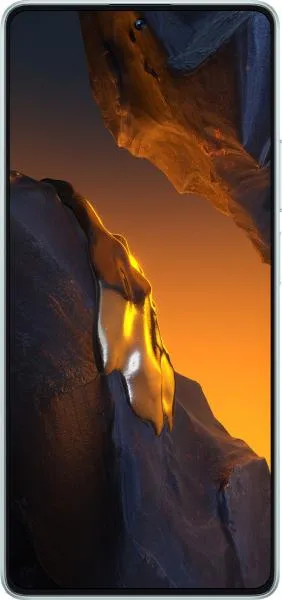
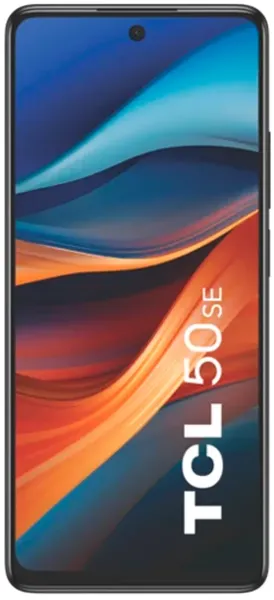
1. Specifications Comparison
| Feature | Xiaomi Poco F5 | TCL 50 SE | Practical Impact |
|---|---|---|---|
| Design | |||
| Dimensions (mm) | 161.1 x 75 x 7.9 | 168.2 x 75.5 x 8.1 | Poco F5 is slightly smaller and thinner, making it potentially more pocketable. |
| Weight (g) | 181 | 195 | Poco F5 is noticeably lighter, reducing hand fatigue during extended use. |
| Display | |||
| Display Type | AMOLED | IPS LCD | Poco F5's AMOLED offers deeper blacks, more vibrant colors, and better power efficiency in dark mode. TCL 50 SE's IPS LCD may offer better visibility in direct sunlight. |
| Size (inches) | 6.67 | 6.78 | Negligible size difference. |
| Resolution | 1080 x 2400 | 1080 x 2460 | Very similar resolutions; sharpness will be comparable on both devices. |
| Refresh Rate (Hz) | 120 | 90 | Poco F5's 120Hz display provides smoother animations and scrolling compared to the 90Hz on the TCL 50 SE. |
| HDR | HDR10+, Dolby Vision | Poco F5 supports HDR content for a wider dynamic range and richer colors in supported videos. Missing HDR spec for TCL 50 SE limits its video quality. | |
| Performance | |||
| Chipset | Snapdragon 7+ Gen 2 (4nm) | Helio G88 (12nm) | Poco F5's significantly more powerful processor and smaller process node will result in much faster performance, smoother multitasking, and better gaming capabilities. |
| CPU | Octa-core (1x2.91 GHz Cortex-X2 & 3x2.49 GHz Cortex-A710 & 4x1.8 GHz Cortex-A510) | Octa-core (2x2.0 GHz Cortex-A75 & 6x1.8 GHz Cortex-A55) | The Poco F5's CPU architecture is more modern and powerful. |
| GPU | Adreno 725 | Mali-G52 MC2 | Poco F5's GPU offers superior graphics performance for demanding games and applications. |
| RAM | 8GB/12GB | 4GB/6GB | Poco F5 offers more RAM options, enabling better multitasking and smoother performance with demanding apps. |
| Camera | |||
| Main Camera (MP) | 64 | 50 | Poco F5 likely has better low-light performance and detail capture due to a larger sensor (OV64B) and wider aperture (f/1.79). |
| Video Recording | 4K@30fps with EIS, 1080p up to 120fps | 1080p@30fps | Poco F5 provides higher resolution video recording and slow-motion capabilities. |
| Battery | |||
| Capacity (mAh) | 5000 | 5010 | Negligible difference in battery capacity. Real-world battery life will depend more on software optimization and usage patterns. |
2. Key Differences Analysis
Xiaomi Poco F5 Advantages:
- Significantly better performance: The Snapdragon 7+ Gen 2 vastly outperforms the Helio G88 in processing power, graphics rendering, and overall efficiency.
- Superior display: The AMOLED panel with 120Hz refresh rate and HDR support offers a dramatically better visual experience.
- More versatile camera: Higher resolution sensor, wider aperture, and 4K video recording capabilities.
TCL 50 SE Advantages:
- Slightly larger battery: Marginal advantage in battery capacity, but real-world difference likely minimal.
- Potentially lower price: Depending on specific configurations and market conditions, the TCL 50 SE might be cheaper.
3. User Profiles & Recommendations
Xiaomi Poco F5: Ideal for users who prioritize performance, gaming, media consumption (videos, photos), and a smooth, responsive user interface. Excellent for power users and mobile photographers/videographers.
TCL 50 SE: Suitable for budget-conscious users who primarily use their phones for basic tasks like calling, texting, web browsing, and social media. Better for users who prioritize battery life above all else and are not concerned with high performance.
4. Decision Framework
Key Questions for Buyers:
- What is your budget? The Poco F5 is positioned in a higher price bracket due to its superior specs.
- What are your primary use cases? Gaming, photography, and demanding apps will benefit greatly from the Poco F5's performance.
- How important is display quality? The AMOLED display on the Poco F5 is a major advantage for media consumption.
Scenario-Based Recommendations:
- Heavy gamer/power user: Poco F5 is the clear choice.
- Budget-conscious user with basic needs: TCL 50 SE might be sufficient.
- User prioritizing media consumption and vibrant visuals: Poco F5 is recommended.
My Choice: Xiaomi Poco F5
The Xiaomi Poco F5 is the superior device in almost every aspect that matters to me. The significantly improved performance, higher quality display, and more capable camera system make it a far more compelling option. While the TCL 50 SE might have a slight edge in battery capacity and a potentially lower price, these advantages are overshadowed by the Poco F5's strengths. The superior user experience offered by the Poco F5's powerful hardware and vibrant display justifies the likely price difference. In practical usage, the speed and responsiveness of the Poco F5 would make daily tasks more enjoyable and efficient. The improved camera would allow for better quality photos and videos. For my needs, these advantages far outweigh minor differences in battery capacity or a slightly larger screen size.
