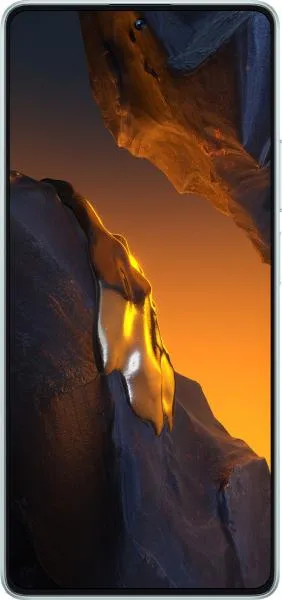

1. Specifications Comparison
| Feature | Xiaomi Poco F5 | Google Pixel 8 Pro | Practical Impact |
|---|---|---|---|
| Design | |||
| Dimensions (mm) | 161.1 x 75 x 7.9 | 162.6 x 76.5 x 8.8 | Pixel 8 Pro is slightly larger and thicker. |
| Weight (g) | 181 | 213 | Poco F5 is noticeably lighter, more comfortable for extended use. |
| Build | Not specified | Not specified | Build quality and materials cannot be compared due to missing information. |
| Display | |||
| Size (inches) | 6.67 | 6.7 | Negligible size difference. |
| Resolution (px) | 1080 x 2400 | 1344 x 2992 | Pixel 8 Pro has a significantly sharper display (higher pixel density), resulting in crisper text and images. |
| Type | AMOLED | LTPO OLED | Both offer excellent contrast and vibrant colors. Pixel's LTPO allows for variable refresh rate, potentially saving battery. |
| Refresh Rate (Hz) | 120 | 120 | Both offer smooth scrolling and animations. |
| Peak Brightness (nits) | 1000 | 2400 | Pixel 8 Pro offers much higher peak brightness, crucial for outdoor visibility. |
| Performance | |||
| Chipset | Snapdragon 7+ Gen 2 | Google Tensor G3 | Both are powerful chips, but benchmarks are needed for accurate comparison. Tensor G3 is expected to excel in AI tasks. |
| CPU | Octa-core (1x2.91 GHz Cortex-X2 & 3x2.49 GHz Cortex-A710 & 4x1.8 GHz Cortex-A510) | Nona-core (1x3.0 GHz Cortex-X3 & 4x2.45 GHz Cortex-A715 & 4x2.15 GHz Cortex-A510) | CPU performance differences require benchmark comparisons. |
| GPU | Adreno 725 | Immortalis-G715s MC10 | GPU performance differences require benchmark comparisons. Immortalis G715 is expected to be more powerful for gaming. |
| RAM (GB) | 8/12 | 12 | Pixel 8 Pro offers more RAM in the analyzed variant, improving multitasking and app performance. |
| Camera | |||
| Main Camera (MP) | 64 | 50 | Megapixel count isn't everything; image quality depends on sensor size, aperture, and processing. |
| Ultrawide (MP) | 8 | 48 | Pixel has a significantly higher resolution ultrawide, capturing more detail. |
| Telephoto | No | 48 MP (5x Optical Zoom) | Pixel 8 Pro offers optical zoom for better image quality at a distance. |
| DxOMark Score | Not Available | 153 (Mobile), 145 (Selfie) | Pixel 8 Pro has a high DxOMark score, indicating excellent camera performance. |
| Battery | |||
| Capacity (mAh) | 5000 | 5050 | Negligible difference in battery capacity. |
| Charging Speed | Not specified | Not specified | Charging speed comparison is impossible without specific data. |
2. Key Differences Analysis
Xiaomi Poco F5 Advantages:
- Lighter and potentially more affordable: Offers a more comfortable in-hand feel and potentially lower price point.
Google Pixel 8 Pro Advantages:
- Superior Display: Sharper, brighter, and more power-efficient due to LTPO technology.
- More Powerful GPU & More RAM: Likely better for demanding games and multitasking.
- Significantly Better Camera System: Higher resolution ultrawide, telephoto lens with optical zoom, and higher DxOMark scores suggest superior image quality.
- Longer Software Support: Pixel phones receive guaranteed OS and security updates for a longer duration.
3. User Profiles & Recommendations
Xiaomi Poco F5: Budget-conscious users prioritizing a lightweight phone for everyday tasks, social media, and casual gaming.
Google Pixel 8 Pro: Users who value a premium experience with the best camera, display, and performance, along with extended software support. Ideal for photography enthusiasts, mobile gamers, and power users.
4. Decision Framework
Key Questions for Buyers:
- What is your budget? The Poco F5 likely offers a more affordable option.
- What are your primary use cases? Photography enthusiasts and power users will appreciate the Pixel 8 Pro.
- How important is software support? Pixel phones generally receive longer software updates.
My Choice: Google Pixel 8 Pro
While the Poco F5 likely provides great value for its price, the Pixel 8 Pro offers a significantly more compelling overall package. Its superior display, camera system with telephoto capabilities, more powerful GPU and larger RAM, and the promise of longer software updates make it the clear winner for me. I prioritize camera quality, performance, and long-term software support, making the Pixel 8 Pro a better fit for my needs, even with the higher price tag. The significantly improved display for outdoor use and content consumption is a major factor as well. The lighter weight of the Poco F5 is tempting, but the other advantages of the Pixel 8 Pro outweigh it.
