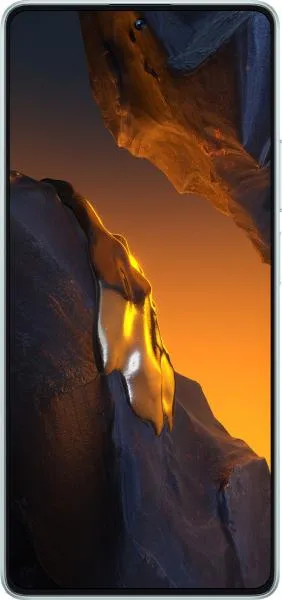

1. Specifications Comparison
| Feature | Xiaomi Poco F5 | Google Pixel 8 | Practical Impact |
|---|---|---|---|
| Design | |||
| Dimensions (mm) | 161.1 x 75 x 7.9 | 150.5 x 70.8 x 8.9 | Pixel 8 is noticeably smaller and slightly thicker, making it potentially more pocketable but possibly less comfortable for large hands. |
| Weight (g) | 181 | 187 | Negligible weight difference in real-world usage. |
| Build Material | Not specified | Not specified | Cannot compare build quality and durability without material information. |
| Display | |||
| Size (inches) | 6.67 | 6.2 | Poco F5 offers a significantly larger screen for more immersive media consumption and multitasking, while Pixel 8 prioritizes one-hand usability. |
| Resolution | 1080 x 2400 | 1080 x 2400 | Identical resolution, but Pixel 8's smaller size results in a higher pixel density (428 vs 395 PPI), potentially producing slightly sharper images. |
| Type | AMOLED | OLED | Both offer excellent contrast and vibrant colors. AMOLED can achieve deeper blacks and potentially higher peak brightness, while specific panel quality can vary. |
| Refresh Rate (Hz) | 120 | 120 | Both provide smooth scrolling and animations. |
| Peak Brightness (nits) | 1000 (peak) | 2000 (peak) | Pixel 8 boasts much higher peak brightness, ensuring superior outdoor visibility. |
| Performance | |||
| Chipset | Snapdragon 7+ Gen 2 | Google Tensor G3 | Both are powerful chips, but benchmarks would be needed for accurate performance comparison. Tensor G3 is optimized for AI tasks and computational photography. |
| CPU | Octa-core (1x2.91 GHz X2 & 3x2.49 GHz A710 & 4x1.8 GHz A510) | Nona-core (1x3.0 GHz X3 & 4x2.45 GHz A715 & 4x2.15 GHz A510) | Core configurations suggest comparable performance, but real-world usage and benchmarks are necessary for definitive conclusions. |
| GPU | Adreno 725 | Immortalis-G715s MC10 | GPU performance comparison requires benchmarks. Immortalis-G715s MC10 is expected to be more powerful in graphics-intensive tasks. |
| RAM (GB) | 8/12 | 8 | Poco F5 offers a 12GB RAM option, potentially beneficial for heavy multitasking and demanding applications. |
| Camera | |||
| Main Camera (MP) | 64 | 50 | Megapixel count isn't everything; sensor size, aperture, and processing play crucial roles in image quality. Pixel 8's larger sensor (1/1.31") suggests better low-light performance. |
| Ultrawide (MP) | 8 | 12 | Pixel 8's ultrawide offers higher resolution. |
| Selfie Camera (MP) | 16 | 10.8 | Poco F5 has a higher resolution selfie camera, but image quality depends on various factors. |
| Video Recording | Up to 4K@30fps with EIS | Up to 4K@60fps with HDR, OIS, EIS | Pixel 8 offers superior video recording capabilities with higher resolution, frame rate, HDR, and OIS/EIS. |
| Battery | |||
| Capacity (mAh) | 5000 | 4575 | Poco F5 has a larger battery capacity, suggesting potentially longer battery life. Real-world usage varies significantly based on usage patterns. |
| Charging Speed | Not specified | Not specified | Cannot compare charging speeds without specific data. |
2. Key Differences Analysis
Xiaomi Poco F5 Advantages:
- Larger Display: More immersive for media and multitasking.
- Potentially Longer Battery Life: Larger battery capacity.
- Higher Resolution Selfie Camera: Potentially better detail in selfies.
- 12GB RAM option: Better for demanding tasks and multitasking.
Google Pixel 8 Advantages:
- More Compact Form Factor: Easier for one-handed use and portability.
- Brighter Display: Excellent outdoor visibility.
- Superior Camera System: Larger main sensor, better video capabilities, advanced computational photography features driven by the Tensor G3 chip.
- More Up-to-Date Software: Longer software support and latest Android features.
- Faster Data Transfer: USB 3.2 vs. USB 2.0 on the Poco F5.
3. User Profiles & Recommendations
Xiaomi Poco F5: Users prioritizing large screen size, long battery life, and affordability, who primarily use their phone for media consumption, gaming, and general tasks.
Google Pixel 8: Users who value a compact phone with a top-tier camera, excellent performance, the latest software, and longer software update cycle. Ideal for photography enthusiasts, those who prioritize software updates, and users who prefer a premium experience.
4. Decision Framework
Key Questions:
- What screen size do you prefer? Large screen for media or compact for one-hand use?
- How important is camera quality? Pixel 8 significantly excels in this area.
- What is your budget and how important is long-term software support? Poco F5 is more budget-friendly, but Pixel 8 will likely receive longer software updates.
My Choice: Google Pixel 8
While the Poco F5 offers a compelling package with its large display and potentially longer battery life, the Google Pixel 8's superior camera system, brighter display, more up-to-date software with a longer update cycle, faster data transfer capabilities, and the powerful Tensor G3 chip tailored for AI and computational photography make it the more appealing choice for me. I prioritize camera quality, software experience, and performance, and I'm willing to compromise slightly on screen size and battery capacity for these advantages. The Pixel 8 also offers a more premium feel, though this is subjective and dependent on materials not specified in the data. Furthermore, the price difference, while noticeable, is justifiable considering the significant advantages offered by the Pixel 8.
