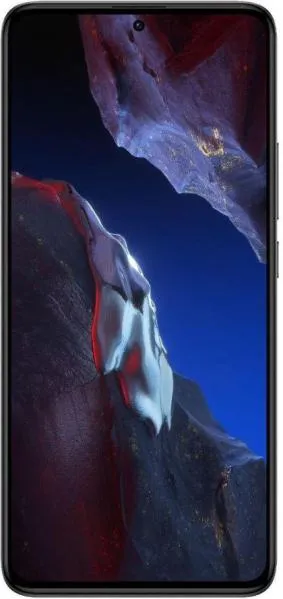

1. Specifications Comparison
| Feature | Xiaomi Poco F5 Pro | ZTE nubia Z50S Pro | Practical Impact |
|---|---|---|---|
| Design | |||
| Dimensions (mm) | 162.8 x 75.4 x 8.6 | 163.9 x 76.3 x 8.3 | Z50S Pro slightly larger, might feel less comfortable in hand. |
| Weight (g) | 204 | 228 | Poco F5 Pro noticeably lighter, reducing hand fatigue during extended use. |
| Display | |||
| Size (inches) | 6.67 | 6.8 | Z50S Pro offers a slightly larger screen for more immersive content consumption. |
| Resolution (px) | 1440 x 3200 | 1260 x 2800 | Poco F5 Pro boasts significantly sharper display (526 ppi vs 452 ppi), resulting in crisper text and images. |
| Refresh Rate (Hz) | 120 | 120 | Both offer smooth scrolling and animations. |
| Display Type | AMOLED, Dolby Vision, HDR10+ | AMOLED | Poco F5 Pro supports Dolby Vision and HDR10+ for superior dynamic range and color accuracy in supported content. |
| Peak Brightness (nits) | 1400 | 1200 | Poco F5 Pro can get slightly brighter, improving outdoor visibility. |
| Performance | |||
| Chipset | Snapdragon 8+ Gen 1 | Snapdragon 8+ Gen 2 | Z50S Pro features a newer, more powerful processor, leading to faster performance and better efficiency. |
| CPU | Octa-core (1x3.0 GHz X2 & 3x2.5 GHz A710 & 4x1.80 GHz A510) | Octa-core (1x3.36 GHz X3 & 2x2.8 GHz A715 & 2x2.8 GHz A710 & 3x2.0 GHz A510) | Z50S Pro's newer CPU architecture offers performance gains, especially in demanding tasks and gaming. |
| GPU | Adreno 730 | Adreno 740 | Z50S Pro's GPU provides a noticeable improvement in graphics performance for smoother gaming and faster rendering. |
| RAM (GB) | 8/12 | 12/16 | Z50S Pro offers more RAM in its base configuration, enabling better multitasking and smoother performance with multiple apps open. |
| Storage (GB) | 256/512 | 256/1000 | Z50S Pro offers a 1TB storage option for users needing extensive local storage. |
| Camera | |||
| Main Camera (MP) | 64MP, Omnivision OV64B | 50MP, Sony IMX800, 35mm equivalent | While Poco F5 Pro has higher resolution, Z50S Pro uses a larger sensor (1/1.49") and a 35mm equivalent lens, potentially offering better low-light performance and a different perspective. |
| Ultrawide (MP) | 8MP | 50MP | Z50S Pro features a significantly higher resolution ultrawide camera, capturing more detail and offering greater versatility. |
| Telephoto | No | 8MP | Z50S Pro includes a dedicated telephoto lens for optical zoom, absent in the Poco F5 Pro. |
| Battery | |||
| Capacity (mAh) | 5160 | 5100 | Negligible difference in battery capacity. Real-world battery life will depend more on software optimization and usage patterns. |
| USB Type | USB Type-C 2.0 | USB Type-C 3.1 | Z50S Pro offers faster data transfer speeds with USB 3.1. |
2. Key Differences Analysis
Xiaomi Poco F5 Pro Advantages:
- Sharper Display: Higher resolution leads to a noticeably crisper viewing experience.
- Lighter and More Compact: More comfortable for one-handed use and extended periods.
- Dolby Vision and HDR10+: Superior dynamic range and color accuracy in supported content.
- Lower Price: Generally more affordable.
ZTE nubia Z50S Pro Advantages:
- More Powerful Processor and GPU: Faster and more efficient performance, especially noticeable in demanding tasks and gaming.
- Larger Storage Option: 1TB option caters to users with extensive storage needs.
- Superior Camera System: Larger main sensor, higher resolution ultrawide, and dedicated telephoto lens offer greater versatility and potentially better image quality.
- Faster Data Transfer: USB 3.1 enables quicker file transfers.
Trade-offs:
- The Z50S Pro's superior performance and camera system come at the cost of a higher price and slightly larger, heavier design.
- The Poco F5 Pro prioritizes display sharpness and a lighter build, but compromises on processing power and camera versatility.
3. User Profiles & Recommendations
Xiaomi Poco F5 Pro:
- Ideal User: Budget-conscious users who prioritize a sharp display, comfortable handling, and good overall performance. Suitable for media consumption, everyday tasks, and moderate gaming.
- Use Cases: Streaming videos, browsing social media, reading articles, casual gaming.
ZTE nubia Z50S Pro:
- Ideal User: Power users and photography enthusiasts who demand top-tier performance, a versatile camera system, and ample storage.
- Use Cases: Demanding mobile gaming, professional photography and videography, multitasking, storing large files.
4. Decision Framework
Key Questions for Buyers:
- What is your budget? The Poco F5 Pro offers excellent value for its price, while the Z50S Pro commands a premium.
- What are your primary use cases? For everyday tasks and media consumption, the Poco F5 Pro suffices. For demanding gaming and photography, the Z50S Pro excels.
- Do you prioritize portability and display sharpness or raw performance and camera versatility? The Poco F5 Pro is lighter and has a sharper display, while the Z50S Pro offers better performance and a more capable camera system.
My Choice: ZTE nubia Z50S Pro
While the Poco F5 Pro is a compelling option for its price, I would choose the ZTE nubia Z50S Pro. The superior performance of the Snapdragon 8+ Gen 2, coupled with the Adreno 740 GPU, ensures a smooth and future-proof experience. The inclusion of a high-resolution ultrawide lens and a dedicated telephoto lens significantly enhances photographic versatility, a crucial factor for me. The larger main sensor also suggests better low light performance. Although the Z50S Pro is slightly heavier and more expensive, the substantial gains in performance and camera capabilities justify the trade-off for my usage patterns, which include mobile gaming, photography, and demanding productivity tasks. The larger storage options on the Z50s Pro are also appealing for long term use. I value a device that will remain powerful and relevant for several years, and the Z50S Pro's specifications suggest it is better equipped for this.
