
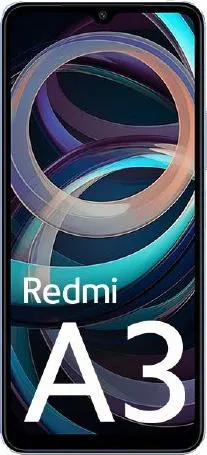
1. Specifications Comparison
| Feature | Xiaomi Poco F5 Pro | Xiaomi Redmi A3 | Practical Impact |
|---|---|---|---|
| Design | |||
| Dimensions (mm) | 162.8 x 75.4 x 8.6 | 168.3 x 76.3 x 8.3 | Poco F5 Pro is slightly smaller and thinner. |
| Weight (g) | 204 | 193 | Redmi A3 is slightly lighter. Negligible difference in daily use. |
| Build | Missing | Missing | Build quality and materials cannot be compared. |
| Display | |||
| Display Type | 6.67" AMOLED, 120Hz | 6.71" IPS LCD, 90Hz | Poco F5 Pro offers significantly better contrast, colors, and viewing angles due to AMOLED technology. Its higher refresh rate results in smoother animations and scrolling. |
| Resolution | 1440 x 3200 | 720 x 1650 | Much sharper and more detailed visuals on the Poco F5 Pro. Redmi A3's resolution is noticeably lower. |
| PPI | 526 | 268 | Significantly higher pixel density on Poco F5 Pro translates to sharper text and images. |
| Brightness | 1400 nits (peak) | 500 nits (HBM) | Poco F5 Pro will be much more readable in direct sunlight. |
| HDR | Dolby Vision, HDR10+ | None | Superior dynamic range and color accuracy on the Poco F5 Pro when viewing HDR content. |
| Performance | |||
| Chipset | Snapdragon 8+ Gen 1 | Mediatek Helio G36 | Poco F5 Pro boasts vastly superior processing power, enabling smooth multitasking, demanding gaming, and faster app loading. |
| CPU | Octa-core (1x3.0 GHz Cortex-X2 & 3x2.5 GHz Cortex-A710 & 4x1.80 GHz Cortex-A510) | Octa-core (4x2.2 GHz Cortex-A53 & 4x1.6 GHz Cortex-A53) | Significant performance difference. Poco F5 Pro's CPU is built for high-end tasks. |
| GPU | Adreno 730 | PowerVR GE8320 | Poco F5 Pro offers a much more powerful GPU, crucial for gaming and graphically intensive applications. |
| RAM | 8GB/12GB | 3GB/4GB/6GB | More RAM in the Poco F5 Pro allows for smoother multitasking and less frequent app reloading. |
| Camera | |||
| Rear Camera | 64MP (Main) + 8MP (Wide) + 2MP (Macro) | 8MP (Main) + 0.3MP (Unknown) | Poco F5 Pro offers higher resolution main sensor, a wider angle lens, and likely better overall image quality. The purpose of the 0.3MP sensor on the Redmi A3 is unclear. |
| Video Recording | Up to 8K@24fps | Up to 1080p@30fps | Poco F5 Pro allows for much higher resolution video recording with better stabilization. |
| Front Camera | 16MP | 5MP | Higher resolution selfie camera on the Poco F5 Pro. |
| Battery | |||
| Capacity | 5160 mAh | 5000 mAh | Slightly larger battery on the Poco F5 Pro. Real-world battery life will depend on usage and optimization. |
| Charging Speed | Missing | Missing | Charging speeds cannot be compared due to missing information. |
2. Key Differences Analysis
Xiaomi Poco F5 Pro Advantages:
- Significantly more powerful: Superior chipset, CPU, GPU, and RAM for a smoother and faster experience.
- Much better display: AMOLED with higher resolution, refresh rate, and HDR support.
- More capable camera system: Higher resolution sensors, wider angle lens, and 8K video recording.
Xiaomi Redmi A3 Advantages:
- Lower price: Positioned in the low-budget segment.
- Slightly lighter: Negligible difference in real-world usage.
Trade-offs:
- Redmi A3 sacrifices performance, display quality, and camera capabilities for affordability.
3. User Profiles & Recommendations
Xiaomi Poco F5 Pro: Users who prioritize performance, a high-quality display, and a versatile camera. Ideal for demanding tasks like gaming, content creation, and media consumption.
Xiaomi Redmi A3: Users on a tight budget who primarily use their phone for basic tasks like calling, texting, and browsing. Not recommended for gaming or demanding applications.
4. Decision Framework
Key Questions:
- What is your budget? The Redmi A3 is significantly cheaper.
- What do you primarily use your phone for? The Poco F5 Pro is better for demanding tasks, while the Redmi A3 suffices for basic use.
- How important is display and camera quality? The Poco F5 Pro significantly outperforms the Redmi A3 in these areas.
Scenario-Based Recommendations:
- Gamer: Poco F5 Pro
- Photographer/Videographer: Poco F5 Pro
- Casual User on a Budget: Redmi A3
- Power User: Poco F5 Pro
My Choice: Xiaomi Poco F5 Pro
Reasoning: The Poco F5 Pro offers significantly better performance, a vastly superior display, and a more capable camera system. While the Redmi A3 is more affordable, the compromises in performance and features are too significant for my needs. I value a smooth and responsive user experience, a high-quality display for media consumption, and a good camera for capturing photos and videos. The Poco F5 Pro delivers on all these fronts, making it the clear winner for me. The price difference is justified by the substantial upgrade in overall quality and capabilities.
