
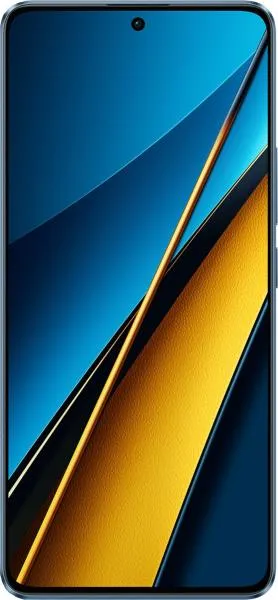
1. Specifications Comparison
| Feature | Xiaomi Poco F5 Pro | Xiaomi Poco X6 | Practical Impact |
|---|---|---|---|
| Design | |||
| Dimensions (mm) | 162.8 x 75.4 x 8.6 | 161.2 x 74.3 x 8.0 | Poco X6 is slightly smaller and thinner, potentially improving one-handed use. |
| Weight (g) | 204 | 181 | Poco X6 is noticeably lighter, reducing hand fatigue during extended use. |
| Display | |||
| Size (inches) | 6.67 | 6.67 | Same screen size. |
| Resolution (px) | 1440 x 3200 | 1220 x 2712 | Poco F5 Pro has a significantly sharper display (QHD+ vs FHD+), resulting in crisper text and images. |
| Panel Type | AMOLED | AMOLED | Both offer vibrant colors and deep blacks. |
| Refresh Rate (Hz) | 120 | 120 | Both offer smooth scrolling and animations. |
| Peak Brightness (nits) | 1400 | 1800 | Poco X6 can get brighter outdoors, improving readability in direct sunlight. |
| Performance | |||
| Chipset | Snapdragon 8+ Gen 1 | Snapdragon 7s Gen 2 | Poco F5 Pro boasts a flagship-level processor, offering significantly better performance for demanding tasks like gaming and video editing. |
| CPU | Octa-core (1x3.0 GHz X2 & 3x2.5 GHz A710 & 4x1.80 GHz A510) | Octa-core (4x2.4 GHz A78 & 4x1.95 GHz A55) | F5 Pro's CPU has a more powerful core configuration, leading to faster processing speeds. |
| GPU | Adreno 730 | Adreno 710 | F5 Pro's GPU provides a substantial advantage in graphics performance, resulting in smoother gameplay and faster rendering. |
| RAM (GB) | 8/12 | 8/12 | Both offer ample RAM for multitasking, though specific configurations may vary. |
| Camera | |||
| Main Camera (MP) | 64 | 64 | Same resolution, but image quality can differ due to sensor and processing differences. |
| Video Recording | Up to 8K@24fps | Up to 4K@30fps | Poco F5 Pro supports higher resolution video recording. |
| Battery | |||
| Capacity (mAh) | 5160 | 5000 | Negligible difference in battery capacity. Real-world battery life will depend on usage patterns and software optimization. |
2. Key Differences Analysis
Xiaomi Poco F5 Pro Advantages:
- Significantly more powerful: The Snapdragon 8+ Gen 1 provides a major performance advantage for demanding tasks.
- Sharper display: The QHD+ resolution offers noticeably crisper visuals.
- Higher resolution video recording: Supports up to 8K recording.
Xiaomi Poco X6 Advantages:
- Lighter and slightly smaller: Improved ergonomics for one-handed use.
- Brighter display: Better visibility in direct sunlight.
- Potentially lower price: Depending on the specific configuration. The provided data shows a lower starting price for the X6.
Trade-offs:
- Performance vs. Price/Ergonomics: The F5 Pro prioritizes performance, but at the cost of a larger, heavier design and potentially higher price. The X6 balances performance with a more manageable size and potentially lower price.
3. User Profiles & Recommendations
Xiaomi Poco F5 Pro: Ideal for power users, gamers, and content creators who demand top-tier performance and a high-resolution display. Suitable for tasks like video editing, high-end gaming, and multitasking.
Xiaomi Poco X6: Suitable for users who prioritize a lightweight, comfortable design and a bright display for everyday use. A good choice for social media, web browsing, and casual gaming. Provides a good balance of features and affordability.
4. Decision Framework
Key Questions for Buyers:
- What is your budget? The Poco X6 is likely to be more affordable.
- What are your primary use cases? Demanding tasks require the F5 Pro's power.
- How important is portability and one-handed use? The X6 is lighter and smaller.
My Choice: Xiaomi Poco F5 Pro
While the Poco X6 offers a compelling combination of features and affordability, I would choose the Poco F5 Pro. The significant performance difference offered by the Snapdragon 8+ Gen 1 is crucial for my workflow, which involves demanding tasks like photo editing and mobile gaming. The sharper display is also a significant advantage for me, as I value crisp visuals. I'm willing to compromise on the slightly larger size and weight for the substantial performance gains and superior display quality. The price difference, while notable, is justified by the substantial upgrade in performance and overall user experience.
