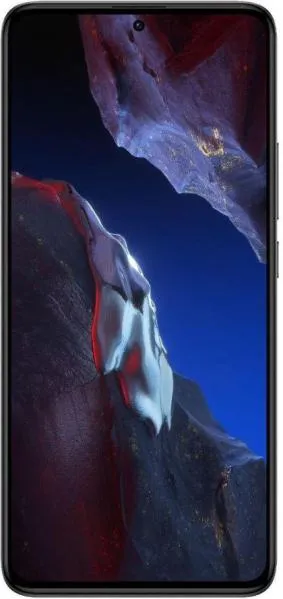
1. Specifications Comparison
| Feature | Xiaomi Poco F5 Pro | realme 8 | Practical Impact |
|---|---|---|---|
| Design | |||
| Dimensions (mm) | 162.8 x 75.4 x 8.6 | 162 x 75.1 x 8.7 | Negligible size difference in real-world usage. |
| Weight (g) | 204 | 191 | Poco F5 Pro is slightly heavier but unlikely to be noticeable. |
| Display | |||
| Size (inches) | 6.67 | 6.78 | Realme 8 has a slightly larger screen, offering more immersive content consumption. |
| Resolution | 1440 x 3200 | 1264 x 2780 | Poco F5 Pro has a significantly sharper display (526 ppi vs 450 ppi), resulting in crisper text and images. |
| Type | AMOLED | LTPO AMOLED | Both offer vibrant colors and deep blacks. Realme 8's LTPO panel allows for dynamic refresh rate adjustment, potentially saving battery. |
| Refresh Rate (Hz) | 120 | 120 | Both offer smooth scrolling and animations. |
| Peak Brightness (nits) | 1400 | 6000 | Realme 8 boasts much higher peak brightness, ensuring better visibility in direct sunlight. |
| Color Depth | 68B | 1B | Realme 8 supports a wider color gamut, potentially offering more nuanced color reproduction for professionals. |
| Performance | |||
| Chipset | Snapdragon 8+ Gen 1 | Snapdragon 7+ Gen 3 | Poco F5 Pro has a more powerful flagship-level processor, enabling smoother performance in demanding tasks and gaming. |
| CPU | Octa-core (1x3.0 GHz Cortex-X2 & 3x2.5 GHz Cortex-A710 & 4x1.80 GHz Cortex-A510) | Octa-core (1x2.8 GHz Cortex-X4 & 4x2.6 GHz Cortex-A720 & 3x1.9 GHz Cortex-A520) | Poco F5 Pro's CPU architecture, while older generation, features higher clock speeds, potentially providing a performance edge. |
| GPU | Adreno 730 | Adreno 732 | While Realme 8 has a newer GPU, Poco F5 Pro's overall performance likely benefits from the superior CPU and chipset. |
| RAM (GB) | 8/12 | 12 | Both offer ample RAM for multitasking, though Poco F5 Pro has an 8GB variant. |
| Camera | |||
| Rear Camera | 64MP Main, 8MP Wide, 2MP Macro | Missing | Poco F5 Pro features a triple camera setup. Realme 8 camera specifications are missing, preventing comparison. |
| Front Camera | 16MP | Missing | Realme 8 camera specifications are missing, preventing comparison. |
| Battery | |||
| Capacity (mAh) | 5160 | 5500 | Realme 8 has a slightly larger battery, potentially offering longer battery life. However, real-world usage depends on various factors including display and processor efficiency. |
2. Key Differences Analysis
Xiaomi Poco F5 Pro Advantages:
- Sharper Display: Higher resolution for crisper visuals.
- More Powerful Processor: Smoother performance for demanding tasks and gaming.
- Known Camera System: While not top-of-the-line, the detailed specifications allow for some assessment of its capabilities.
Realme 8 Advantages:
- Larger Display: More immersive content experience.
- Higher Peak Brightness: Excellent outdoor visibility.
- Wider Color Gamut: Potentially richer colors, especially beneficial for content creation.
- Larger Battery: Potential for longer battery life.
- LTPO Display: Dynamic refresh rate for potential power savings.
- Newer OS: Android 14 offers potential feature and security advantages.
Trade-offs:
- Realme 8's missing camera details make a thorough comparison impossible. This is a significant drawback as camera quality is a crucial factor for many users.
- Poco F5 Pro uses a slightly older but more powerful processor. The real-world performance difference likely depends on specific use cases.
3. User Profiles & Recommendations
Xiaomi Poco F5 Pro: Users prioritizing performance, a sharp display, and a known camera system. Ideal for mobile gaming, demanding applications, and general use.
Realme 8: Users who value a large, bright display, long battery life, and the latest Android features. Suitable for content consumption, casual gaming, and users who prioritize battery life over peak performance. The lack of camera details makes a strong recommendation difficult.
4. Decision Framework
Key Questions:
- What is your budget and what features are most important to you? (e.g., Performance, display, camera, battery life)
- What type of user are you? (e.g., Gamer, power user, content consumer)
- How important is camera quality to you?
Scenario-Based Recommendations:
- Prioritize Performance: Poco F5 Pro
- Prioritize Battery Life and Display: Realme 8 (with the caveat of unknown camera quality)
- Prioritize Camera: Cannot make a recommendation without Realme 8's camera specifications.
My Choice: Xiaomi Poco F5 Pro
While the Realme 8 boasts some attractive features like the LTPO AMOLED display and larger battery, the lack of camera information is a deal-breaker. The Poco F5 Pro offers a known quantity with a good balance of performance, display quality, and a functional camera system. The slightly older processor is likely still more powerful than the Realme 8's Snapdragon 7+ Gen 3 for demanding tasks. I prioritize knowing what I'm getting, especially with a component as critical as the camera. If camera quality is less important and battery life is paramount, the Realme 8 might be a good choice, but only after thoroughly researching its camera capabilities from independent sources once available.
