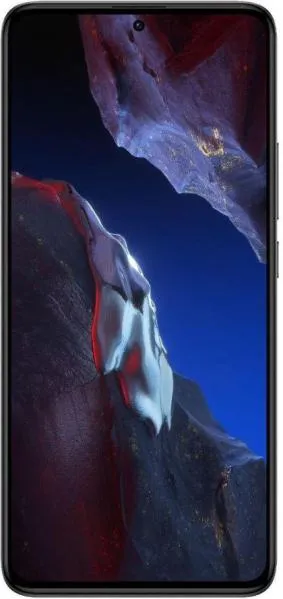

1. Specifications Comparison
| Feature | Xiaomi Poco F5 Pro | Google Pixel 8 Pro | Practical Impact |
|---|---|---|---|
| Design | |||
| Dimensions (mm) | 162.8 x 75.4 x 8.6 | 162.6 x 76.5 x 8.8 | Pixel 8 Pro slightly wider and thicker |
| Weight (g) | 204 | 213 | Negligible weight difference in practical use |
| Build Materials | Not specified | Not specified | Cannot compare build quality and durability |
| Display | |||
| Display Type | AMOLED | LTPO OLED | Pixel's LTPO panel allows for more granular refresh rate control, potentially saving battery |
| Display Size (inches) | 6.67 | 6.7 | Virtually identical screen real estate |
| Resolution | 1440 x 3200 | 1344 x 2992 | Poco F5 Pro has a slightly sharper display due to higher resolution |
| Refresh Rate (Hz) | 120 | 120 | Both offer smooth scrolling and animations |
| Peak Brightness (nits) | 1400 | 2400 | Pixel 8 Pro significantly brighter, improving outdoor visibility |
| Performance | |||
| Chipset | Snapdragon 8+ Gen 1 | Google Tensor G3 | Tensor G3 focuses on AI and machine learning, Snapdragon 8+ Gen 1 on raw performance. Real-world performance differences may vary depending on usage. |
| CPU | Octa-core (1x3.0 GHz Cortex-X2 & 3x2.5 GHz Cortex-A710 & 4x1.80 GHz Cortex-A510) | Nona-core (1x3.0 GHz Cortex-X3 & 4x2.45 GHz Cortex-A715 & 4x2.15 GHz Cortex-A510) | Tensor G3 has a newer prime core (X3) potentially offering a slight single-core performance advantage. |
| GPU | Adreno 730 | Immortalis-G715s MC10 | Adreno 730 generally recognized for strong gaming performance, impact of Immortalis-G715s MC10 requires further real-world testing |
| RAM (GB) | 8/12 | 12 | Pixel 8 Pro offers more RAM, potentially improving multitasking and app retention |
| Camera | |||
| Main Camera (MP) | 64 | 50 | Pixel generally known for superior image processing despite lower resolution |
| Ultrawide (MP) | 8 | 48 | Pixel 8 Pro has a much higher resolution ultrawide lens |
| Telephoto (MP) | None | 48 | Pixel 8 Pro offers optical zoom, missing on the Poco F5 Pro |
| DxOMark Score | Not Available | 153 (Overall) | Pixel 8 Pro has a high DxOMark score, indicating excellent camera quality |
| Battery | |||
| Capacity (mAh) | 5160 | 5050 | Poco F5 Pro has slightly larger battery capacity |
| Charging Speed | Not specified | Not specified | Cannot compare charging speeds |
2. Key Differences Analysis
Xiaomi Poco F5 Pro Advantages:
- Sharper Display: Higher resolution provides more detail.
- Potentially Lower Price: Typically positioned in a more affordable segment.
- Slightly Larger Battery: Potentially longer battery life.
Google Pixel 8 Pro Advantages:
- Superior Camera System: Higher DxOMark score and Google's renowned image processing. Telephoto lens enables optical zoom.
- Brighter Display: Much higher peak brightness for better outdoor visibility.
- More RAM: Improved multitasking and app performance.
- Latest Android Version and Longer Support: Pixel phones receive faster and longer OS and security updates.
- LTPO Display: More power efficient, potentially extending battery life.
- USB 3.2: Faster data transfer speeds compared to USB 2.0 on the Poco F5 Pro.
3. User Profiles & Recommendations
Xiaomi Poco F5 Pro: Users prioritizing a sharp display, potentially longer battery life, and affordability. Ideal for:
- Budget-conscious consumers
- Users focused on media consumption
- Gamers seeking smooth performance
Google Pixel 8 Pro: Users who value camera quality, software experience, and a bright display. Ideal for:
- Photography enthusiasts
- Users who want the latest Android features and updates
- Those who prioritize a premium user experience
4. Decision Framework
Key Questions:
- What is your budget? The Poco F5 Pro is likely more affordable.
- What are your priorities? Camera quality and software updates? Or display sharpness and battery life?
- How important is long-term software support? Pixel phones generally receive longer updates.
My Choice: Google Pixel 8 Pro
While the Poco F5 Pro offers a compelling package with a sharp display and large battery, the Pixel 8 Pro's superior camera system, brighter display, latest Android version with guaranteed long-term updates, more RAM, and faster USB standard make it the better overall choice for me. I prioritize camera quality, software updates, and a smooth user experience, and the Pixel 8 Pro excels in these areas. The addition of a telephoto lens and a significantly brighter display further solidify its advantage. While the price difference might be a factor, the long-term benefits and premium experience offered by the Pixel 8 Pro outweigh the cost for my personal needs. The inclusion of Wifi 7 future-proofs the device for emerging faster wireless networks.
