
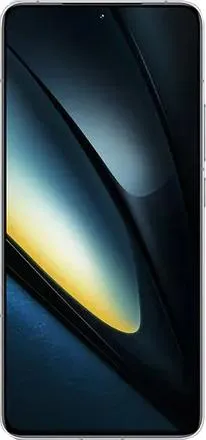
1. Specifications Comparison
| Feature | Xiaomi Poco C65 | Xiaomi Poco F6 Pro | Practical Impact |
|---|---|---|---|
| Design | |||
| Dimensions | 168x78x8.1mm | 160.9x75x8.2mm | The Poco F6 Pro is slightly smaller and thinner, making it potentially more pocketable. |
| Weight | 192g | 209g | The Poco C65 is noticeably lighter, reducing hand fatigue during extended use. |
| Fingerprint Sensor | Side-mounted | Under-display | Preference-based, but under-display sensors are often perceived as more modern. |
| Display | |||
| Display Type | IPS LCD | AMOLED | AMOLED offers significantly better contrast, deeper blacks, and more vibrant colors, leading to a superior visual experience on the F6 Pro. |
| Display Size | 6.74" | 6.67" | Negligible size difference. |
| Resolution | 720x1600 (HD+) | 1440x3200 (WQHD+) | The F6 Pro has a much sharper display with significantly higher pixel density, resulting in crisper text and images. |
| Refresh Rate | 90Hz | 120Hz | The F6 Pro's higher refresh rate provides smoother scrolling and animations, resulting in a more fluid user experience. |
| Peak Brightness | 600 nits (HBM) | 4000 nits (peak) | The F6 Pro's drastically higher peak brightness ensures exceptional outdoor visibility, even in direct sunlight. |
| Performance | |||
| Chipset | Mediatek Helio G85 (12nm) | Qualcomm Snapdragon 8 Gen 2 (4nm) | The Snapdragon 8 Gen 2 in the F6 Pro is a flagship processor, offering significantly faster performance, improved efficiency, and superior gaming capabilities compared to the mid-range Helio G85. |
| CPU | Octa-core (2x2.0 GHz Cortex-A75 & 6x1.8 GHz Cortex-A55) | Octa-core (1x3.2 GHz Cortex-X3 & 2x2.8 GHz Cortex-A715 & 2x2.8 GHz Cortex-A710 & 3x2.0 GHz Cortex-A510) | The F6 Pro's CPU architecture is far more powerful, enabling seamless multitasking and demanding applications. |
| GPU | Mali-G52 MC2 | Adreno 740 | The Adreno 740 GPU in the F6 Pro provides a substantial leap in graphics performance, crucial for high-end gaming and graphically demanding tasks. |
| RAM/Storage | 256GB/8GB | 512GB/12GB RAM, 1000GB/16GB RAM | The F6 Pro offers significantly more RAM and storage, enabling smoother multitasking, faster app loading, and ample space for files and media. |
| Camera | |||
| Video Capabilities | 1080p@30fps | Up to 8K@24fps | The F6 Pro offers significantly higher video resolution and frame rate options, including 8K recording, enabling professional-grade video capture. |
| Battery | |||
| Capacity | 5000mAh | 5000mAh | Similar battery capacity, but real-world battery life will depend on usage and the F6 Pro's more powerful components might consume more power. |
2. Key Differences Analysis
Poco C65 Advantages:
- Lighter Weight: More comfortable for extended use.
- Lower Price: Significantly more affordable.
Poco F6 Pro Advantages:
- Significantly faster performance: Superior CPU and GPU for demanding tasks and gaming.
- Much better display: AMOLED with higher resolution, refresh rate, and brightness.
- More RAM and Storage: Smoother multitasking and ample space for files.
- Superior Camera Capabilities: Higher resolution video recording capabilities.
3. User Profiles & Recommendations
Poco C65: Budget-conscious users who prioritize basic functionality: calling, texting, social media browsing, and light gaming.
Poco F6 Pro: Power users, gamers, and content creators who demand top-tier performance, a stunning display, and advanced camera features.
4. Decision Framework
Key Questions:
- What is your budget?
- What are your primary smartphone usage patterns?
- Do you prioritize performance, display quality, and camera capabilities, or affordability and basic functionality?
Scenario-Based Recommendations:
- Tight Budget, Basic Usage: Poco C65
- Demanding User, High Budget: Poco F6 Pro
- Moderate Budget, Balanced Needs: Consider other mid-range options.
My Choice: Xiaomi Poco F6 Pro
While the Poco C65 offers excellent value for its price, I would choose the Poco F6 Pro. The significantly improved performance, stunning AMOLED display, and versatile camera capabilities are crucial for my workflow and entertainment needs. I prioritize a smooth and responsive user experience, and the F6 Pro's powerful hardware ensures that. While the price difference is substantial, the long-term benefits of a future-proof device with top-tier specifications outweigh the initial cost for me. The superior display alone makes a huge difference in daily usage, and the performance headroom ensures the phone will remain capable for years to come.
