
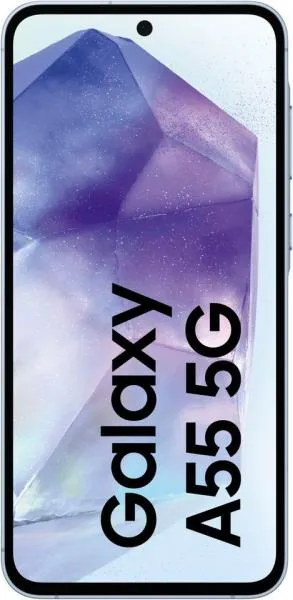
1. Specifications Comparison
| Feature | Xiaomi Poco C65 | Samsung Galaxy A55 | Practical Impact |
|---|---|---|---|
| Design | |||
| Dimensions | 168 x 78 x 8.1 mm | 161.1 x 77.4 x 8.2 mm | A55 slightly smaller and thinner, potentially more comfortable to hold. |
| Weight | 192g | 213g | Poco C65 noticeably lighter. |
| Build Materials | Not specified | Not specified | Cannot compare build quality and durability. |
| Display | |||
| Display Type | IPS LCD | Super AMOLED | A55 offers richer colors, deeper blacks, and better power efficiency. |
| Display Size | 6.74" | 6.6" | Negligible size difference. |
| Resolution | 720 x 1600 (HD+) | 1080 x 2340 (FHD+) | A55 significantly sharper and more detailed. |
| Refresh Rate | 90Hz | 120Hz | A55 provides smoother scrolling and animations. |
| Peak Brightness | 600 nits (HBM) | 1000 nits (HBM) | A55 will be much more visible in direct sunlight. |
| Performance | |||
| Chipset | Mediatek Helio G85 (12nm) | Exynos 1480 (4nm) | A55's Exynos chip is significantly more powerful and efficient due to smaller process node. Expect smoother multitasking and better gaming performance. |
| CPU | Octa-core (2x2.0 GHz Cortex-A75 & 6x1.8 GHz Cortex-A55) | Octa-core (4x2.75 GHz Cortex-A78 & 4x2.0 GHz Cortex-A55) | A55 has faster and more powerful CPU cores. |
| GPU | Mali-G52 MC2 | Xclipse 530 | A55 offers better graphics performance for gaming and demanding applications. |
| RAM | 8GB | 8GB/12GB | A55 offers a 12GB RAM option for even smoother multitasking. |
| Storage | 256GB | 256GB | Equivalent storage. |
| Camera | |||
| Rear Camera | Not specified | Not specified | Cannot compare camera quality and features. |
| Front Camera | Not specified | Not specified | Cannot compare camera quality and features. |
| Video Recording | 1080p@30fps | 4K@30fps, 1080p@60fps | A55 capable of recording higher resolution and frame rate video. |
| Battery | |||
| Capacity | 5000mAh | 5000mAh | Similar battery capacity, but A55's AMOLED display and efficient processor likely result in longer battery life. |
| Other | |||
| OS | Android 13 | Android 14 | A55 comes with a newer Android version and longer guaranteed updates (up to Android 18). |
| NFC | Yes | Yes | Both support contactless payments. |
| USB | USB Type-C 2.0 | USB Type-C 2.0, OTG | A55 supports On-The-Go for connecting peripherals. |
2. Key Differences Analysis
Xiaomi Poco C65 Advantages:
- Lighter Weight: Noticeably lighter, making it more comfortable for extended use.
- Lower Price: Belongs to the "low price" range, making it more budget-friendly.
Samsung Galaxy A55 Advantages:
- Superior Display: AMOLED technology offers better colors, contrast, and outdoor visibility. Higher resolution and refresh rate provide a smoother and sharper experience.
- Significantly Better Performance: More powerful processor and GPU for smoother multitasking, gaming, and demanding applications.
- More Advanced Camera Features: 4K video recording and Electronic Image Stabilization (EIS) for smoother videos.
- Newer Software and Longer Support: Ships with Android 14 and guaranteed updates up to Android 18.
- More Connectivity Options: USB OTG allows for connecting peripherals.
Trade-offs:
- Price: The A55's superior features come at a higher price ("medium price" range).
3. User Profiles & Recommendations
Xiaomi Poco C65: Budget-conscious users who prioritize basic functionality, long battery life, and a lightweight device for calling, texting, and light web browsing.
Samsung Galaxy A55: Users who value a premium display, smooth performance, better camera features, and longer software support. Suitable for gaming, multimedia consumption, and multitasking.
4. Decision Framework
Key Questions for Buyers:
- What is your budget? The Poco C65 is significantly cheaper.
- What are your primary smartphone usage patterns? Basic tasks vs. demanding applications and multimedia.
- How important are display quality, performance, and camera features? The A55 excels in these areas.
My Choice: Samsung Galaxy A55
While the Poco C65 offers excellent value for its price, the Samsung Galaxy A55 is the superior device overall. The significantly better display, more powerful performance, newer software with longer update support, and enhanced camera features justify the higher price for me. The improved user experience in everyday tasks, gaming, and multimedia consumption outweighs the slightly heavier weight. The longer software support also ensures a future-proof investment. While the specific camera details are missing, the ability to record 4K video is a significant advantage over 1080p. The 4nm processor in the A55 promises significant performance and efficiency gains over the 12nm processor in the Poco C65. These factors combined make the A55 a more compelling choice for a long-term investment.
