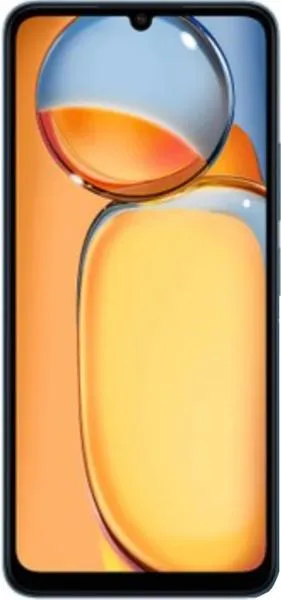
1. Specifications Comparison
| Feature | Xiaomi Poco C65 | Phone 8 | Practical Impact |
|---|---|---|---|
| Design | |||
| Dimensions | 168 x 78 x 8.1 mm | 162 x 75.1 x 8.7 mm | Phone 8 is slightly shorter, narrower, but thicker. Poco C65 might feel slightly larger in hand. |
| Weight | 192g | 191g | Negligible weight difference. |
| Build Materials | Not specified | Not specified | Cannot compare build quality and durability. |
| Display | |||
| Display Type | IPS LCD, 90Hz | LTPO AMOLED, 120Hz | Phone 8 offers superior contrast, deeper blacks, and potentially better power efficiency due to LTPO. Its higher refresh rate will result in smoother animations. |
| Resolution | 720x1600 | 1264x2780 | Phone 8 has a much sharper display with significantly higher pixel density (260 ppi vs 450 ppi), resulting in clearer text and images. |
| Peak Brightness | 600 nits (HBM) | 6000 nits (peak) | Phone 8 will be significantly more readable in direct sunlight. |
| Performance | |||
| Chipset | Mediatek Helio G85 (12nm) | Snapdragon 7+ Gen 3 (4nm) | Phone 8 boasts a significantly more powerful and efficient processor, leading to smoother multitasking, faster app loading, and better gaming performance. |
| CPU | Octa-core (2x2.0 GHz Cortex-A75 & 6x1.8 GHz Cortex-A55) | Octa-core (1x2.8 GHz Cortex-X4 & 4x2.6 GHz Cortex-A720 & 3x1.9 GHz Cortex-A520) | Phone 8's CPU architecture is newer and more powerful, resulting in a significant performance advantage. |
| GPU | Mali-G52 MC2 | Adreno 732 | Phone 8 offers a considerably more powerful GPU, resulting in a superior gaming experience and smoother graphics rendering. |
| RAM | 8GB | 12GB | Phone 8 will handle multitasking and demanding applications more efficiently. |
| Storage | 256GB | 512GB | Phone 8 provides double the storage capacity. |
| Camera | |||
| Video Capabilities | 1080p@30fps | Up to 4K@60fps with OIS/EIS | Phone 8 offers significantly better video recording capabilities with higher resolution, frame rates, and stabilization. |
| Rear Camera Specs | Not specified | Not specified | Cannot compare image quality, features, or low-light performance. |
| Battery | |||
| Capacity | 5000 mAh | 5500 mAh | Phone 8 has a slightly larger battery capacity, potentially offering longer battery life. However, real-world battery life depends on various factors, including display usage and processor efficiency. |
2. Key Differences Analysis
Phone 8 Advantages:
- Significantly superior performance: The Snapdragon 7+ Gen 3 chipset and higher RAM offer a vastly improved user experience for demanding tasks and gaming.
- Much better display: The higher resolution AMOLED display with a 120Hz refresh rate and exceptional brightness provides a richer and smoother visual experience.
- Enhanced video recording: 4K recording at 60fps with OIS and EIS enables capturing high-quality videos.
- Larger storage: 512GB provides ample space for apps, media, and files.
Xiaomi Poco C65 Advantages:
- Potentially lower price: Belonging to the "low price" range, it likely offers a more budget-friendly option.
3. User Profiles & Recommendations
Xiaomi Poco C65: Suitable for budget-conscious users who prioritize basic smartphone functionality like calling, texting, web browsing, and social media. Not recommended for demanding tasks, gaming, or media consumption.
Phone 8: Ideal for users who demand high performance, a premium display, excellent camera capabilities, and ample storage. Suitable for power users, gamers, and content creators.
4. Decision Framework
Key Questions for Buyers:
- What is your budget? The Poco C65 is a budget option, while Phone 8 is a mid-range to high-end device.
- What are your primary smartphone usage patterns? For basic tasks, the Poco C65 might suffice. For demanding tasks, gaming, or media consumption, Phone 8 is recommended.
- How important is display quality and performance? Phone 8 significantly outperforms the Poco C65 in these areas.
My Choice: Phone 8
While lacking a model name makes it slightly unusual, I would choose Phone 8. The significant performance advantage, superior display, enhanced video capabilities, and larger storage make it a much more compelling device. Even without knowing the exact price difference, the overall user experience offered by Phone 8 would be vastly superior for my needs, which include multitasking, media consumption, and occasional gaming. The Poco C65, while potentially much cheaper, would likely feel sluggish and frustrating in comparison. The investment in Phone 8 would likely translate to a more enjoyable and longer-lasting smartphone experience.
