
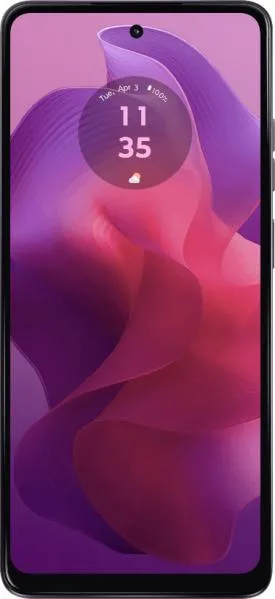
1. Specifications Comparison
| Feature | Xiaomi Poco C65 | Motorola Moto G24 | Practical Impact |
|---|---|---|---|
| Design | |||
| Dimensions | 168 x 78 x 8.1 mm | 163.5 x 74.5 x 8 mm | Moto G24 is slightly smaller and might feel more comfortable in hand. |
| Weight | 192g | 181g | Moto G24 is noticeably lighter, reducing hand fatigue during extended use. |
| Colors | Black, Blue, Purple | Matte Charcoal, Ice Green, Blueberry, Pink Lavender | Moto G24 offers a wider variety of color options. |
| Display | |||
| Size | 6.74" | 6.56" | Poco C65 offers a slightly larger screen for more immersive content consumption. |
| Type | IPS LCD, 90Hz | IPS LCD, 90Hz | Both offer smooth scrolling and animations thanks to the 90Hz refresh rate. |
| Resolution | 720x1600 | 720x1612 | Virtually identical resolutions; no noticeable difference in sharpness. |
| Peak Brightness | 600 nits (HBM) | 537 nits | Poco C65 might be slightly more readable in direct sunlight due to the higher peak brightness. However, the typical brightness for the Poco C65 is lower at 450 nits. |
| Performance | |||
| Chipset | Mediatek Helio G85 (12nm) | Mediatek Helio G85 (12nm) | Identical chipsets; performance should be very similar. |
| CPU | Octa-core (2x2.0 GHz Cortex-A75 & 6x1.8 GHz Cortex-A55) | Octa-core (2x2.0 GHz Cortex-A75 & 6x1.7 GHz Cortex-A55) | Slight difference in the efficiency cores' clock speed, potentially giving the Poco C65 a negligible performance edge. In practice, the performance difference would be minimal. |
| GPU | Mali-G52 MC2 | Mali-G52 MC2 | Same GPU; similar gaming and graphics performance. |
| RAM | 8GB | 8GB | Same RAM; multitasking capabilities should be comparable. |
| Storage | 256GB | 128GB | Poco C65 offers double the storage, allowing for more apps, photos, and videos. |
| Battery | |||
| Capacity | 5000 mAh | 5000 mAh | Identical battery capacities; battery life should be comparable, depending on software optimization. |
| Software | |||
| OS | Android 13 | Android 14 | Moto G24 comes with a newer Android version, offering potential features and security updates. |
| Other | |||
| NFC | Yes | Yes | Both support contactless payments and data transfer. |
| Sensors | Accelerometer, Compass, Fingerprint (side-mounted) | Accelerometer, Gyro, Proximity, Compass, Fingerprint (side-mounted) | Moto G24 includes a gyroscope for improved motion sensing in games and AR applications. |
2. Key Differences Analysis
Xiaomi Poco C65 Advantages:
- Larger Display: Offers slightly more immersive media consumption.
- Double the Storage: Allows for storing more files and apps without worrying about running out of space.
- Potentially Brighter Display: Might be easier to read outdoors in direct sunlight due to the higher peak brightness (though typical brightness is lower).
Motorola Moto G24 Advantages:
- Lighter and More Compact: Feels more comfortable to hold and use for extended periods.
- Newer Android Version: Benefits from the latest features and security updates.
- More Color Options: Provides more choices to suit individual preferences.
- Gyroscope Sensor: Enables better motion sensing in games and AR applications.
3. User Profiles & Recommendations
Xiaomi Poco C65: Ideal for users who prioritize a large screen for media consumption, require ample storage, and are on a tight budget.
Motorola Moto G24: Suits users who prefer a lightweight and compact phone, value having the latest software, and enjoy a wider range of color options. Good for light gaming due to the gyroscope.
4. Decision Framework
Key Questions for Buyers:
- How important is screen size and storage? If these are top priorities, the Poco C65 is a better choice.
- Do you value having the latest software and a more compact phone? If so, the Moto G24 is preferable.
- What is your budget? Both phones are in the low price range, but specific pricing might vary.
My Choice: Motorola Moto G24
While the Poco C65 offers more storage and a potentially slightly brighter display in sunlight, I would choose the Motorola Moto G24. The newer Android version, lighter weight, smaller form factor, and inclusion of a gyroscope sensor are more compelling to me. Software updates are crucial for security and new features, and the improved handling comfort makes a noticeable difference in daily use. The gyroscope enhances gaming and potential AR experiences. While the 128GB storage is less than the Poco C65, it is still sufficient for many users, and expandable storage options might be available. Ultimately, the Moto G24 provides a more well-rounded and future-proof experience for my personal preferences.
