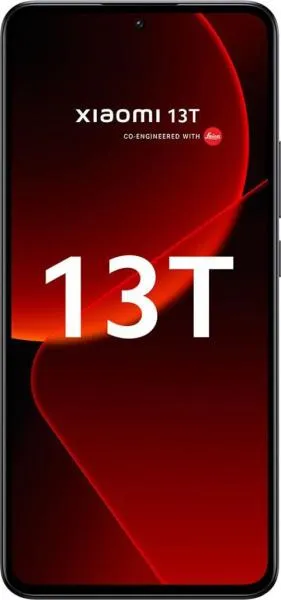
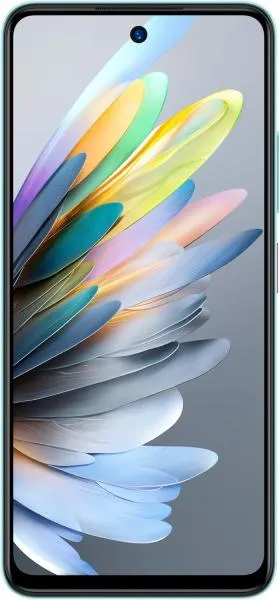
1. Specifications Comparison
| Feature | Xiaomi 13T | ZTE Blade A75 4G | Practical Impact |
|---|---|---|---|
| Design | |||
| Dimensions (mm) | 162.2 x 75.7 x 8.5 | 164.1 x 75.8 x 8.6 | Virtually identical in size and feel. |
| Weight (g) | 193 | 189 | Negligible weight difference in real-world usage. |
| Fingerprint Sensor | Under Display | Side-mounted | Preference-based; under-display feels more modern, side-mounted can be faster. |
| Display | |||
| Display Type | AMOLED, 68B colors, 144Hz | IPS LCD, 90Hz | Xiaomi offers significantly better contrast, color accuracy, and smoother scrolling with higher refresh rate and AMOLED technology. |
| Resolution | 1220 x 2712 | 720 x 1612 | Xiaomi provides much sharper visuals due to significantly higher resolution. |
| Peak Brightness | 2600 nits | Not specified | Xiaomi's display will be far more visible in direct sunlight. Missing peak brightness for ZTE makes a detailed comparison impossible. |
| Refresh Rate | 144Hz | 90Hz | Xiaomi offers a noticeably smoother user experience, especially in gaming and scrolling. |
| Performance | |||
| Chipset | Mediatek Dimensity 8200 Ultra (4 nm) | Unisoc T606 (12 nm) | Xiaomi's processor is significantly more powerful, resulting in faster app loading, smoother multitasking, and better gaming performance. |
| CPU | Octa-core (1x3.1 GHz Cortex-A78 & 3x3.0 GHz Cortex-A78 & 4x2.0 GHz Cortex-A55) | Octa-core (2x1.6 GHz Cortex-A75 & 6x1.6 GHz Cortex-A55) | The architecture and clock speeds indicate a substantial performance advantage for the Xiaomi device. |
| GPU | Mali-G610 MC6 | Mali-G57 MP1 | Xiaomi offers superior graphics performance, crucial for demanding games and visual tasks. |
| RAM | 12GB | 4GB | Xiaomi offers significantly more RAM, enabling smoother multitasking and preventing app closures in the background. |
| Storage | 256GB | 256GB | Storage capacity is equal in both devices. |
| Camera | |||
| Video Capabilities | 4K@30fps (HDR, EIS), various other options | 1080p@30fps | Xiaomi provides higher resolution video recording and more features like HDR and EIS for improved quality and stabilization. Detailed camera sensor specifications are missing for both, limiting a complete comparison. |
| Battery | |||
| Capacity | 5000 mAh | 5000 mAh | Battery capacity is the same, but real-world battery life depends on optimization and usage patterns. |
2. Key Differences Analysis
Xiaomi 13T Advantages:
- Significantly superior performance: The Dimensity 8200 Ultra outperforms the Unisoc T606 by a wide margin, resulting in a much smoother and faster user experience.
- Much better display: The high-resolution AMOLED with 144Hz refresh rate provides a vibrant, smooth, and responsive visual experience.
- More RAM for multitasking: 12GB RAM ensures seamless switching between apps and prevents background processes from being killed.
- Superior video recording capabilities: Offers 4K recording, HDR, and EIS for higher quality videos.
ZTE Blade A75 4G Advantages:
- Lower price: Belonging to the "low price" range, it's significantly more affordable.
- Slightly lighter: Though the difference is minimal, it might be noticeable for some users.
3. User Profiles & Recommendations
Xiaomi 13T: Ideal for users who prioritize performance, a high-quality display, smooth multitasking, and mobile gaming. Suitable for power users, content creators, and gamers.
ZTE Blade A75 4G: Best suited for budget-conscious users who primarily use their phones for basic tasks like calling, texting, browsing, and social media. Good for light users or as a secondary device.
4. Decision Framework
Key Questions for Buyers:
- What is your budget? The ZTE is significantly cheaper.
- What are your primary phone usage patterns? For basic tasks, the ZTE might suffice; for demanding tasks, the Xiaomi is necessary.
- How important is display quality and performance? The Xiaomi offers a far superior experience in these areas.
Scenario-Based Recommendations:
- Tight Budget, Basic Usage: ZTE Blade A75 4G
- Moderate Budget, Demanding Usage: Xiaomi 13T
- Power User, Gamer, Content Creator: Xiaomi 13T
My Choice: Xiaomi 13T
While the ZTE Blade A75 4G offers a lower price point, the Xiaomi 13T provides a significantly superior overall experience due to its vastly more powerful processor, stunning AMOLED display with a high refresh rate, and larger RAM capacity. The performance and display differences alone make the Xiaomi 13T a much more compelling device for my needs. I prioritize a smooth and responsive user experience, which the Xiaomi 13T clearly delivers. The price difference is justified by the substantial upgrade in quality and capabilities.
