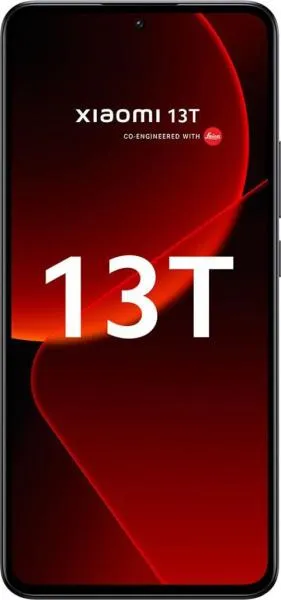
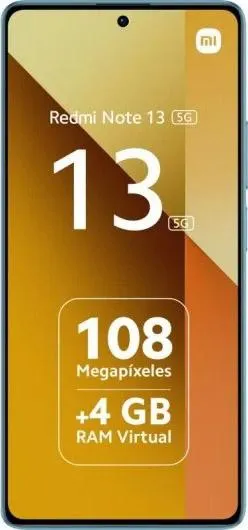
1. Specifications Comparison
| Feature | Xiaomi 13T | Xiaomi Redmi Note 13 | Practical Impact |
|---|---|---|---|
| Design | |||
| Dimensions (mm) | 162.2 x 75.7 x 8.5 | 161.1 x 75 x 7.6 | Redmi Note 13 is slightly smaller and thinner, potentially improving one-handed use. |
| Weight (g) | 193 | 174.5 | Redmi Note 13 is noticeably lighter, reducing hand fatigue during extended use. |
| Fingerprint Sensor | Under display | Side-mounted | Preference-based; under-display is often considered more modern, side-mounted can be quicker to access. |
| Display | |||
| Size (inches) | 6.67 | 6.67 | Identical screen sizes. |
| Type | AMOLED, 68B colors, 144Hz | AMOLED, 1B colors, 120Hz | 13T offers significantly smoother scrolling and animations with its 144Hz refresh rate and vastly superior color accuracy and range with 68B colors (vs. likely 16.7M colors represented as 1B). 1B colors is likely a marketing simplification and doesn't represent true 10-bit color depth.* | |
| Resolution | 1220 x 2712 | 1080 x 2400 | 13T has a sharper display with higher pixel density (446 ppi vs 395 ppi), resulting in clearer text and images. |
| Peak Brightness (nits) | 2600 | 1000 | 13T offers much higher peak brightness, ensuring better visibility in direct sunlight. |
| Performance | |||
| Chipset | Mediatek Dimensity 8200 Ultra (4 nm) | Mediatek Dimensity 6080 (6 nm) | 8200 Ultra is significantly more powerful, enabling smoother multitasking, faster app loading, and better gaming performance. The 4nm process suggests better power efficiency compared to the 6nm process. |
| CPU | Octa-core (1x3.1 GHz Cortex-A78 & 3x3.0 GHz Cortex-A78 & 4x2.0 GHz Cortex-A55) | Octa-core (2x2.4 GHz Cortex-A76 & 6x2.0 GHz Cortex-A55) | 13T boasts a faster and more powerful CPU architecture, translating to improved overall responsiveness. |
| GPU | Mali-G610 MC6 | Mali-G57 MC2 | 13T possesses a substantially more capable GPU, resulting in smoother graphics rendering, especially in demanding games. |
| RAM | 12GB | 8GB/12GB | 12GB RAM ensures smoother multitasking; however, both options should provide sufficient memory for everyday use. |
| Battery | |||
| Capacity (mAh) | 5000 | 5000 | Identical battery capacities. Real-world battery life will depend on usage and software optimization. |
| Camera | |||
| Video Capabilities | 4K@30fps (HDR, EIS), 1080p@ various fps (HDR, EIS) | 1080p@30fps | 13T offers superior video recording capabilities, including 4K resolution, HDR, and Electronic Image Stabilization (EIS) for smoother footage. Detailed camera specifications are missing for proper comparison. |
2. Key Differences Analysis
Xiaomi 13T Advantages:
- Significantly superior performance: The Dimensity 8200 Ultra, faster CPU and GPU, and higher RAM contribute to a much smoother and more responsive user experience across all tasks.
- Much better display: Higher resolution, refresh rate, color depth, and peak brightness deliver a vastly improved visual experience.
- Enhanced video recording: Offers 4K resolution, HDR, and EIS for higher quality video capture.
Xiaomi Redmi Note 13 Advantages:
- Lower price: Positioned in a lower price bracket, offering greater affordability.
- Lighter and slightly smaller: Easier to handle and carry.
Trade-offs:
- Redmi Note 13: Sacrifices performance, display quality, and camera features for affordability.
- Xiaomi 13T: Higher price for premium features.
3. User Profiles & Recommendations
Xiaomi 13T: Ideal for users who prioritize performance, a premium display, and advanced camera features. Suitable for demanding tasks like gaming, content creation, and media consumption.
Xiaomi Redmi Note 13: Suitable for budget-conscious users who prioritize essential smartphone functionalities for everyday tasks like calling, texting, web browsing, and social media.
4. Decision Framework
Key Questions:
- What is your budget? The Redmi Note 13 offers better value if affordability is paramount.
- How important is performance and display quality? The 13T excels in these areas.
- What are your primary use cases? Gaming, content creation, and media consumption benefit greatly from the 13T's capabilities.
My Choice: Xiaomi 13T
While the Redmi Note 13 offers good value for its price, the Xiaomi 13T's significant advantages in performance, display quality, and camera capabilities make it the superior choice for me. The smoother user experience, vibrant visuals, and future-proof hardware justify the higher price. I prioritize a fluid and enjoyable user experience, and the 13T delivers that in spades. The difference in weight is negligible to me, and I prefer the under-display fingerprint sensor. The superior display alone is a major deciding factor, as I consume a lot of media on my phone.
