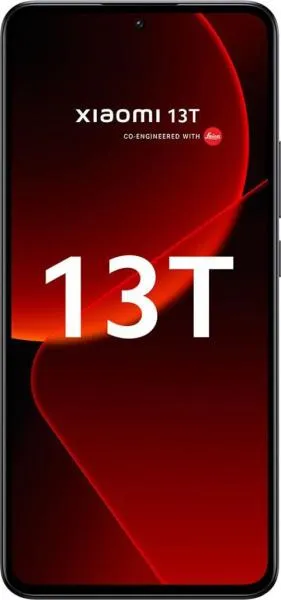
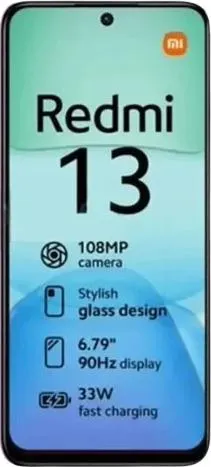
1. Specifications Comparison
| Feature | Xiaomi 13T | Xiaomi Redmi 13 | Practical Impact |
|---|---|---|---|
| Design | |||
| Dimensions | 162.2 x 75.7 x 8.5 mm | 168.6 x 76.3 x 8.3 mm | Redmi 13 is slightly larger and heavier. |
| Weight | 193g | 205g | Noticeable difference in hand, 13T feels more premium. |
| Fingerprint Sensor | Under display | Side-mounted | Preference-based, under-display feels more modern. |
| Display | |||
| Display Type | AMOLED, 68B colors, 144Hz | IPS LCD, 90Hz | 13T offers significantly better colors, contrast, and smoothness due to AMOLED and higher refresh rate. |
| Resolution | 1220 x 2712 | 1080 x 2460 | 13T has a sharper display. Noticeable in text clarity and image detail. |
| Peak Brightness | 2600 nits | 550 nits (HBM) | 13T is vastly superior in bright sunlight readability. |
| Refresh Rate | 144Hz | 90Hz | 13T offers a smoother scrolling and gaming experience. |
| Performance | |||
| Chipset | Mediatek Dimensity 8200 Ultra (4 nm) | Mediatek Helio G91 Ultra (12 nm) | 8200 Ultra is significantly more powerful, resulting in faster app loading, smoother multitasking, and better gaming performance. |
| CPU | Octa-core (1x3.1 GHz Cortex-A78 & 3x3.0 GHz Cortex-A78 & 4x2.0 GHz Cortex-A55) | Octa-core (2x2.0 GHz Cortex-A75 & 6x1.8 GHz Cortex-A55) | 13T's CPU offers superior performance in demanding tasks. |
| GPU | Mali-G610 MC6 | Mali-G52 MC2 | 13T's GPU provides a much better gaming experience. |
| RAM | 12GB | 8GB | 13T can handle more apps in the background without performance slowdown. |
| Camera | |||
| Video Capabilities | 4K@30fps (HDR, EIS), 1080p@ various fps (HDR, EIS) | 1080p@30fps | 13T offers superior video recording capabilities with higher resolution and frame rates, along with HDR and EIS. |
| Battery | |||
| Capacity | 5000 mAh | 5030 mAh | Negligible difference in real-world usage. |
2. Key Differences Analysis
Xiaomi 13T Advantages:
- Significantly superior display: AMOLED with higher resolution, refresh rate, and peak brightness. This translates to a dramatically better visual experience in all usage scenarios.
- Much more powerful performance: The Dimensity 8200 Ultra outperforms the Helio G91 Ultra in every aspect. This is crucial for demanding tasks, gaming, and long-term usability.
- Better video recording: Higher resolution, frame rates, and the inclusion of HDR and EIS offer more versatility and quality.
Xiaomi Redmi 13 Advantages:
- Slightly larger battery: Though the difference is minimal, it might result in slightly longer battery life under light usage.
- Lower price: The Redmi 13 is positioned in the low price range, making it more budget-friendly.
3. User Profiles & Recommendations
Xiaomi 13T: Users who prioritize performance, a high-quality display, and smooth user experience. Ideal for gamers, content creators, and power users.
Xiaomi Redmi 13: Budget-conscious users who primarily use their phones for basic tasks like calling, texting, browsing, and social media. Not recommended for demanding tasks or gaming.
4. Decision Framework
Key Questions for Buyers:
- What is your budget? The Redmi 13 is significantly cheaper.
- What are your primary use cases? For demanding tasks and gaming, the 13T is essential.
- How important is display quality? The 13T's display is a major differentiator.
My Choice: Xiaomi 13T
While the Redmi 13 offers a lower price point, the Xiaomi 13T's superior display, significantly improved performance, and enhanced video capabilities make it the clear winner for me. The difference in price is justified by the substantial upgrade in overall user experience. The smoother display, faster app loading, and better multitasking capabilities offered by the 13T are crucial for a satisfying smartphone experience in the long run. I prioritize performance and a premium visual experience, and the 13T delivers on both fronts. The Redmi 13 feels like a compromise in too many areas, especially considering the relatively small difference in battery capacity.
