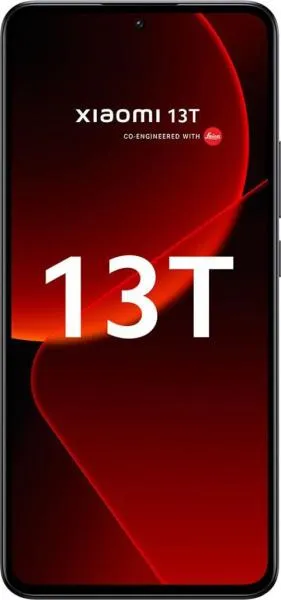

1. Specifications Comparison
| Feature | Xiaomi 13T | vivo X100 Pro | Practical Impact |
|---|---|---|---|
| Design | |||
| Dimensions (mm) | 162.2 x 75.7 x 8.5 | 164.1 x 75.3 x 8.9 | The vivo is slightly larger and thicker. |
| Weight (g) | 193 | 221 | The Xiaomi is noticeably lighter, improving one-handed use. |
| Display | |||
| Size (inches) | 6.67 | 6.78 | Negligible difference in screen real estate. |
| Type | AMOLED, 144Hz | LTPO AMOLED, 120Hz | Both offer vibrant colors and deep blacks. The Xiaomi's 144Hz offers smoother scrolling and animations, while the vivo's LTPO panel allows for dynamic refresh rate adjustment, potentially saving battery. |
| Peak Brightness (nits) | 2600 | 3000 | The vivo offers slightly higher peak brightness, potentially improving outdoor visibility. |
| Resolution | 1220x2712 | 1260x2800 | Both are sharp displays; the vivo has a marginally higher pixel density. |
| Performance | |||
| Chipset | Mediatek Dimensity 8200 Ultra | Mediatek Dimensity 9300 | The Dimensity 9300 is generally considered more powerful, leading to faster app loading, smoother multitasking, and better gaming performance. |
| CPU | Octa-core (1x3.1 GHz Cortex-A78 & 3x3.0 GHz Cortex-A78 & 4x2.0 GHz Cortex-A55) | Octa-core (1x3.25 GHz Cortex-X4 & 3x2.85 GHz Cortex-X4 & 4x2.0 GHz Cortex-A720) | The vivo's CPU architecture, featuring Cortex-X4 cores, should offer a significant performance advantage in demanding tasks. |
| GPU | Mali-G610 MC6 | Immortalis-G720 MC12 | The Immortalis-G720 is expected to deliver superior graphics performance compared to the Mali-G610. |
| RAM | 12GB | 16GB | The vivo offers more RAM, enabling better multitasking and preventing apps from closing in the background. |
| Battery | |||
| Capacity (mAh) | 5000 | 5400 | The vivo has a slightly larger battery, potentially resulting in longer battery life. |
| Camera | |||
| Video Capabilities | 4K@30fps, 1080p up to 120fps | 8K@30fps, 4K@60fps | The vivo offers 8K video recording and higher resolution slow-motion at 4K. We lack detailed camera sensor information for a complete comparison. |
2. Key Differences Analysis
Xiaomi 13T Advantages:
- Lighter and more comfortable to hold: Noticeably lighter weight improves one-handed usage.
- Higher refresh rate display: Smoother scrolling and animations, beneficial for gaming and general use.
vivo X100 Pro Advantages:
- More powerful processor and GPU: Significantly improved performance for demanding tasks and gaming.
- Larger battery: Potentially longer battery life.
- More RAM: Enhanced multitasking capabilities.
- Higher resolution video recording: Offers 8K recording for capturing more detail.
Trade-offs:
- The Xiaomi sacrifices performance for a lighter weight and higher refresh rate display.
- The vivo is heavier and potentially more expensive but offers superior performance and battery life.
3. User Profiles & Recommendations
Xiaomi 13T: Suited for users who prioritize a lightweight phone with a smooth display and value good performance for everyday tasks. Ideal for social media, web browsing, and casual gaming.
vivo X100 Pro: Ideal for power users who demand top-tier performance for gaming, video editing, and multitasking. Also suitable for users who prioritize camera capabilities and longer battery life.
4. Decision Framework
Key Questions:
- What is your budget? The vivo X100 Pro is likely to be more expensive.
- What are your primary use cases? Gaming and demanding tasks favor the vivo; everyday use with a focus on comfort favors the Xiaomi.
- How important is battery life and camera quality? The vivo likely has an edge in both areas.
My Choice: vivo X100 Pro
While the Xiaomi 13T offers a compelling combination of a smooth display and lighter weight, the vivo X100 Pro's superior performance, larger battery, and more capable video recording make it the better overall choice for me. I prioritize long-term performance and capabilities over marginal gains in refresh rate and weight. The Dimensity 9300's significant performance advantage and the improved GPU will provide a better user experience in the long run. The extra RAM is also crucial for future-proofing the device. While I appreciate the lighter weight of the Xiaomi, the performance difference is too significant to ignore.
