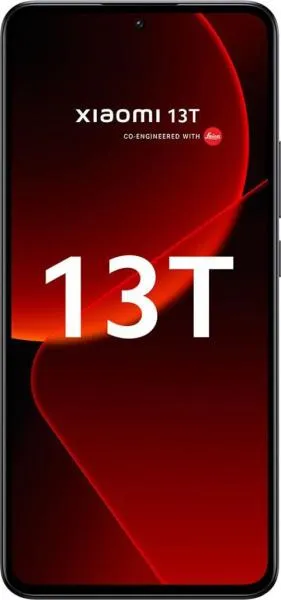

1. Specifications Comparison
| Feature | Xiaomi 13T | vivo X100 | Practical Impact |
|---|---|---|---|
| Design | |||
| Dimensions (mm) | 162.2 x 75.7 x 8.5 | 164.1 x 75.2 x 8.5 | Virtually identical in size and thickness. |
| Weight (g) | 193 | 202 | The vivo X100 is noticeably heavier, potentially impacting one-handed use. |
| Build Materials | Not specified | Not specified | Cannot compare build quality and durability without further information. |
| Display | |||
| Size (inches) | 6.67 | 6.78 | The vivo X100 offers a slightly larger screen for more immersive content consumption. |
| Type | AMOLED, 68B colors | LTPO AMOLED, 1B colors | Both are high-quality AMOLED displays, but the Xiaomi boasts a wider color gamut for more vibrant visuals. The vivo X100 utilizing LTPO allows for dynamic refresh rate adjustments leading to potentially better battery life. |
| Resolution | 1220 x 2712 | 1260 x 2800 | Both offer sharp resolutions; the vivo X100 is slightly sharper due to the higher pixel count and larger screen. |
| Refresh Rate (Hz) | 144 | 120 | The Xiaomi 13T offers a higher refresh rate, resulting in smoother animations and scrolling. While 120Hz is still excellent, the difference is noticeable in fast-paced games and UI interactions. |
| Peak Brightness (nits) | 2600 | 3000 | The vivo X100 boasts higher peak brightness, making it more readable in direct sunlight. |
| Performance | |||
| Chipset | Mediatek Dimensity 8200 Ultra | Mediatek Dimensity 9300 | The Dimensity 9300 in the Vivo X100 is generally considered a more powerful and efficient chip, leading to better performance in demanding tasks and potentially improved battery life. |
| CPU | Octa-core (1x3.1 GHz Cortex-A78 & 3x3.0 GHz Cortex-A78 & 4x2.0 GHz Cortex-A55) | Octa-core (1x3.25 GHz Cortex-X4 & 3x2.85 GHz Cortex-X4 & 4x2.0 GHz Cortex-A720) | The vivo X100's CPU boasts a more modern and powerful architecture, translating to faster processing speeds and improved multi-tasking capabilities. |
| GPU | Mali-G610 MC6 | Immortalis-G720 MC12 | The Immortalis-G720 MC12 in the vivo X100 is expected to deliver superior graphics performance compared to the Mali-G610 MC6. |
| RAM | 12GB | 16GB | The vivo X100 offers more RAM, enabling smoother multitasking and better handling of demanding applications. |
| Camera | |||
| Specifications | Not detailed for vivo X100 | Not detailed for vivo X100 | Cannot compare camera quality and features without detailed sensor and lens information. |
| Video Capabilities | 4K@30fps (HDR, EIS), 1080p at various fps and HDR/EIS | Not specified | The Xiaomi 13T supports 4K video recording with stabilization; video capabilities of the Vivo X100 are unknown. |
| Battery | |||
| Capacity (mAh) | 5000 | 5000 | Identical battery capacities suggest similar potential battery life, though real-world usage will depend on software optimization and other factors. |
2. Key Differences Analysis
Xiaomi 13T Advantages:
- Higher Refresh Rate Display: Smoother scrolling and animations.
- Potentially Lower Price: Depending on market and specific configurations.
vivo X100 Advantages:
- More Powerful Processor: Better performance for demanding tasks and gaming.
- More RAM: Improved multitasking.
- Brighter Display: Enhanced outdoor visibility.
- More Recent OS: Android 14 offers potential features and security updates not available on Android 13.
3. User Profiles & Recommendations
Xiaomi 13T: Users prioritizing a smooth display experience, particularly for gaming, and seeking a potentially more affordable option.
vivo X100: Users who demand top-tier performance, value a bright display for outdoor use, and prefer having the latest Android version. Power users and mobile gamers would benefit from the improved processing power and RAM.
4. Decision Framework
Key Questions for Buyers:
- What is your budget? The Xiaomi 13T might offer better value if price is a major concern.
- What are your primary use cases? Gamers might prefer the 144Hz display of the Xiaomi 13T, while power users will appreciate the vivo X100's superior performance.
- How important is outdoor visibility? The vivo X100's brighter display is a significant advantage in sunny environments.
My Choice: vivo X100
While the Xiaomi 13T offers a compelling 144Hz display, the vivo X100's superior processor (Dimensity 9300), larger RAM (16GB), brighter display, and more recent Android OS (Android 14) make it a more future-proof and powerful device overall. The slightly heavier weight is a minor trade-off for the significant performance gains. The lack of detailed camera specifications for the vivo X100 prevents a full comparison, but based on the available information, the vivo X100 seems like the stronger contender for demanding users.
