1. Specifications Comparison
| Feature | Xiaomi 13T | Samsung Galaxy Tab S9 FE | Practical Impact |
|---|---|---|---|
| Design | |||
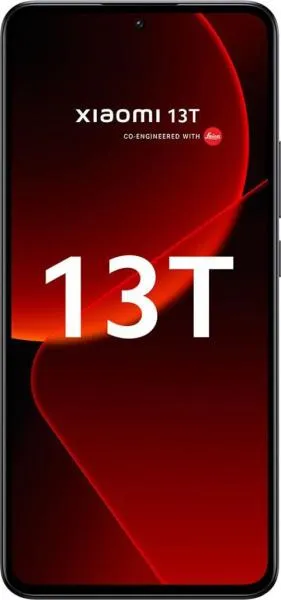
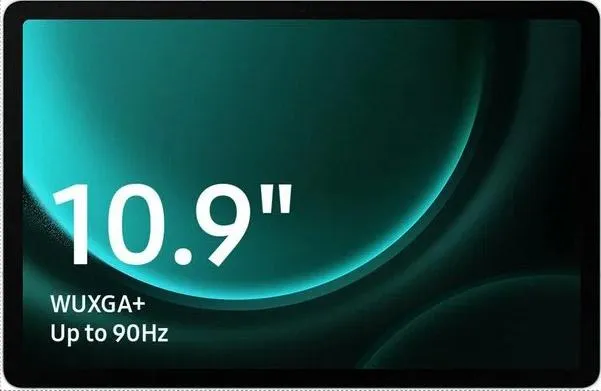
| Dimensions | 162.2 x 75.7 x 8.5 mm | 254.3 x 165.8 x 6.5 mm | The Xiaomi 13T is a standard smartphone size, while the Samsung Galaxy Tab S9 FE is a significantly larger tablet. Portability and one-handed use are major differentiators. |
| Weight | 193g | 523g | The Tab S9 FE is much heavier, impacting portability and comfort for extended use. |
| Build | Not specified | Not specified | Build quality impacts durability and premium feel. Lack of information prevents comparison. |
| Display | |||
| Size | 6.67" | 10.9" | Larger display on the Tab S9 FE offers more immersive content consumption but reduces portability. |
| Type | AMOLED, 144Hz | IPS LCD, 90Hz | The 13T's AMOLED offers superior contrast, deeper blacks, and potentially better power efficiency. Its 144Hz refresh rate provides smoother animations and scrolling compared to the Tab S9 FE's 90Hz. |
| Resolution | 1220 x 2712 | 1440 x 2304 | Higher resolution on the 13T results in sharper text and images. However, the practical difference might be minimal given the Tab S9FE's larger display size and lower pixel density. |
| Peak Brightness | 2600 nits | Not specified | The 13T's exceptionally high peak brightness ensures excellent outdoor visibility. The lack of data for the Tab S9 FE prevents comparison in this area. |
| Performance | |||
| Chipset | Mediatek Dimensity 8200 Ultra (4nm) | Exynos 1380 (5nm) | Both are capable chipsets, but the Dimensity 8200 Ultra is generally considered more powerful, potentially offering better performance in demanding tasks and gaming. |
| CPU | Octa-core (1x3.1 GHz Cortex-A78 & 3x3.0 GHz Cortex-A78 & 4x2.0 GHz Cortex-A55) | Octa-core (4x2.4 GHz Cortex-A78 & 4x2.0 GHz Cortex-A55) | The 8200 Ultra's higher clock speeds suggest better single-core performance, important for responsiveness. |
| GPU | Mali-G610 MC6 | Mali-G68 MP5 | While the G68 has more cores, architectural differences and clock speeds could make the G610 MC6 perform better in certain scenarios. More detailed benchmarks would be needed for a definitive comparison. |
| RAM | 12GB | 8GB | More RAM on the 13T allows for smoother multitasking and better handling of demanding applications. |
| Battery | |||
| Capacity | 5000 mAh | 8000 mAh | The Tab S9 FE has a significantly larger battery, likely providing much longer battery life. However, the larger display also consumes more power, so real-world usage will determine the actual difference. |
| Other | |||
| OS | Android 13 | Android 13 | Both run on the same OS version, offering similar software experiences. |
| NFC | True | False | The 13T supports NFC for contactless payments and other functionalities. The Tab S9 FE lacks NFC. |
2. Key Differences Analysis
Xiaomi 13T Advantages:
- Superior Display: AMOLED with higher refresh rate and peak brightness.
- More Powerful Performance: Faster processor and more RAM.
- More Compact: Easier to carry and use one-handed.
- NFC Functionality: Enables contactless payments.
Samsung Galaxy Tab S9 FE Advantages:
- Larger Display: More immersive for media consumption and multitasking.
- Longer Battery Life: Significantly larger battery capacity.
3. User Profiles & Recommendations
Xiaomi 13T: Ideal for users who prioritize performance, a high-quality display, portability, and features like NFC. Suitable for gaming, media consumption on the go, and everyday tasks.
Samsung Galaxy Tab S9 FE: Best suited for users who prioritize a large screen for media consumption, productivity tasks, and extended battery life. Suitable for watching movies, reading, note-taking, and browsing.
4. Decision Framework
Key Questions:
- What is your primary use case? (Media consumption, gaming, productivity, communication)
- How important is portability?
- What is your budget? (Both are mid-range, but actual prices may vary)
My Choice: Xiaomi 13T
While the Samsung Galaxy Tab S9 FE offers a compelling large screen experience and long battery life, I would choose the Xiaomi 13T. Its superior display quality, stronger performance, more compact size, and inclusion of NFC better suit my needs for a daily driver. I prioritize a smooth and responsive user experience, portability, and the convenience of NFC for mobile payments. The Tab S9 FE, while excellent for media consumption, feels less versatile for everyday use. The lack of peak brightness information is concerning, especially considering outdoor usage. Finally, the significant difference in weight makes the 13T much more practical for carrying throughout the day.
