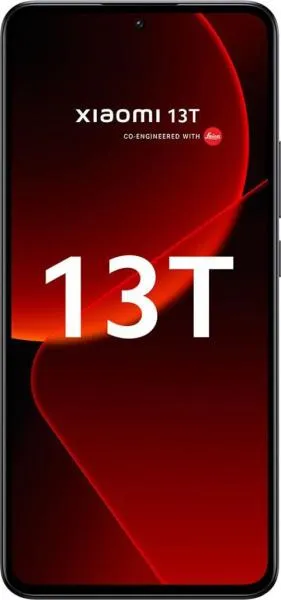

1. Specifications Comparison
| Feature | Xiaomi 13T | Realme 12+ | Practical Impact |
|---|---|---|---|
| Design | |||
| Dimensions (mm) | 162.2 x 75.7 x 8.5 | 163 x 75.5 x 7.9 | Virtually identical in hand feel. Realme 12+ slightly thinner. |
| Weight (g) | 193 | 190 | Negligible weight difference in practical use. |
| Build Materials | Not specified | Not specified | Cannot compare build quality and durability. |
| Display | |||
| Size (inches) | 6.67 | 6.67 | Same screen size. |
| Type | AMOLED, 68B colors, 144Hz, Dolby Vision, HDR10+ | AMOLED, 120Hz, HDR10+ | Xiaomi offers higher refresh rate (smoother animations/scrolling) and wider color gamut (more vibrant visuals) with Dolby Vision support for enhanced HDR content. |
| Resolution | 1220 x 2712 | 1080 x 2400 | Xiaomi boasts significantly sharper display (446 ppi vs 395 ppi), noticeably crisper text and images. |
| Peak Brightness (nits) | 2600 | 2000 | Xiaomi's display is considerably brighter, improving outdoor visibility. |
| Performance | |||
| Chipset | Mediatek Dimensity 8200 Ultra (4 nm) | Mediatek Dimensity 7050 (6 nm) | Xiaomi's 8200 Ultra is more powerful, enabling smoother multitasking, faster app loading, and better gaming performance. The 4nm process suggests better power efficiency. |
| CPU | Octa-core (1x3.1 GHz Cortex-A78 & 3x3.0 GHz Cortex-A78 & 4x2.0 GHz Cortex-A55) | Octa-core (2x2.6 GHz Cortex-A78 & 6x2.0 GHz Cortex-A55) | Xiaomi's CPU configuration suggests superior performance, particularly in demanding tasks. |
| GPU | Mali-G610 MC6 | Mali-G68 MC4 | While architectural differences exist, the 8200 Ultra's overall performance advantage suggests a stronger GPU in the Xiaomi, leading to better gaming and graphics-intensive tasks. |
| RAM | 12GB | 8GB | Xiaomi provides more RAM, enhancing multitasking capabilities and reducing app closures in the background. |
| Storage | 256GB | 256GB | Same storage capacity. |
| Camera | |||
| Rear Camera | Not specified | Not specified | Camera performance cannot be compared without detailed sensor and lens specifications. |
| Video Capabilities | 4K@30fps (HDR, EIS), 1080p@30/60/120fps (HDR, EIS) | 4K@30fps (EIS), 1080p@30/60fps (EIS) | Xiaomi offers HDR video recording at various resolutions and a higher frame rate slow-motion option (120fps) for smoother slow-motion videos. |
| Battery | |||
| Capacity (mAh) | 5000 | 5000 | Same battery capacity. Real-world battery life depends on optimization and usage patterns. |
2. Key Differences Analysis
Xiaomi 13T Advantages:
- Superior Display: Higher resolution, refresh rate, brightness, and wider color gamut.
- More Powerful Performance: Faster processor, more RAM.
- Enhanced Video Recording: HDR video and 120fps slow-motion.
Realme 12+ Advantages:
- Slightly Thinner: Negligible difference in practical use.
- More Recent Android Version: May offer some newer features, although long-term OS support is crucial.
3. User Profiles & Recommendations
Xiaomi 13T: Ideal for users who prioritize display quality, performance, and smooth gaming/media consumption. Suitable for power users, mobile gamers, and content creators.
Realme 12+: Suitable for users seeking a more budget-friendly option who prioritize a recent Android version. Adequate for general use, social media, and light gaming.
4. Decision Framework
Key Questions for Buyers:
- What is your budget? Both are mid-range but price differences might exist.
- What are your primary use cases? Gaming, media consumption, general use?
- How important is display quality and performance?
Scenario-Based Recommendations:
- Gamer: Xiaomi 13T for its superior performance and display.
- Casual User: Realme 12+ might suffice if budget is a constraint.
- Content Creator: Xiaomi 13T for the better display and video recording capabilities.
My Choice: Xiaomi 13T
The Xiaomi 13T offers a significantly better display and notably improved performance thanks to the Dimensity 8200 Ultra and higher RAM. While the Realme 12+ boasts a newer Android version out-of-the-box, the performance and display advantages of the Xiaomi 13T are more compelling for long-term user experience. The slightly higher price, if any, for the Xiaomi 13T is justified by the substantial upgrades in crucial areas. The superior video recording capabilities further solidify the Xiaomi 13T as the better overall device for my needs.
