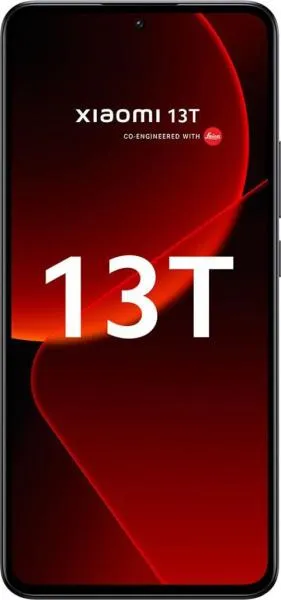
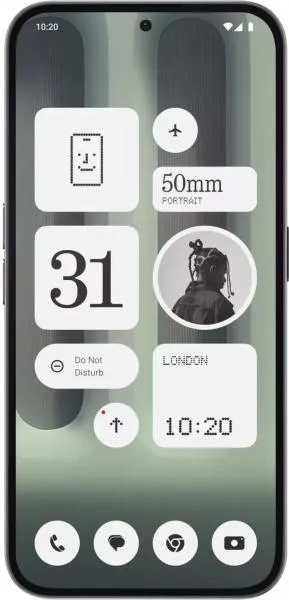
1. Specifications Comparison
| Feature | Xiaomi 13T | Nothing Phone (2a) Plus | Practical Impact |
|---|---|---|---|
| Design | |||
| Dimensions (mm) | 162.2 x 75.7 x 8.5 | 161.7 x 76.3 x 8.5 | Virtually identical in size and thickness. |
| Weight (g) | 193 | 190 | Negligible weight difference; both feel substantial in hand. |
| Colors | Black, Meadow Green, Alpine Blue | Black, Grey | Xiaomi offers more color options. |
| Display | |||
| Size (inches) | 6.67 | 6.7 | Negligible size difference. |
| Type | AMOLED, 68B colors | AMOLED, 1B colors | Xiaomi's 68B color display offers significantly more vibrant and accurate colors, noticeable in professional photo/video editing and for discerning users. |
| Resolution | 1220 x 2712 | 1080 x 2412 | Xiaomi offers a sharper display (446 ppi vs 395 ppi), resulting in crisper text and images. |
| Refresh Rate (Hz) | 144 | 120 | Xiaomi's higher refresh rate delivers smoother animations and scrolling, beneficial for gaming and fast-paced content. |
| Peak Brightness (nits) | 2600 | 1300 | Xiaomi's significantly higher peak brightness ensures better visibility in direct sunlight. |
| Performance | |||
| Chipset | Mediatek Dimensity 8200 Ultra (4 nm) | Mediatek Dimensity 7350 Pro (4 nm) | 8200 Ultra is a more powerful chipset, resulting in smoother multitasking, faster app loading, and better gaming performance. |
| CPU | Octa-core (1x3.1 GHz Cortex-A78 & 3x3.0 GHz Cortex-A78 & 4x2.0 GHz Cortex-A55) | Octa-core (2x3.0 GHz Cortex-A715 & 6x 2.0 GHz Cortex-A510) | Xiaomi's CPU configuration provides a performance advantage, especially in demanding tasks. |
| GPU | Mali-G610 MC6 | Mali-G610 MC4 | Xiaomi's GPU offers better graphics performance for gaming. |
| RAM | 12GB | 12GB | Both phones offer ample RAM for smooth multitasking. |
| Storage | 256GB | 256GB | Both phones offer the same storage capacity. |
| Battery | |||
| Capacity (mAh) | 5000 | 5000 | Identical battery capacity; real-world battery life will depend on usage and software optimization. |
| Camera | |||
| Video Capabilities | 4K@30fps (HDR, EIS), 1080p@ various fps (HDR, EIS) | 4K@30fps (EIS), 1080p@ various fps (EIS) | Xiaomi offers HDR video recording at multiple resolutions and framerates, resulting in better dynamic range in videos. Specific sensor details are missing for detailed comparison. |
| Other | |||
| OS | Android 13 | Android 14 | Nothing Phone launches with a newer Android version, offering potential software features and longer update support. |
| Sensors | Accelerometer, gyro, proximity, compass, Fingerprint (under display), color spectrum | Accelerometer, gyro, proximity, compass, Fingerprint (under display) | Xiaomi has a color spectrum sensor for potentially more accurate white balance in photos, but its real-world impact may be minimal. |
2. Key Differences Analysis
Xiaomi 13T Advantages:
- Superior Display: Brighter, sharper, smoother, and with more vibrant colors.
- Greater Performance: More powerful chipset and GPU for smoother overall experience and better gaming.
- HDR Video Recording: Enhanced dynamic range in videos.
Nothing Phone (2a) Plus Advantages:
- Newer OS: Starts with Android 14, potentially offering longer software support and newer features.
- Potentially Lower Price: While both are mid-range, the Nothing Phone might be slightly cheaper. This is speculative as exact pricing is not provided.
3. User Profiles & Recommendations
Xiaomi 13T: Users who prioritize display quality, performance (especially gaming), and vibrant content consumption (videos, photos).
Nothing Phone (2a) Plus: Users who prioritize having the latest Android version and potentially a slightly lower price point. Suitable for general use and less demanding tasks.
4. Decision Framework
Key Questions for Buyers:
- How important is display quality? If vibrant colors, high brightness, and smoothness are crucial, the Xiaomi 13T excels.
- What is your typical usage? For demanding tasks and gaming, the Xiaomi 13T is better equipped. For general use, the Nothing Phone is sufficient.
- How much do you value the latest software? If having the newest Android version and longer update support is a priority, the Nothing Phone is preferable.
My Choice: Xiaomi 13T
While the Nothing Phone (2a) Plus offers the latest Android version, the Xiaomi 13T's significantly superior display, performance advantages, and HDR video recording capability make it the more compelling choice for me. I prioritize a smooth and visually engaging user experience, and the 13T delivers that more comprehensively. The difference in refresh rate and peak brightness would make a noticeable impact in daily use, especially outdoors. The more powerful chipset ensures future-proofing for demanding applications and games. While Android 14 is appealing, the performance and display benefits of the Xiaomi 13T outweigh the software advantage for my personal needs.
