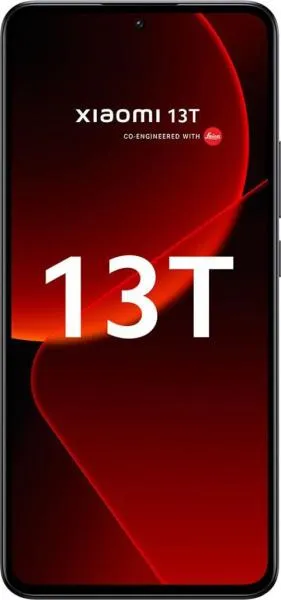
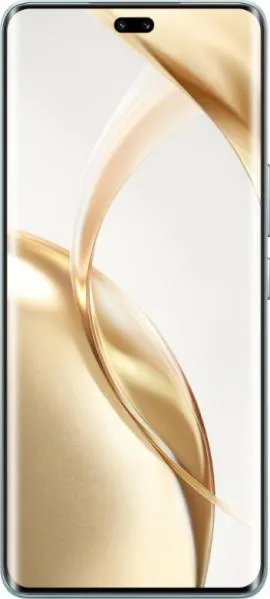
1. Specifications Comparison
| Feature | Xiaomi 13T | Honor 200 Pro | Practical Impact |
|---|---|---|---|
| Design | |||
| Dimensions (mm) | 162.2 x 75.7 x 8.5 | 163.3 x 75.2 x 8.2 | Honor is slightly taller and narrower, but minimally thinner. Negligible difference in hand feel. |
| Weight (g) | 193 | 199 | 6g difference, practically unnoticeable in daily use. |
| Display | |||
| Size (inches) | 6.67 | 6.78 | Honor offers a slightly larger display, providing marginally more screen real estate. |
| Type | AMOLED, 68B colors | OLED, 1B colors | While both are excellent display technologies, the Honor's 1B color depth potentially offers smoother color gradients, though discernible only to trained eyes in specific content. Xiaomi's 68B is already excellent for the vast majority of users. |
| Refresh Rate (Hz) | 144 | 120 | Xiaomi's higher refresh rate results in noticeably smoother animations and scrolling, especially beneficial for gaming and fast-paced content. |
| Peak Brightness (nits) | 2600 | 4000 | Honor's significantly higher peak brightness ensures better visibility in direct sunlight. |
| Resolution | 1220x2712 | 1224x2700 | Virtually identical resolutions, resulting in similar sharpness. |
| Performance | |||
| Chipset | Mediatek Dimensity 8200 Ultra | Qualcomm Snapdragon 8s Gen 3 | Snapdragon 8s Gen 3 generally offers superior performance, particularly in demanding tasks and gaming, based on benchmark comparisons. |
| CPU | Octa-core (1x3.1 GHz Cortex-A78 & 3x3.0 GHz Cortex-A78 & 4x2.0 GHz Cortex-A55) | Octa-core (1x3.0 GHz Cortex-X4 & 4x2.8 GHz Cortex-A720 & 3x2.0 GHz Cortex-A520) | The architectural differences favor the Snapdragon 8s Gen 3 for sustained performance. |
| GPU | Mali-G610 MC6 | Adreno 735 | Adreno 735 generally provides better gaming and graphics performance compared to the Mali-G610 MC6. |
| RAM (GB) | 12 | 12 | Equal RAM capacity should provide similar multitasking capabilities. |
| Storage (GB) | 256 | 512 | Honor offers double the storage, crucial for users who store large files like photos and videos. |
| Battery | |||
| Capacity (mAh) | 5000 | 5200 | Honor has a slightly larger battery, potentially translating to slightly longer battery life. Real-world usage will vary. |
| Camera | |||
| Video Capabilities | 4K@30fps (HDR, EIS), 1080p variations | 4K@30fps (OIS, EIS), 1080p variations | Both offer similar video resolution and frame rates. However, Honor features OIS (Optical Image Stabilization) potentially resulting in smoother and more stable video footage compared to Xiaomi's EIS (Electronic Image Stabilization). Missing detailed camera specs limit a comprehensive comparison. |
2. Key Differences Analysis
Xiaomi 13T Advantages:
- Higher Refresh Rate Display: Smoother user experience, especially noticeable in gaming and scrolling.
- Potentially Lower Price: While not specified, historically Xiaomi phones offer competitive pricing.
Honor 200 Pro Advantages:
- More Powerful Processor: Better performance for demanding tasks and gaming.
- Larger Storage: More space for apps, photos, and videos.
- Brighter Display: Enhanced outdoor visibility.
- Optical Image Stabilization: Potentially better video quality.
- Newer Android Version: Starts with a more recent OS and potentially longer software support.
Trade-offs:
- Xiaomi: Higher refresh rate but potentially less powerful processor.
- Honor: More powerful processor but lower refresh rate display. Higher price might be a factor depending on regional availability.
3. User Profiles & Recommendations
Xiaomi 13T: Suited for users who prioritize a smooth display experience for everyday tasks, social media, and casual gaming, and are budget-conscious.
Honor 200 Pro: Ideal for users who demand top-tier performance for demanding games, multitasking, and content creation, and need ample storage. Also preferable for users who prioritize bright outdoor visibility and potentially better video stability.
4. Decision Framework
Key Questions for Buyers:
- What is your budget? The Honor, with its superior specs, might come at a premium price.
- What are your primary use cases? Gamers and power users would lean towards the Honor. Casual users might prefer the Xiaomi's smoother display.
- Do you prioritize display smoothness or raw processing power? This is a subjective preference based on individual usage patterns.
Scenario-Based Recommendations:
- Heavy gamer: Honor 200 Pro
- Casual user on a budget: Xiaomi 13T
- Photographer/Videographer: Honor 200 Pro (due to OIS)
My Choice: Honor 200 Pro
While the Xiaomi 13T offers a compelling 144Hz display, I prioritize long-term performance and overall capabilities. The Honor 200 Pro's Snapdragon 8s Gen 3, larger storage, brighter display with improved outdoor visibility, OIS for video stabilization, and the newer Android OS make it a more compelling overall package for my needs. The slightly larger battery is a welcome addition. I am willing to compromise on the slightly lower refresh rate for the significant gains in processing power and other features. The double storage is a significant advantage for my usage. Even if the Honor 200 Pro comes at a slightly higher price, I believe the superior performance and features justify the investment in the long run.
