1. Specifications Comparison
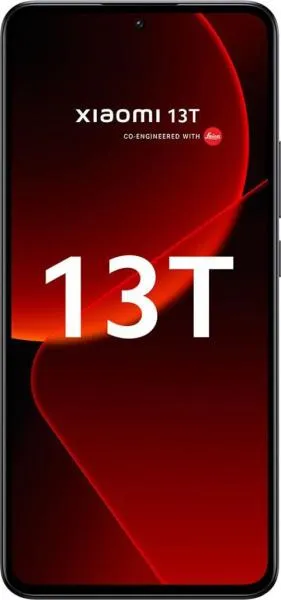
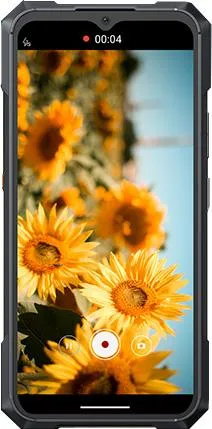
| Feature | Xiaomi 13T | Cubot KingKong X | Practical Impact |
|---|---|---|---|
| Design | |||
| Dimensions (mm) | 162.2 x 75.7 x 8.5 | 170.9 x 82.2 x 18.7 | The Xiaomi 13T is significantly smaller and thinner, making it more pocketable and easier to handle. The Cubot is much larger and thicker, likely more rugged. |
| Weight (g) | 193 | 388 | The Cubot is substantially heavier, potentially tiring for extended use. The Xiaomi is lighter and more comfortable for one-handed operation. |
| Build Materials | Not specified | Not specified | Build material impacts durability and premium feel. This information is missing for both phones. |
| Display | |||
| Display Type | AMOLED, 68B colors | IPS LCD | The Xiaomi's AMOLED offers superior contrast, deeper blacks, and more vibrant colors. The Cubot's IPS LCD is generally less power-efficient and has less vibrant colors. |
| Display Size (inches) | 6.67 | 6.58 | Negligible difference in screen real estate. |
| Resolution | 1220 x 2712 | 1080 x 2408 | The Xiaomi has a sharper display with higher pixel density (446 ppi vs 401 ppi), resulting in crisper text and images. |
| Refresh Rate (Hz) | 144 | 120 | The Xiaomi offers a slightly smoother scrolling and gaming experience with its higher refresh rate. However, the difference between 120Hz and 144Hz is often subtle. |
| Peak Brightness (nits) | 2600 | Not specified | The Xiaomi's exceptionally high peak brightness ensures excellent outdoor visibility. The lack of this specification for the Cubot makes comparison impossible. |
| Performance | |||
| Chipset | Mediatek Dimensity 8200 Ultra (4 nm) | Mediatek Dimensity 7050 (6 nm) | The Dimensity 8200 Ultra in the Xiaomi is a more powerful and efficient chip, likely resulting in better performance in demanding tasks and gaming. |
| CPU | Octa-core (1x3.1 GHz Cortex-A78 & 3x3.0 GHz Cortex-A78 & 4x2.0 GHz Cortex-A55) | Octa-core (2x2.6 GHz Cortex-A78 & 6x2.0 GHz Cortex-A55) | The Xiaomi's CPU configuration suggests a performance advantage, especially in single-core performance. |
| GPU | Mali-G610 MC6 | Mali-G68 MC4 | While the Cubot uses a newer GPU architecture, the Xiaomi's overall performance is likely superior due to the more powerful chipset. Detailed GPU comparisons are needed for a definitive conclusion. |
| RAM | 12GB | 16GB | The Cubot offers more RAM, enabling better multitasking and smoother performance with numerous open apps. |
| Storage | 256GB | 512GB | The Cubot provides double the storage, allowing users to store more files, apps, and media. |
| Battery | |||
| Capacity (mAh) | 5000 | 10200 | The Cubot has a significantly larger battery capacity, potentially offering much longer battery life. |
| Camera | |||
| Video Capabilities | 4K@30fps (HDR, EIS), 1080p various fps (HDR, EIS) | 4K@30fps, 1080p@30fps | The Xiaomi offers more video recording options and features Electronic Image Stabilization (EIS) for smoother footage, also supporting HDR video recording at multiple resolutions and framerates. Detailed camera sensor specifications are missing for both. |
2. Key Differences Analysis
Xiaomi 13T Advantages:
- Superior Display: Brighter, sharper AMOLED with higher refresh rate and HDR support.
- More Powerful Chipset: Faster and more efficient processor for better overall performance.
- Sleeker Design: Significantly thinner and lighter, more comfortable for everyday use.
- More advanced video recording capabilities: EIS and HDR support at multiple resolutions and framerates.
Cubot KingKong X Advantages:
- Much Larger Battery: Potentially significantly longer battery life.
- More RAM and Storage: Better multitasking and ample space for files.
- Rugged Design (Inferred): The size and weight suggest a ruggedized design, although this isn't explicitly stated.
3. User Profiles & Recommendations
Xiaomi 13T: Users who prioritize performance, a high-quality display, a sleek design, and advanced camera features. Ideal for gaming, media consumption, and everyday tasks.
Cubot KingKong X: Users who prioritize extremely long battery life and ample storage. Potentially suitable for outdoor enthusiasts or those in areas with limited charging access, assuming a rugged design.
4. Decision Framework
Key Questions for Buyers:
- What is your budget? Both are mid-range, but specific pricing is needed for comparison.
- What are your primary use cases? (Gaming, media consumption, outdoor activities, etc.)
- Which features are most important to you? (Performance, battery life, display quality, camera)
Scenario-Based Recommendations:
- Heavy gamer: Xiaomi 13T for its superior performance and display.
- Outdoor enthusiast: Cubot KingKong X, assuming its ruggedness, for its large battery.
- Casual user: Either phone could be suitable depending on individual priorities regarding battery life vs. performance and display quality.
My Choice: Xiaomi 13T
While the Cubot KingKong X boasts a massive battery and more RAM/storage, the Xiaomi 13T's superior display, significantly more powerful processor, and sleeker design are more compelling to me. I value a smooth and responsive user experience, a high-quality visual experience, and a phone that is comfortable to hold and carry. The Xiaomi 13T delivers in these areas. The lack of specific information about the Cubot's build and durability also makes it a less certain choice. The large battery is tempting, but I'd prioritize the overall quality and performance of the Xiaomi 13T. I am also assuming, perhaps incorrectly, that the significantly higher weight of the Cubot would negatively impact the daily usability of the phone.
