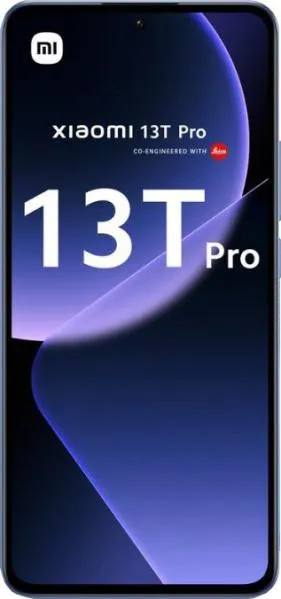
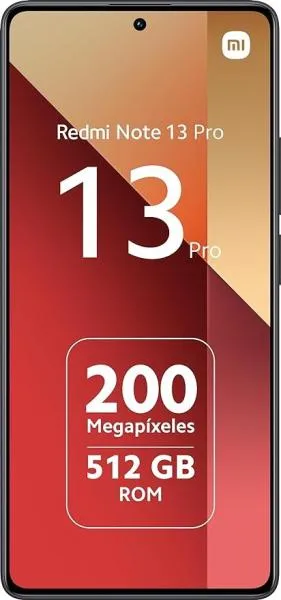
1. Specifications Comparison
| Feature | Xiaomi 13T Pro | Xiaomi Redmi Note 13 Pro 4G | Practical Impact |
|---|---|---|---|
| Design | |||
| Dimensions | 162.2 x 75.7 x 8.5 mm | 161.1 x 75 x 8 mm | Virtually identical in size and feel. |
| Weight | 200g | 188g | 13T Pro is slightly heavier, likely due to more premium materials or a larger camera module. |
| Display | |||
| Size | 6.67" | 6.67" | Same screen size. |
| Type | AMOLED, 68B colors, 144Hz | AMOLED, 1B colors, 120Hz | 13T Pro offers significantly smoother scrolling and animations with its higher refresh rate and vastly superior color accuracy and range due to the 68B color support. |
| Resolution | 1220 x 2712 (1.5K) | 1080 x 2400 (FHD+) | 13T Pro boasts a sharper display with more detail. |
| Peak Brightness | 2600 nits | 1300 nits | 13T Pro will be much more visible in direct sunlight. |
| Performance | |||
| Chipset | Mediatek Dimensity 9200+ (4 nm) | Mediatek Helio G99 Ultra | 9200+ offers significantly faster CPU and GPU performance, leading to smoother multitasking, faster app loading, and better gaming capabilities. |
| CPU | Octa-core (1x3.35 GHz X3 & 3x3.0 GHz A715 & 4x2.0 GHz A510) | Octa-core (2x2.2 GHz A76 & 6x2.0 GHz A55) | 13T Pro's more modern and powerful CPU architecture translates to a substantial performance advantage. |
| GPU | Immortalis-G715 MC11 | Mali-G57 MC2 | 13T Pro provides a vastly superior gaming and graphics rendering experience. |
| RAM/Storage | 12GB/512GB, 16GB/1GB | 8GB/256GB, 12GB/512GB | Both offer ample storage options, but the 13T Pro's potential 16GB RAM option allows for more intensive multitasking. |
| Camera | |||
| Video Capabilities | 8K@24fps, 4K@60fps, 1080p@240fps | 1080p@60fps | 13T Pro vastly outperforms in video recording capabilities with higher resolutions and frame rates. Information regarding specific camera sensors and lens details is missing for proper comparison. |
| Battery | |||
| Capacity | 5000 mAh | 5000 mAh | Same battery capacity, but real-world battery life will depend on software optimization and display power consumption. |
2. Key Differences Analysis
Xiaomi 13T Pro Advantages:
- Significantly more powerful: The Dimensity 9200+ vastly outperforms the Helio G99 in all aspects.
- Much better display: Higher resolution, refresh rate, color accuracy, and peak brightness.
- Superior video recording: 8K and 4K capabilities compared to 1080p on the Redmi Note 13 Pro.
Xiaomi Redmi Note 13 Pro 4G Advantages:
- Lighter: Slightly less weight might be preferable for some users.
- Potentially Lower Price: Though both are mid-range, the Redmi Note 13 Pro 4G likely sits at a lower price point within that range.
Trade-offs:
- The Redmi Note 13 Pro 4G sacrifices performance and display quality for potential cost savings.
3. User Profiles & Recommendations
Xiaomi 13T Pro: Users who prioritize performance, a premium display, and advanced camera features for gaming, content creation, and demanding tasks.
Xiaomi Redmi Note 13 Pro 4G: Users on a tighter budget who prioritize basic functionality, social media, and light tasks over top-tier performance and display quality. Suitable for casual users.
4. Decision Framework
Key Questions:
- What is your budget? The 13T Pro commands a higher price for its superior features.
- What are your primary use cases? Demanding tasks, gaming, and content creation benefit from the 13T Pro's power.
- How important is display quality? The 13T Pro's superior display enhances media consumption and overall user experience.
Scenario-based recommendations:
- Gamer: Xiaomi 13T Pro
- Casual User: Redmi Note 13 Pro 4G
- Photographer/Videographer: Xiaomi 13T Pro
My Choice: Xiaomi 13T Pro
The Xiaomi 13T Pro is the clear winner for me. While potentially more expensive, the significant leap in performance, the stunning display, and the superior video recording capabilities justify the price difference. The Dimensity 9200+ provides future-proofing for demanding applications and games, and the 144Hz display combined with the vibrant color range offers a dramatically better user experience. The Redmi Note 13 Pro 4G feels like a compromise in too many areas, especially considering that both are positioned in the mid-range market. The slight weight difference is negligible compared to the substantial gains offered by the 13T Pro.
