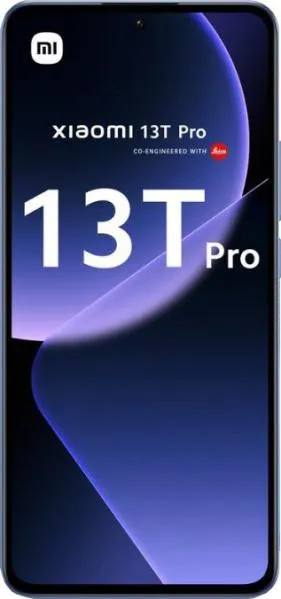
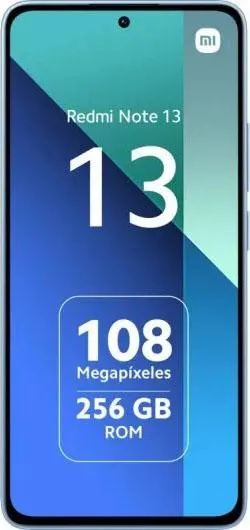
1. Specifications Comparison
| Feature | Xiaomi 13T Pro | Xiaomi Redmi Note 13 4G | Practical Impact |
|---|---|---|---|
| Design | |||
| Dimensions | 162.2 x 75.7 x 8.5 mm | 162.3 x 75.6 x 8 mm | Virtually identical in size and hand feel. |
| Weight | 200g | 188.5g | 13T Pro is slightly heavier, but the difference is negligible. |
| Build Materials | Not specified | Not specified | Unable to compare build quality and durability. |
| Display | |||
| Size | 6.67" | 6.67" | Same screen size. |
| Type | AMOLED, 144Hz, Dolby Vision, HDR10+ | AMOLED, 120Hz | 13T Pro offers a smoother experience with its higher refresh rate and supports HDR content with richer colors and contrast thanks to Dolby Vision and HDR10+. |
| Resolution | 1220 x 2712 | 1080 x 2400 | 13T Pro has a significantly sharper display (446 ppi vs 395 ppi). |
| Peak Brightness | 2600 nits | 1800 nits | 13T Pro will be much more readable in direct sunlight. |
| Performance | |||
| Chipset | Mediatek Dimensity 9200+ (4nm) | Qualcomm Snapdragon 685 (6nm) | The 9200+ is significantly more powerful, leading to much faster app loading, smoother multitasking, and better gaming performance. |
| CPU | Octa-core (1x3.35 GHz Cortex-X3 & 3x3.0 GHz Cortex-A715 & 4x2.0 GHz Cortex-A510) | Octa-core (4x2.8 GHz Cortex-A73 & 4x1.9 GHz Cortex-A53) | 13T Pro's CPU architecture is more modern and powerful. |
| GPU | Immortalis-G715 MC11 | Adreno 610 | The Immortalis G715 offers a substantial leap in graphics performance for demanding games and tasks. |
| RAM/Storage | 512GB/12GB, 1000GB/16GB | 128GB/8GB, 256GB/8GB | 13T Pro provides significantly more RAM and storage in its base configuration, enabling smoother multitasking and ample space for apps and files. |
| Camera | |||
| Rear Camera | Not specified in detail | Not specified in detail | Insufficient information for detailed comparison. However, the provided video capabilities indicate that the 13T Pro offers significantly more advanced video recording options. |
| Video | 8K@24fps, 4K@60fps, 1080p@240fps | 1080p@30fps | 13T Pro allows for much higher resolution and frame rate video recording, including slow-motion capture. |
| Battery | |||
| Capacity | 5000 mAh | 5000 mAh | Same battery capacity, but real-world battery life will depend on software optimization and hardware efficiency. |
2. Key Differences Analysis
Xiaomi 13T Pro Advantages:
- Significantly more powerful: The Dimensity 9200+ chipset and superior GPU provide a massive performance advantage for demanding tasks and gaming.
- Smoother and sharper display: The 144Hz refresh rate and higher resolution make for a more responsive and visually appealing experience. HDR support further enhances visual quality.
- More versatile video recording: Capable of recording 8K and 4K at higher frame rates.
- More RAM and Storage: Offers configurations with much larger RAM and internal storage.
Xiaomi Redmi Note 13 4G Advantages:
- Potentially lower price: As a more budget-oriented device, it is likely to be cheaper.
- Slightly lighter: Although the difference is minimal.
Trade-offs:
- The Redmi Note 13 4G sacrifices performance, display quality, and camera features for a potentially lower price point.
3. User Profiles & Recommendations
Xiaomi 13T Pro: Ideal for users who prioritize performance, a high-quality display, and advanced camera features. Suitable for demanding tasks like gaming, video editing, and multitasking.
Xiaomi Redmi Note 13 4G: Best suited for users on a tighter budget who primarily use their phones for basic tasks like browsing, social media, and light gaming.
4. Decision Framework
Key Questions:
- What is your budget? The 13T Pro is expected to be more expensive.
- What are your primary phone usage patterns? For basic tasks, the Redmi Note 13 may suffice. For demanding tasks, the 13T Pro is essential.
- How important is display quality and smoothness? The 13T Pro's superior display is a major differentiator.
My Choice: Xiaomi 13T Pro
Reasoning: The Xiaomi 13T Pro offers a significantly better user experience across the board thanks to its superior processor, display, and more advanced features. While it will likely be more expensive, the performance and feature upgrades justify the higher price for me. I value a smooth and responsive experience, a bright and sharp display, and the capability to handle demanding tasks and games without compromise. The Redmi Note 13 4G, while potentially more affordable, makes too many compromises in key areas that would negatively impact my daily usage.
