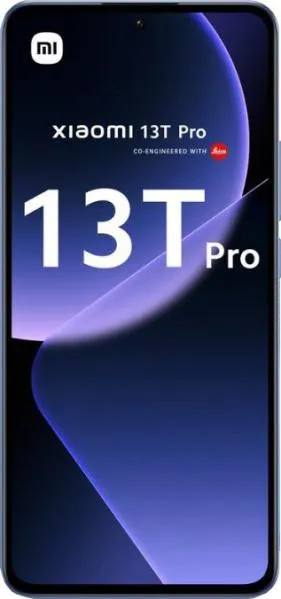
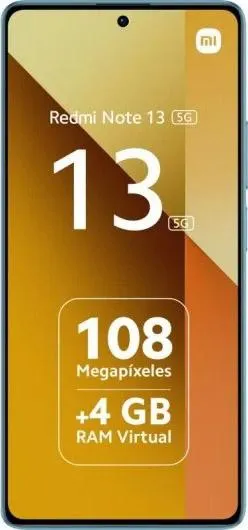
1. Specifications Comparison
| Feature | Xiaomi 13T Pro | Xiaomi Redmi Note 13 | Practical Impact |
|---|---|---|---|
| Design | |||
| Dimensions (mm) | 162.2 x 75.7 x 8.5 | 161.1 x 75 x 7.6 | 13T Pro slightly taller and thicker. Negligible difference in daily use. |
| Weight (g) | 200 | 174.5 | Redmi Note 13 noticeably lighter, reducing hand fatigue during extended use. |
| Fingerprint Sensor | Under display | Side-mounted | Preference-based. Under-display feels more modern, side-mounted often faster and more reliable. |
| Display | |||
| Size (inches) | 6.67 | 6.67 | Identical screen sizes. |
| Type | AMOLED, 68B colors, 144Hz | AMOLED, 1B colors*, 120Hz | 13T Pro offers significantly smoother scrolling and animations due to the higher refresh rate and vastly superior color accuracy and range due to the 68B color depth. The asterisk next to "1B colors" on the Redmi Note 13 suggests potential interpolation and not true 10-bit color. |
| Resolution | 1220 x 2712 | 1080 x 2400 | 13T Pro has a sharper display with more detail due to the higher resolution. |
| Peak Brightness (nits) | 2600 | 1000 | 13T Pro will be significantly more visible in direct sunlight. |
| Performance | |||
| Chipset | Mediatek Dimensity 9200+ (4 nm) | Mediatek Dimensity 6080 (6 nm) | 9200+ is a flagship-level processor, offering significantly faster performance in demanding tasks, gaming, and multitasking compared to the mid-range 6080. |
| CPU | Octa-core (1x3.35 GHz Cortex-X3 & 3x3.0 GHz Cortex-A715 & 4x2.0 GHz Cortex-A510) | Octa-core (2x2.4 GHz Cortex-A76 & 6x2.0 GHz Cortex-A55) | The 13T Pro's CPU architecture is more powerful and efficient. |
| GPU | Immortalis-G715 MC11 | Mali-G57 MC2 | 13T Pro's GPU offers a substantial leap in graphics performance, enabling higher frame rates and better visual quality in games. |
| RAM/Storage | 512GB/12GB, 1000GB/16GB | 256GB/8GB, 256GB/12GB | 13T Pro offers more RAM and storage in its top configuration, allowing for smoother multitasking and more space for apps and files. |
| Camera | |||
| Video Capabilities | 8K@24fps, 4K@60fps, ... | 1080p@30fps | 13T Pro boasts significantly better video recording capabilities, including higher resolution (up to 8K) and frame rates (up to 240fps at 1080p). Detailed camera sensor specifications are missing for a thorough comparison. |
| Battery | |||
| Capacity (mAh) | 5000 | 5000 | Identical battery capacities. Real-world battery life will depend on usage and optimization, but the 13T Pro's more efficient 4nm processor might provide slightly better longevity. |
2. Key Differences Analysis
Xiaomi 13T Pro Advantages:
- Significantly more powerful: Superior chipset, CPU, and GPU translate to a vastly improved user experience in demanding tasks, gaming, and overall responsiveness.
- Much better display: Higher resolution, refresh rate, peak brightness, and color depth result in a sharper, smoother, and more vibrant visual experience.
- Superior video recording: Wider range of resolutions and frame rates for higher quality video content.
Xiaomi Redmi Note 13 Advantages:
- Lighter and slightly thinner: More comfortable for extended use.
- Lower price: Offers good value for its price range.
3. User Profiles & Recommendations
Xiaomi 13T Pro: Users who prioritize performance, a premium display, and advanced features like high-quality video recording. Suitable for gamers, power users, and content creators.
Xiaomi Redmi Note 13: Budget-conscious users who prioritize basic functionality, a large screen, and long battery life. Suitable for casual users primarily focused on communication, social media, and web browsing.
4. Decision Framework
Key Questions:
- What is your budget? The Redmi Note 13 is significantly cheaper.
- What are your primary use cases? Demanding tasks and gaming benefit from the 13T Pro's power.
- How important is display quality? The 13T Pro's display is a major advantage.
My Choice: Xiaomi 13T Pro
While the Redmi Note 13 offers excellent value for its price, the Xiaomi 13T Pro is the clear winner for me. The significantly superior performance, stunning display, and advanced video capabilities justify the higher price. The difference in day-to-day usage would be substantial, providing a smoother, faster, and more visually engaging experience. The slightly heavier weight is a minor trade-off for the significant performance gains. As someone who values a smooth and responsive user experience, and appreciates a high-quality display, the 13T Pro aligns better with my needs.
