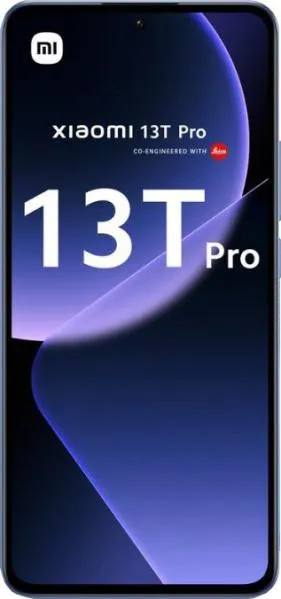
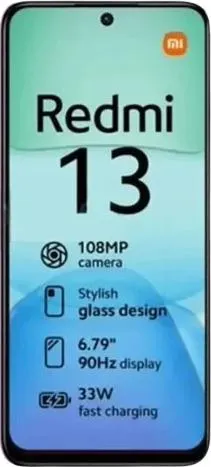
1. Specifications Comparison
| Feature | Xiaomi 13T Pro | Xiaomi Redmi 13 | Practical Impact |
|---|---|---|---|
| Design | |||
| Dimensions (mm) | 162.2 x 75.7 x 8.5 | 168.6 x 76.3 x 8.3 | 13T Pro is slightly smaller and thinner. Redmi 13 is slightly lighter but larger overall. |
| Weight (g) | 200 | 205 | Negligible difference in weight for most users. |
| Fingerprint Sensor | Under display | Side-mounted | Preference-based, under-display often perceived as more premium. |
| Display | |||
| Display Type | AMOLED, 144Hz | IPS LCD, 90Hz | 13T Pro offers significantly better contrast, color accuracy, and smoother animations due to AMOLED and higher refresh rate. |
| Resolution | 1220 x 2712 | 1080 x 2460 | 13T Pro has a sharper display. |
| Peak Brightness (nits) | 2600 | 550 (HBM) | 13T Pro will be significantly more visible in direct sunlight. |
| Performance | |||
| Chipset | Mediatek Dimensity 9200+ (4nm) | Mediatek Helio G91 Ultra (12nm) | 13T Pro offers significantly faster processing speeds, better multitasking, and superior gaming performance. 4nm process offers better power efficiency. |
| CPU | Octa-core (1x3.35 GHz Cortex-X3 & 3x3.0 GHz Cortex-A715 & 4x2.0 GHz Cortex-A510) | Octa-core (2x2.0 GHz Cortex-A75 & 6x1.8 GHz Cortex-A55) | 13T Pro's CPU is much more powerful, leading to snappier performance in demanding tasks. |
| GPU | Immortalis-G715 MC11 | Mali-G52 MC2 | 13T Pro's GPU significantly outperforms the Redmi 13, resulting in much better gaming and graphics-intensive application performance. |
| RAM/Storage | 512GB/12GB, 1000GB/16GB | 256GB/8GB | 13T Pro offers significantly more RAM and storage in its configurations. More RAM enables better multitasking, while larger storage accommodates more apps, photos, and videos. |
| Camera | |||
| Video Capabilities | Up to 8K@24fps | Up to 1080p@30fps | The 13T Pro boasts superior video recording capabilities with higher resolution (up to 8K) and frame rates, alongside features like HDR and EIS for better quality footage. |
| Battery | |||
| Capacity (mAh) | 5000 | 5030 | Negligible difference in battery capacity. Real-world battery life will depend more on software optimization and usage patterns. |
2. Key Differences Analysis
Xiaomi 13T Pro Advantages:
- Significantly superior performance: The Dimensity 9200+ and ample RAM offer a much smoother, faster, and more responsive experience.
- Much better display: The AMOLED with a 144Hz refresh rate provides vibrant colors, deeper blacks, and incredibly smooth scrolling and animations. Higher peak brightness ensures outdoor visibility.
- Superior video recording capabilities: Offers higher resolution and frame rate options.
- Faster Charging: While charging speeds aren't specified, the 13T Pro, given its positioning, likely boasts faster charging capabilities compared to the Redmi 13.
Xiaomi Redmi 13 Advantages:
- Lower price: Positioned in the low price range, it's significantly more affordable.
- Slightly larger battery: Offers a marginally larger battery capacity, although real-world difference may be minimal.
Trade-offs:
- Performance vs. Price: The Redmi 13 sacrifices performance significantly for its lower price.
- Display Quality vs. Price: The Redmi 13's IPS LCD panel is less vibrant and responsive than the 13T Pro's AMOLED.
3. User Profiles & Recommendations
Xiaomi 13T Pro: Ideal for users who prioritize performance, a premium display, and high-quality video recording. Suitable for demanding tasks like gaming, content creation, and multitasking.
Xiaomi Redmi 13: Best suited for budget-conscious users who primarily use their phones for basic tasks like calling, texting, browsing, and social media. Not recommended for demanding games or heavy multitasking.
4. Decision Framework
Key Questions:
- What is your budget? The Redmi 13 is significantly cheaper.
- What are your primary phone usage patterns? Demanding users will need the 13T Pro's performance.
- How important is display quality? The 13T Pro's AMOLED display offers a significantly better visual experience.
Scenario-Based Recommendations:
- Gamer: 13T Pro
- Photographer/Videographer: 13T Pro
- Casual User on a Budget: Redmi 13
My Choice: Xiaomi 13T Pro
While the Redmi 13 offers an attractive price, the 13T Pro's significant advantages in performance, display quality, and video capabilities make it the clear winner for me. The superior user experience offered by the faster processor, smoother display, and higher quality camera outweighs the price difference. The Dimensity 9200+ provides future-proofing for demanding apps and games, while the AMOLED display offers a visual treat. I prioritize a smooth and responsive user experience, which the 13T Pro delivers in spades. The price premium is justified by the substantial upgrade in overall quality and capabilities.
