1. Specifications Comparison
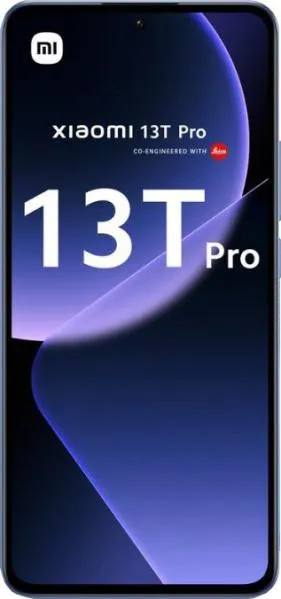
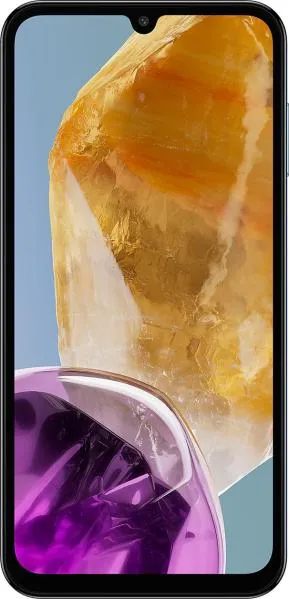
| Feature | Xiaomi 13T Pro | Samsung Galaxy M15 | Practical Impact |
|---|---|---|---|
| Design | |||
| Dimensions (mm) | 162.2 x 75.7 x 8.5 | 160.1 x 76.8 x 9.3 | The Xiaomi 13T Pro is slightly shorter, narrower, and significantly thinner. The M15 is noticeably thicker. |
| Weight (g) | 200 | 217 | The Xiaomi 13T Pro is lighter, making it more comfortable for extended use. |
| Build Materials | Unspecified | Unspecified | Build quality and feel cannot be compared without further information. |
| Display | |||
| Size (inches) | 6.67 | 6.5 | The Xiaomi 13T Pro has a slightly larger display, providing a more immersive experience. |
| Type | AMOLED, 144Hz | Super AMOLED, 90Hz | Both are AMOLED, offering vibrant colors and deep blacks. The 13T Pro's 144Hz refresh rate provides significantly smoother animations and scrolling compared to the M15's 90Hz. |
| Resolution | 1220 x 2712 | 1080 x 2340 | The 13T Pro has a much sharper display (446 ppi vs 396 ppi), resulting in clearer text and images. |
| Peak Brightness (nits) | 2600 | 800 (HBM), Peak Unspecified | The 13T Pro boasts substantially higher peak brightness, ensuring excellent outdoor visibility even in direct sunlight. The M15's peak brightness is unknown. |
| Performance | |||
| Chipset | Mediatek Dimensity 9200+ (4nm) | Mediatek Dimensity 6100+ (6nm) | The 9200+ is a significantly more powerful chipset built on a more advanced process node, leading to superior performance and efficiency in demanding tasks and gaming. |
| CPU | Octa-core (1x3.35 GHz X3 & 3x3.0 GHz A715 & 4x2.0 GHz A510) | Octa-core (2x2.2 GHz A76 & 6x2.0 GHz A55) | The 13T Pro's CPU offers faster clock speeds and a more powerful core configuration, translating to significantly faster app loading, multitasking, and overall responsiveness. |
| GPU | Immortalis-G715 MC11 | Mali-G57 MC2 | The 13T Pro's GPU is considerably more powerful, delivering a much better gaming experience and smoother performance in graphically intensive applications. |
| RAM/Storage | 12GB/512GB, 16GB/1TB | 6GB/128GB | The 13T Pro provides substantially more RAM and storage, enabling smoother multitasking and ample space for apps, photos, and videos. The M15's limited storage may be restrictive for some users. |
| Battery | |||
| Capacity (mAh) | 5000 | 6000 | The M15 has a larger battery capacity, potentially offering longer battery life. However, real-world battery life depends on various factors, including software optimization and display usage. |
| Camera | |||
| Video Capabilities | Up to 8K@24fps | 1080p@30fps (EIS) | The 13T Pro offers vastly superior video recording capabilities, including 8K resolution and higher frame rates, resulting in much higher quality videos. |
| Specific Sensor details | Unspecified for both | Unspecified for both | Image quality comparisons cannot be made without sensor specifications (size, megapixels, aperture). |
2. Key Differences Analysis
Xiaomi 13T Pro Advantages:
- Significantly higher performance: Much faster CPU and GPU for demanding tasks and gaming.
- Superior display: Higher resolution, refresh rate, and peak brightness for a smoother and more vibrant visual experience.
- More premium design: Thinner and lighter build.
- Advanced video recording capabilities: Up to 8K resolution.
Samsung Galaxy M15 Advantages:
- Larger battery capacity: Potentially longer battery life.
- Potentially lower price: Although both are mid-range, the M15 might be more affordable.
3. User Profiles & Recommendations
Xiaomi 13T Pro: Users who prioritize performance, a high-quality display, and advanced features like high-resolution video recording. Ideal for gamers, power users, and content creators.
Samsung Galaxy M15: Users who prioritize battery life and affordability over top-tier performance and features. Suitable for basic tasks, web browsing, and casual media consumption.
4. Decision Framework
Key Questions:
- What is your budget? The 13T Pro is likely more expensive.
- What are your primary use cases? Gaming, content creation, or everyday tasks?
- How important is battery life versus performance?
My Choice: Xiaomi 13T Pro
While the Samsung Galaxy M15 might offer longer battery life, the Xiaomi 13T Pro's significantly superior performance, display, and overall feature set make it the clear winner for me. I value a smooth and responsive user experience, a vibrant and sharp display, and the ability to handle demanding tasks and gaming. The 13T Pro excels in these areas. The difference in battery capacity might be offset by the 13T Pro's more efficient chipset. The vastly superior video recording capabilities are also a major selling point. While I acknowledge the M15's potential price advantage, the substantial performance and feature gap makes the 13T Pro a more compelling choice.
