1. Specifications Comparison
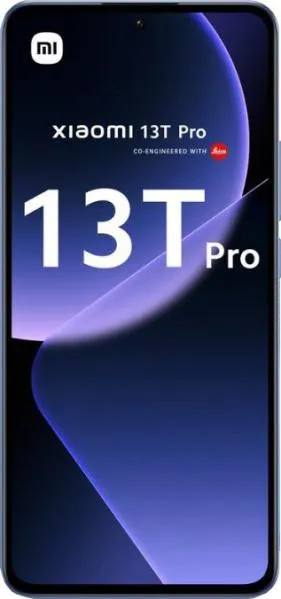
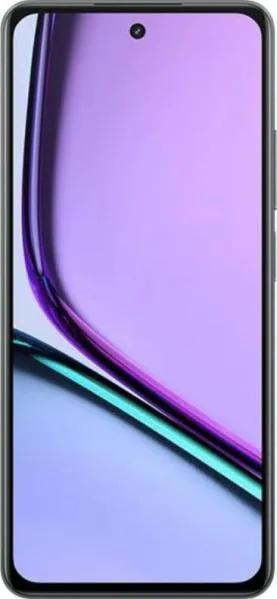
| Feature | Xiaomi 13T Pro | Realme C67 | Practical Impact |
|---|---|---|---|
| Design | |||
| Dimensions | 162.2 x 75.7 x 8.5 mm | 165.7 x 76 x 7.9 mm | Xiaomi is slightly shorter and narrower, Realme is marginally thinner. Negligible difference in hand feel. |
| Weight | 200g | 190g | Xiaomi is slightly heavier, but the difference is unlikely to be noticeable in daily use. |
| Build | Not specified | Not specified | Build quality and materials cannot be compared due to lack of information. |
| Display | |||
| Display Type | AMOLED, 68B colors, 144Hz | IPS LCD, 120Hz | Xiaomi's AMOLED offers significantly better contrast, deeper blacks, and potentially higher color accuracy. The 144Hz refresh rate will result in noticeably smoother animations and scrolling compared to 120Hz on the Realme. |
| Resolution | 1220x2712 (446 ppi) | 1080x2400 (392 ppi) | Xiaomi's display is significantly sharper due to higher resolution and pixel density. |
| Peak Brightness | 2600 nits | 680 nits (HBM) | Xiaomi offers drastically brighter display, ensuring excellent outdoor visibility even in direct sunlight. |
| Performance | |||
| Chipset | Mediatek Dimensity 9200+ (4nm) | Mediatek Dimensity 6100+ (6nm) | The Dimensity 9200+ is a significantly more powerful chipset than the 6100+, enabling much smoother performance in demanding tasks like gaming and multitasking. |
| CPU | Octa-core (1x3.35 GHz X3 & 3x3.0 GHz A715 & 4x2.0 GHz A510) | Octa-core (2x2.2 GHz A76 & 6x2.0 GHz A55) | Xiaomi's CPU has a more powerful core configuration, leading to faster processing speeds. |
| GPU | Immortalis-G715 MC11 | Mali-G57 MC2 | Xiaomi offers substantially more powerful GPU, resulting in a considerably better gaming experience and smoother graphics rendering. |
| RAM/Storage | 12/512GB, 16/1000GB | 6/128GB | Xiaomi offers significantly more RAM and storage options, enabling smoother multitasking and ample space for apps and files. The limited RAM on the Realme could lead to performance bottlenecks. |
| Camera | |||
| Video Capabilities | 8K@24fps, 4K@60fps, 1080p@240fps | 1080p@30fps | Xiaomi offers vastly superior video recording capabilities with higher resolution and frame rate options. Slow-motion recording is also significantly better. Specific camera sensor details are missing for comparison. |
| Battery | |||
| Capacity | 5000 mAh | 5000 mAh | Both phones have the same battery capacity. Real-world battery life will depend on factors like display usage and chipset efficiency, where the Xiaomi's more efficient 4nm process might give it an edge. |
2. Key Differences Analysis
- Performance: The Xiaomi 13T Pro significantly outperforms the Realme C67 due to its superior processor, GPU, and RAM. This translates to smoother multitasking, faster app loading, and a considerably better gaming experience.
- Display: The Xiaomi's AMOLED display with a 144Hz refresh rate and higher resolution delivers a far superior visual experience compared to the Realme's IPS LCD with a 120Hz refresh rate.
- Camera: Based on video recording capabilities alone, the Xiaomi offers far more advanced features. However, a detailed comparison of photo quality is impossible due to lacking sensor information.
3. User Profiles & Recommendations
- Xiaomi 13T Pro: Ideal for users who prioritize performance, a premium display, and advanced camera features. Suitable for demanding tasks like gaming, video editing, and content creation.
- Realme C67: Best suited for budget-conscious users who prioritize basic functionality and long battery life. Suitable for everyday tasks like web browsing, social media, and casual gaming.
4. Decision Framework
- What is your budget? The Xiaomi 13T Pro will be more expensive.
- What are your primary use cases? Demanding tasks? Casual use?
- Which features are most important to you? Display quality? Performance? Battery life?
My Choice: Xiaomi 13T Pro
The Xiaomi 13T Pro is the clear winner for me. While the Realme C67 offers a larger display and comparable battery capacity, the 13T Pro provides a significantly superior user experience in almost every other aspect. Its powerful processor, stunning AMOLED display with a high refresh rate, and advanced camera features justify the higher price tag. The performance gap alone makes the 13T Pro a much more future-proof device. Even without full camera specifications, the video capabilities alone highlight a substantial difference in favor of the Xiaomi. While the Realme C67 might be a good option for budget users with basic needs, the 13T Pro offers a compelling package for power users and those seeking a premium mobile experience.
