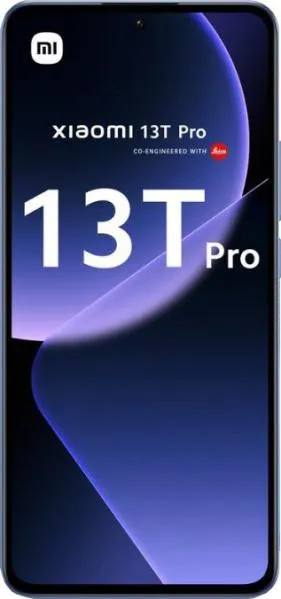
1. Specifications Comparison
| Feature | Xiaomi 13T Pro | Phone 8 | Practical Impact |
|---|---|---|---|
| Design | |||
| Dimensions | 162.2 x 75.7 x 8.5 mm | 162 x 75.1 x 8.7 mm | Virtually identical in size and hand feel. |
| Weight | 200g | 191g | Xiaomi is slightly heavier, but the difference is negligible. |
| Build Materials | Not specified | Not specified | Cannot compare build quality and durability. |
| Display | |||
| Size | 6.67" | 6.78" | Negligible difference in screen real estate. |
| Type | AMOLED, 68B colors, 144Hz | LTPO AMOLED, 1B colors, 120Hz | Both offer vibrant colors and smooth scrolling. Xiaomi's 144Hz might provide a slightly smoother experience in fast-paced games, while the LTPO panel on Phone 8 could offer better battery efficiency with variable refresh rate. Phone 8's claimed support for 1 billion colors is likely a marketing point with imperceptible real-world benefit compared to Xiaomi's 68 billion. |
| Resolution | 1220 x 2712 | 1264 x 2780 | Both are sharp and detailed; the difference is negligible. |
| Peak Brightness | 2600 nits | 6000 nits | Phone 8 boasts significantly higher peak brightness, ensuring better visibility in direct sunlight. |
| Performance | |||
| Chipset | Mediatek Dimensity 9200+ (4nm) | Qualcomm Snapdragon 7+ Gen 3 (4nm) | Both are powerful chips for demanding tasks and gaming. Benchmark comparisons are needed for definitive performance analysis. |
| CPU | Octa-core (1x3.35 GHz X3 & 3x3.0 GHz A715 & 4x2.0 GHz A510) | Octa-core (1x2.8 GHz X4 & 4x2.6 GHz A720 & 3x1.9 GHz A520) | Different core configurations; real-world performance depends on optimization and specific tasks. |
| GPU | Immortalis-G715 MC11 | Adreno 732 | Gaming performance differences require further benchmarking and game testing. |
| RAM | 12GB/16GB | 12GB | Xiaomi offers a 16GB RAM option for even more demanding multitasking. |
| Storage | 512GB/1TB | 512GB | Xiaomi offers a 1TB storage option for users needing more space. |
| Camera | |||
| Rear Camera | Not specified | Not specified | Cannot compare camera quality and features. |
| Video | 8K@24fps, 4K@60fps, 1080p@240fps | 4K@60fps, 1080p@120fps | Xiaomi offers 8K video recording and higher slow-motion capabilities. Phone 8 specifies OIS (Optical Image Stabilization) which might result in smoother video footage compared to Xiaomi's EIS (Electronic Image Stabilization). |
| Battery | |||
| Capacity | 5000 mAh | 5500 mAh | Phone 8 has a larger battery, potentially leading to longer battery life. |
2. Key Differences Analysis
Xiaomi 13T Pro Advantages:
- Higher Refresh Rate Display: Potentially smoother scrolling and gaming.
- 8K Video Recording: Higher resolution video capture.
- Higher Slow-motion Video: More creative options for video recording.
- More RAM and Storage Options: Better for power users and large file storage.
Phone 8 Advantages:
- Brighter Display: Significantly improved outdoor visibility.
- Larger Battery: Potentially longer battery life.
- Newer Android Version: Access to the latest features and security updates out of the box. OIS for potentially smoother videos.
Trade-offs:
- Xiaomi prioritizes display smoothness and video capabilities over peak brightness and battery capacity.
- Phone 8 prioritizes battery life and display brightness over higher refresh rate and video resolution/frame rate.
3. User Profiles & Recommendations
Xiaomi 13T Pro: Users who prioritize a smooth display, high video recording capabilities (including 8K and high slow-motion), and demanding multitasking. Suitable for mobile gamers, content creators, and power users.
Phone 8: Users who prioritize battery life, excellent outdoor visibility, and the latest Android features. Suitable for everyday users, social media enthusiasts, and those who spend significant time outdoors.
4. Decision Framework
Key Questions:
- What is your priority: display smoothness/video recording or battery life/outdoor visibility?
- How important is having the latest Android version?
- What is your budget and how much storage do you need?
Scenario-Based Recommendations:
- Heavy gamer: Xiaomi 13T Pro for its higher refresh rate and potentially more powerful GPU.
- Outdoor enthusiast: Phone 8 for its brighter display and larger battery.
- Budget-conscious user: Decision depends on specific pricing; compare value based on features important to you.
My Choice: Phone 8
While the Xiaomi 13T Pro offers enticing features like a 144Hz display and 8K video recording, I would choose Phone 8. The significantly brighter display is a major advantage for me, as I frequently use my phone outdoors. The larger battery also appeals to my need for reliable all-day battery life. While I value a smooth display, the difference between 120Hz and 144Hz is less significant to me than outdoor visibility and battery life. The newer Android version also ensures access to the latest features and security updates. The potential benefit of OIS for video recording is also a factor. Finally, without knowing the pricing, I assume that the newer Snapdragon 7+ Gen 3 will be more power efficient than the Dimensity 9200+, especially considering the Cortex A720 cores in the efficiency cluster.
