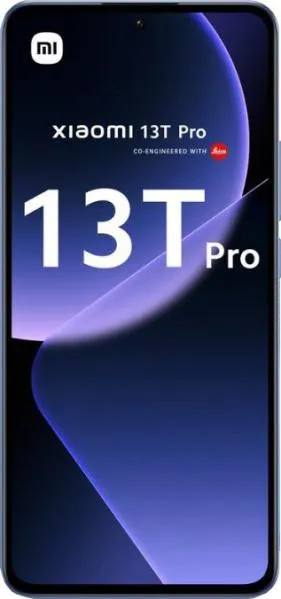
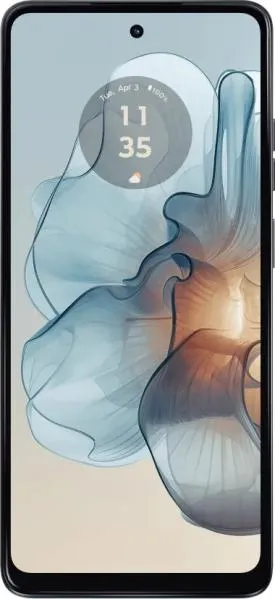
1. Specifications Comparison
| Feature | Xiaomi 13T Pro | Motorola Moto G24 Power | Practical Impact |
|---|---|---|---|
| Design | |||
| Dimensions (mm) | 162.2 x 75.7 x 8.5 | 163.5 x 74.5 x 9 | Xiaomi is slightly smaller and thinner. |
| Weight (g) | 200 | 197 | Negligible weight difference. |
| Build Materials | Not specified | Not specified | Cannot compare build quality and durability. |
| Display | |||
| Display Type | AMOLED, 68B colors | IPS LCD | Xiaomi offers significantly better contrast, color accuracy, and viewing angles. |
| Size (inches) | 6.67 | 6.56 | Xiaomi has a slightly larger display. |
| Resolution | 1220 x 2712 | 720 x 1612 | Xiaomi's much higher resolution results in sharper text and images. |
| Refresh Rate (Hz) | 144 | 90 | Xiaomi provides a smoother and more responsive user experience, especially noticeable in gaming and scrolling. |
| Peak Brightness (nits) | 2600 | 537 | Xiaomi's vastly superior brightness ensures excellent outdoor visibility. |
| Performance | |||
| Chipset | Mediatek Dimensity 9200+ (4 nm) | Mediatek Helio G85 (12 nm) | Xiaomi's significantly more powerful chipset allows for much faster performance in demanding tasks and gaming. |
| CPU | Octa-core (1x3.35 GHz Cortex-X3 & 3x3.0 GHz Cortex-A715 & 4x2.0 GHz Cortex-A510) | Octa-core (2x2.0 GHz Cortex-A75 & 6x1.7 GHz Cortex-A55) | Xiaomi's CPU offers superior performance in multitasking and demanding applications. |
| GPU | Immortalis-G715 MC11 | Mali-G52 MC2 | Xiaomi offers significantly better graphics performance for gaming. |
| RAM | 12GB/16GB | 8GB | Xiaomi offers more RAM, enabling better multitasking and smoother performance. |
| Storage | 512GB/1000GB | 128GB | Xiaomi provides significantly more storage. |
| Camera | |||
| Rear Camera | Not specified | Not specified | Cannot compare camera quality and features. |
| Video Capabilities | 8K@24fps, 4K@60fps, ... | 1080p@30fps | Xiaomi offers significantly higher resolution and frame rate video recording capabilities. |
| Battery | |||
| Capacity (mAh) | 5000 | 6000 | Motorola has a larger battery capacity, potentially leading to longer battery life. |
| Charging Speed | Not specified | Not specified | Cannot compare charging speeds. |
2. Key Differences Analysis
Xiaomi 13T Pro Advantages:
- Significantly superior display: AMOLED with higher resolution, refresh rate, and brightness. This translates to a more vibrant, smoother, and easier-to-view screen.
- Much more powerful performance: The Dimensity 9200+ outperforms the Helio G85 by a large margin, making the Xiaomi phone much faster and more capable for gaming and demanding tasks.
- More RAM and storage: Offers more headroom for multitasking and storing files.
- Superior video recording capabilities: Supports higher resolution and frame rates.
Motorola Moto G24 Power Advantages:
- Larger battery capacity: Potentially longer battery life, although real-world usage will depend on other factors.
- Lower price: Belongs to a lower price range, making it more budget-friendly.
3. User Profiles & Recommendations
Xiaomi 13T Pro: Ideal for users who prioritize performance, a high-quality display, and ample storage. Suitable for demanding tasks like gaming, video editing, and multitasking.
Motorola Moto G24 Power: Best suited for budget-conscious users who prioritize battery life and basic smartphone functionality. Good for casual use, web browsing, and social media.
4. Decision Framework
Key Questions for Buyers:
- What is your budget? The Xiaomi is a more expensive "medium price" phone, while the Motorola is a "low price" option.
- What are your primary use cases? Gaming, demanding apps, and media consumption benefit from the Xiaomi's superior performance and display. Basic usage and long battery life favor the Motorola.
- How important is display quality? The Xiaomi's AMOLED display is vastly superior to the Motorola's IPS LCD.
My Choice: Xiaomi 13T Pro
While the Motorola Moto G24 Power offers a larger battery and lower price, the Xiaomi 13T Pro's superior performance, stunning display, and ample storage make it the clear winner for me. The difference in user experience offered by the 144Hz AMOLED display and the powerful Dimensity 9200+ chipset would be significant in daily use. I prioritize a smooth and responsive experience, vibrant visuals, and the ability to handle demanding tasks. The higher price is justified by the significant jump in quality and capabilities. The potential for slightly shorter battery life is a trade-off I'm willing to make for the overall superior experience.
