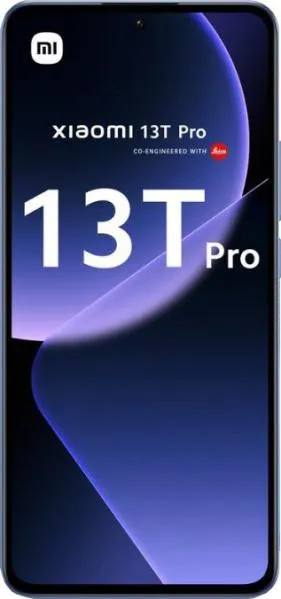
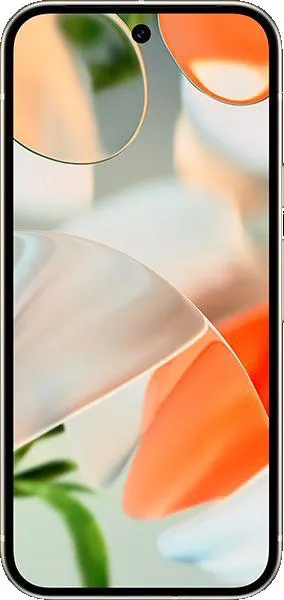
1. Specifications Comparison
| Feature | Xiaomi 13T Pro | Google Pixel 9 | Practical Impact |
|---|---|---|---|
| Design | |||
| Dimensions | 162.2 x 75.7 x 8.5 mm | 152.8 x 72 x 8.5 mm | Pixel 9 is noticeably smaller and narrower, making it more pocketable and easier to use one-handed. |
| Weight | 200g | 198g | Negligible weight difference. |
| Display | |||
| Size | 6.67" | 6.3" | 13T Pro offers a larger screen for more immersive media consumption. Pixel 9 provides better one-handed usability. |
| Type | AMOLED, 144Hz | OLED, 120Hz | Both offer smooth scrolling and animations. 13T Pro's higher refresh rate might be noticeable in fast-paced games, but less so in everyday use. |
| Resolution | 1220 x 2712 | 1080 x 2424 | 13T Pro has a sharper display due to higher resolution. |
| Peak Brightness | 2600 nits | 2700 nits | Pixel 9 is slightly brighter in direct sunlight. |
| Performance | |||
| Chipset | Dimensity 9200+ (4nm) | Google Tensor G4 (4nm) | Both are high-performance chips built on a 4nm process. Dimensity 9200+ generally benchmarks higher in raw performance. Tensor G4 excels in AI and machine learning tasks, enhancing features like voice recognition and photography. |
| CPU | Octa-core (1x3.35 GHz Cortex-X3 & 3x3.0 GHz Cortex-A715 & 4x2.0 GHz Cortex-A510) | Octa-core (1x3.1 GHz Cortex-X4 & 3x2.6 GHz Cortex-A720 & 4x1.92 GHz Cortex-A520) | Both CPUs offer excellent performance. Cortex-X4 in Pixel 9 might provide slight single-core performance advantage. |
| GPU | Immortalis-G715 MC11 | Mali-G715 MC7 | 13T Pro's GPU likely offers better gaming performance due to more cores. |
| RAM/Storage | 12GB/512GB, 16GB/1TB | 12GB/256GB | 13T Pro offers more storage options, catering to users with large media libraries. |
| Battery | |||
| Capacity | 5000 mAh | 4700 mAh | 13T Pro likely offers longer battery life due to larger capacity. Real-world usage will vary. |
| Camera | |||
| Video Capabilities | 8K@24fps, 4K@60fps, ... | 4K@60fps, 1080p@240fps... | Both offer extensive video recording options. 13T Pro boasts 8K recording, although practical usage is limited by storage and processing power. Pixel's historically superior image processing likely results in better overall video quality. We lack detailed camera sensor specs to make a thorough comparison. |
| Software | |||
| OS | Android 13 | Android 14 | Pixel 9 ships with the latest Android version and will receive longer software updates directly from Google. |
2. Key Differences Analysis
Xiaomi 13T Pro Advantages:
- Larger, sharper display: More immersive media experience.
- Higher resolution: Sharper text and images.
- Potentially better gaming performance: Due to more powerful GPU.
- Larger battery: Potentially longer battery life.
- More storage options: Suitable for users with large media libraries.
- Higher Refresh Rate: Smoother experience for gaming and scrolling.
Google Pixel 9 Advantages:
- More compact and ergonomic design: Easier one-handed use.
- Brighter display: Better visibility in direct sunlight.
- Latest Android version and longer software support: Ensures security and feature updates for a longer period.
- Expected superior camera performance (based on Pixel's history): Likely produces better image and video quality despite lacking 8K recording.
- Tensor G4's AI capabilities: Enhanced features like voice assistant and computational photography.
3. User Profiles & Recommendations
Xiaomi 13T Pro: Users who prioritize media consumption, gaming, and long battery life. Also suitable for those needing ample storage.
Google Pixel 9: Users who prefer a compact phone with a great camera, smooth performance, and the latest software with guaranteed long-term updates.
4. Decision Framework
Key Questions:
- What screen size do you prefer? Larger for media or smaller for one-handed use?
- How important is camera quality and software updates?
- What is your budget and storage requirement?
Scenario-based Recommendations:
- Heavy gamer/media consumer: Xiaomi 13T Pro
- Photography enthusiast/wants latest software: Google Pixel 9
- Balanced user on a budget: Consider both, prioritizing features that matter most.
My Choice: Google Pixel 9
While the Xiaomi 13T Pro offers impressive hardware, particularly in the display and performance departments, I would choose the Google Pixel 9. The deciding factors for me are:
- Compact form factor: I value one-handed usability.
- Guaranteed software updates: Ensures long-term security and access to new features. Pixel's timely updates are a significant advantage.
- Historically superior camera performance: While specifications are incomplete, Pixel's track record suggests its camera will outperform the 13T Pro in overall image and video quality.
- Tensor G4's AI capabilities: Enhancements in areas like voice assistance and computational photography are valuable for daily use.
While I appreciate the 13T Pro's larger display and battery, the Pixel 9 better aligns with my priorities for a smartphone. The slightly smaller battery is a trade-off I'm willing to make for the benefits mentioned above.
