1. Specifications Comparison
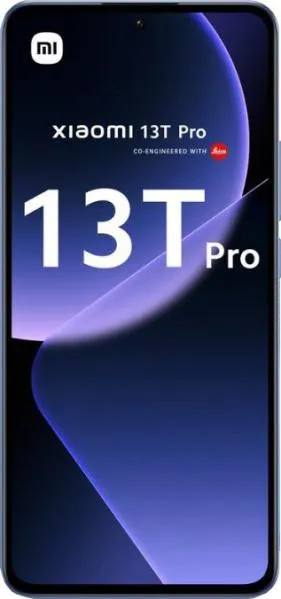
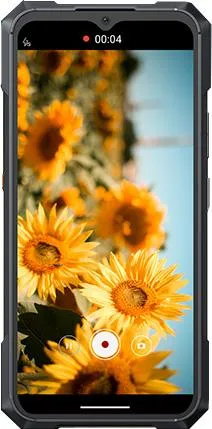
| Feature | Xiaomi 13T Pro | Cubot KingKong X | Practical Impact |
|---|---|---|---|
| Design | |||
| Dimensions | 162.2 x 75.7 x 8.5 mm | 170.9 x 82.2 x 18.7 mm | The Xiaomi 13T Pro is significantly smaller and thinner, making it more pocketable and easier to handle. The Cubot is larger and thicker, potentially more rugged but less comfortable for one-handed use. |
| Weight | 200g | 388g | The Cubot is almost twice as heavy, which can be tiring for extended use. The Xiaomi will feel much lighter in hand. |
| Build Materials | Not specified | Not specified | Build quality and durability are unknown without further information. |
| Display | |||
| Display Type | AMOLED, 68B colors, 144Hz, Dolby Vision, HDR10+ | IPS LCD, 120Hz | The Xiaomi's AMOLED offers superior contrast, deeper blacks, and richer colors compared to the Cubot's IPS LCD. The higher refresh rate on the Xiaomi (144Hz vs 120Hz) will result in smoother animations and scrolling. Dolby Vision and HDR10+ support on the Xiaomi provide a wider dynamic range for compatible content. |
| Resolution | 1220 x 2712 | 1080 x 2408 | The Xiaomi has a sharper display due to its higher resolution. |
| Peak Brightness | 2600 nits | Not specified | The Xiaomi's extremely high peak brightness ensures excellent outdoor visibility. The Cubot's unspecified peak brightness makes it difficult to assess its performance in sunlight. |
| Performance | |||
| Chipset | Mediatek Dimensity 9200+ (4nm) | Mediatek Dimensity 7050 (6nm) | The Xiaomi's Dimensity 9200+ is a significantly more powerful processor built on a more advanced manufacturing process (4nm vs 6nm), leading to better performance and potentially better battery efficiency. |
| CPU | Octa-core (1x3.35 GHz Cortex-X3 & 3x3.0 GHz Cortex-A715 & 4x2.0 GHz Cortex-A510) | Octa-core (2x2.6 GHz Cortex-A78 & 6x2.0 GHz Cortex-A55) | The Xiaomi's CPU configuration suggests superior performance in demanding tasks and multitasking. |
| GPU | Immortalis-G715 MC11 | Mali-G68 MC4 | The Xiaomi's GPU is more powerful, enabling smoother gaming and faster graphics rendering. |
| RAM | 12GB/16GB | 16GB | Both phones offer ample RAM for multitasking, but the different storage options paired with the RAM might impact overall system performance in the long run (e.g., 12GB RAM with 512GB storage on the Xiaomi). |
| Battery | |||
| Capacity | 5000 mAh | 10200 mAh | The Cubot has a much larger battery capacity, likely resulting in significantly longer battery life. However, real-world battery life depends on various factors including display type, processor efficiency, and software optimization. |
| Camera | |||
| Video Capabilities | 8K@24fps, 4K@60fps, ... | 4K@30fps, 1080p@30fps | The Xiaomi offers significantly more advanced video recording capabilities, including 8K resolution and higher frame rates. More details on specific camera sensors and lens configurations are needed for a comprehensive comparison. |
2. Key Differences Analysis
Xiaomi 13T Pro Advantages:
- Significantly more powerful processor and GPU, leading to smoother performance in demanding tasks and gaming.
- Superior display quality with AMOLED technology, higher resolution, refresh rate, and HDR support.
- More compact and lightweight design.
- More advanced video recording capabilities.
Cubot KingKong X Advantages:
- Much larger battery capacity, potentially resulting in significantly longer battery life.
3. User Profiles & Recommendations
Xiaomi 13T Pro: Users who prioritize performance, a high-quality display, and a sleek design. Suitable for demanding tasks like gaming, content creation, and media consumption.
Cubot KingKong X: Users who prioritize extremely long battery life above all else. Potentially more appealing to users who require a rugged phone, though this is not confirmed by the provided specs.
4. Decision Framework
Key Questions for Buyers:
- What is your budget and how important is performance? The Xiaomi 13T Pro likely commands a higher price for its superior performance.
- How important is battery life? The Cubot KingKong X offers significantly longer battery life, potentially exceeding two days on a single charge.
- What is your preferred form factor? The Xiaomi 13T Pro is smaller and lighter, while the Cubot KingKong X is larger and heavier.
My Choice: Xiaomi 13T Pro
While the Cubot KingKong X boasts impressive battery life, the Xiaomi 13T Pro offers a significantly superior overall package. Its powerful processor, stunning AMOLED display, and more advanced features make it a more versatile and enjoyable device for everyday use. The compact form factor is also a big plus for me. While battery life is important, the performance difference and overall user experience offered by the 13T Pro outweigh the Cubot's advantage in battery capacity. I'm willing to sacrifice some battery life for a significantly better user experience in terms of performance, display, and handling.
