
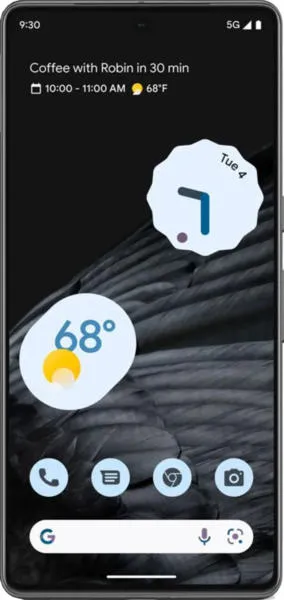
Xiaomi 12T Pro vs. Google Pixel 7 Pro: A Deep Dive
Let's dissect the Xiaomi 12T Pro and Google Pixel 7 Pro, two powerful contenders in the smartphone arena. We'll go beyond the spec sheets to uncover what these numbers truly mean for your everyday experience.
1. Specifications Breakdown
| Feature | Xiaomi 12T Pro | Google Pixel 7 Pro | Real-World Implications |
|---|---|---|---|
| Design | |||
| Dimensions (mm) | 163.1 x 75.9 x 8.6 | 162.9 x 76.6 x 8.9 | Pixel 7 Pro slightly wider, thicker; both feel substantial in hand. |
| Weight (g) | 205 | 212 | Negligible difference in weight; both are on the heavier side for modern smartphones. |
| Display | |||
| Size (inches) | 6.67 | 6.7 | Virtually identical screen real estate. |
| Resolution (px) | 1220 x 2712 | 1440 x 3120 | Pixel 7 Pro boasts sharper visuals due to higher resolution. Noticeable in detailed images and text rendering. |
| Refresh Rate (Hz) | 120 | 120 | Both offer smooth scrolling and animations; Pixel 7 Pro utilizes LTPO for dynamic refresh rate, potentially saving battery. |
| Display Type | AMOLED | LTPO AMOLED | Both offer vibrant colors and deep blacks. LTPO allows Pixel 7 Pro to lower refresh rate for static content, conserving battery. |
| Peak Brightness | 900 nits (typ), 1200 nits (peak) | 1500 nits (peak) | Pixel 7 Pro significantly brighter, improving outdoor visibility. |
| Performance | |||
| Chipset | Snapdragon 8+ Gen 1 | Google Tensor G2 | Both are flagship processors, but benchmarks suggest Snapdragon 8+ Gen 1 might offer a slight edge in raw performance. Tensor G2 excels in AI tasks. |
| RAM (GB) | 8/12 | 12 | 12GB RAM on Pixel 7 Pro allows for more aggressive multitasking and smoother performance with demanding applications. |
| Camera | |||
| Main Sensor (MP) | 200 | 50 | Xiaomi boasts higher megapixel count, but Pixel's larger sensor and superior image processing generally produce better overall image quality. |
| DxOMark Score | 129 | 147 | Pixel 7 Pro significantly outperforms in DxOMark rankings, indicating superior image and video quality. |
| Battery Life | |||
| Capacity (mAh) | 5000 | 5000 | Similar battery capacities, but real-world battery life will depend on usage patterns and software optimization. |
2. Key Insights
- Performance: While the Xiaomi 12T Pro might have a slight edge in raw processing power, the Google Pixel 7 Pro's Tensor G2 chip excels in AI-driven tasks like photography, voice recognition, and language processing. The Pixel's 12GB RAM also provides a smoother multitasking experience.
- Display: Both phones offer stunning AMOLED displays with 120Hz refresh rates. However, the Pixel 7 Pro's LTPO panel allows for a dynamic refresh rate, conserving battery life. Its higher resolution and peak brightness provide a noticeable advantage in clarity and outdoor visibility.
- Camera: While the Xiaomi 12T Pro boasts a massive 200MP sensor, the Pixel 7 Pro's 50MP sensor, combined with Google's renowned image processing algorithms, consistently delivers superior image quality in various conditions. This is reflected in the significantly higher DxOMark scores.
3. User Profiles and Recommendations
- Xiaomi 12T Pro: Users seeking raw performance and a high-resolution display at a potentially lower price point. Those prioritizing gaming or other graphically intensive tasks might prefer the Snapdragon 8+ Gen 1's power.
- Google Pixel 7 Pro: Users who prioritize camera quality, software experience, and AI features. The Pixel excels in capturing stunning photos and videos, offers a clean Android experience with timely updates, and provides unique AI-driven capabilities.
4. Buying Decision Framework
- What is your budget? The Xiaomi 12T Pro generally comes at a slightly lower price.
- What are your photography needs? The Pixel 7 Pro is the clear winner for photography enthusiasts.
- Do you value a clean Android experience with timely updates? The Pixel 7 Pro offers this advantage.
Scenario-based recommendations:
- Casual User: Either phone would suffice, but the Pixel 7 Pro's superior camera and software experience might be more appealing.
- Photographer: The Pixel 7 Pro is the clear choice.
- Gamer: The Xiaomi 12T Pro's powerful processor might offer a slight edge in performance.
My Choice: Google Pixel 7 Pro
While I appreciate the Xiaomi 12T Pro's impressive specifications, I would choose the Google Pixel 7 Pro. The deciding factors for me are the superior camera system, the clean Android experience with guaranteed updates, and the innovative AI features powered by the Tensor G2 chip. The slightly higher price is justified by the significant advantages in these crucial areas. The brighter, sharper display with LTPO technology is a welcome bonus. As a tech journalist, having a phone that excels in photography and offers a seamless software experience is paramount. The Pixel 7 Pro delivers on both fronts.
