
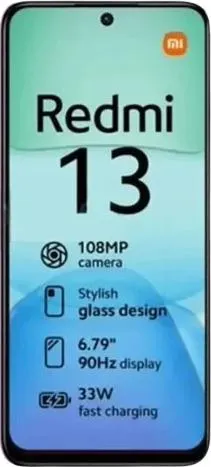
vivo X100 vs. Xiaomi Redmi 13: A Detailed Comparison
The smartphone landscape is constantly evolving, with new contenders vying for your attention. Today, we'll dissect two promising devices: the vivo X100 and the Xiaomi Redmi 13. By examining their specifications and translating them into real-world implications, we'll empower you to choose the device that best fits your needs.
1. Specifications Breakdown
| Feature | vivo X100 | Xiaomi Redmi 13 | Real-World Implications |
|---|---|---|---|
| Design | |||
| Dimensions | 164.1 x 75.2 x 8.5 mm | 168.6 x 76.3 x 8.3 mm | X100 is slightly smaller and thinner, potentially more pocketable. |
| Weight | 202g | 205g | Negligible weight difference in practical use. |
| Display | |||
| Type | LTPO AMOLED, 1B colors, 120Hz | IPS LCD, 90Hz | X100 offers superior contrast, deeper blacks, and smoother scrolling due to AMOLED and higher refresh rate. |
| Size | 6.78" | 6.79" | Virtually identical screen sizes. |
| Resolution | 1260 x 2800 | 1080 x 2460 | X100 boasts significantly sharper visuals due to higher resolution. |
| Peak Brightness | 3000 nits | 550 nits | X100 will be far more readable in direct sunlight. |
| Performance | |||
| Chipset | Dimensity 9300 (4nm) | Helio G91 Ultra (12nm) | X100's 4nm chipset promises significantly better performance and power efficiency. |
| CPU | Octa-core (1x3.25 GHz X4...) | Octa-core (2x2.0 GHz A75...) | X100's more modern CPU architecture should deliver noticeably faster speeds and multitasking. |
| GPU | Immortalis-G720 MC12 | Mali-G52 MC2 | X100 will handle demanding games and graphics-intensive tasks much more smoothly. |
| RAM | 16GB | 8GB | X100's doubled RAM allows for seamless multitasking and app switching. |
| Storage | 256/512GB | 256GB | Both offer ample storage, but X100 provides a 512GB option for power users. |
| Battery | |||
| Capacity | 5000 mAh | 5030 mAh | Negligible difference in battery capacity. Real-world battery life will depend on usage and efficiency. |
2. Key Insights
The vivo X100 clearly positions itself as a premium device, boasting a superior display, significantly more powerful processor, and double the RAM. The Redmi 13, on the other hand, aims for affordability, making compromises on display quality and processing power.
X100 Advantages: Stunning AMOLED display, blazing-fast performance, excellent multitasking capabilities, superior brightness for outdoor use.
Redmi 13 Advantages: Slightly larger battery, lower price point.
3. User Profiles and Recommendations
vivo X100: Ideal for users who demand top-tier performance, a vibrant and responsive display, and seamless multitasking. Gamers, content creators, and power users will appreciate its capabilities.
Xiaomi Redmi 13: Suitable for budget-conscious users who prioritize basic functionality and long battery life over peak performance and display quality. Best for casual users who primarily use their phones for communication, social media, and light browsing.
4. Buying Decision Framework
- What is your budget? The Redmi 13 is significantly more affordable.
- How important is performance and display quality? If these are top priorities, the X100 is the clear winner.
- What are your primary phone usage patterns? For demanding tasks, choose the X100; for basic use, the Redmi 13 might suffice.
My Choice: The vivo X100
While the Redmi 13 offers tempting value, I would choose the vivo X100. The superior display, significantly faster processor, and ample RAM are crucial for my workflow. As a tech journalist, I need a device that can handle multitasking, demanding applications, and content creation with ease. The X100's performance advantages, coupled with the stunning AMOLED display, make it a more compelling device for my needs, even with the higher price tag. The brighter screen is also essential for reviewing devices outdoors and showcasing display quality accurately. While battery life is important, I prioritize performance and user experience, and the X100 delivers on both fronts.
