
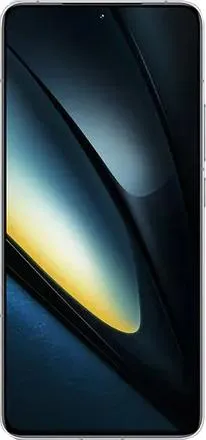
1. Specifications Comparison
| Feature | vivo X100 | Xiaomi Poco F6 Pro | Practical Impact |
|---|---|---|---|
| Design | |||
| Dimensions | 164.1 x 75.2 x 8.5 mm | 160.9 x 75 x 8.2 mm | Poco F6 Pro is slightly shorter, thinner, and marginally lighter. Real-world difference in hand feel might be minimal. |
| Weight | 202g | 209g | 7g difference; negligible in practical use. |
| Colors | White, Orange, Startrail Blue, Asteroid Black | Black, White | More color options available for the vivo X100. |
| Display | |||
| Size | 6.78" | 6.67" | Negligible difference in screen real estate. |
| Type | LTPO AMOLED, 1B colors, 120Hz | AMOLED, 68B colors, 120Hz, Dolby Vision, HDR10+ | Both offer smooth scrolling and vibrant colors. The Poco F6 Pro supports Dolby Vision and HDR10+ for enhanced video playback. While both boast high color depth, the practical difference between 1B and 68B is minimal for most users. |
| Resolution | 1260 x 2800 | 1440 x 3200 | Poco F6 Pro has a sharper display (higher pixel density) leading to crisper text and images. |
| Peak Brightness | 3000 nits | 4000 nits | Poco F6 Pro offers significantly better outdoor visibility. |
| Performance | |||
| Chipset | Mediatek Dimensity 9300 (4 nm) | Qualcomm Snapdragon 8 Gen 2 (4 nm) | Snapdragon 8 Gen 2 generally benchmarks higher in terms of raw performance and GPU capabilities. Expect smoother gaming and faster app loading on the Poco F6 Pro. |
| CPU | Octa-core (1x3.25 GHz Cortex-X4 & 3x2.85 GHz Cortex-X4 & 4x2.0 GHz Cortex-A720) | Octa-core (1x3.2 GHz Cortex-X3 & 2x2.8 GHz Cortex-A715 & 2x2.8 GHz Cortex-A710 & 3x2.0 GHz Cortex-A510) | Both CPUs are powerful and capable of handling demanding tasks. Real-world performance differences will likely be subtle for average users. |
| GPU | Immortalis-G720 MC12 | Adreno 740 | Adreno 740 is generally considered more powerful, providing a better gaming and graphics experience. |
| RAM/Storage | 256GB/16GB, 512GB/16GB | 512GB/12GB, 1000GB/16GB | Poco F6 Pro offers a 1TB storage option for users needing vast local storage. The impact of 12GB vs 16GB RAM is minimal for most users. |
| Battery | |||
| Capacity | 5000 mAh | 5000 mAh | Identical battery capacity; actual battery life depends on usage and optimization. |
| Other | |||
| OS | Android 14 | Android 14 (up to 17) | Poco F6 Pro has longer guaranteed software updates. |
| NFC | True | True | Both support contactless payments. |
| Video Capabilities | Not specified | 8K@24fps, 4K@60fps, etc. | Poco F6 Pro offers extensive video recording options, including 8K resolution. This is significant for users who prioritize video content creation. |
2. Key Differences Analysis
vivo X100 Advantages:
- More Color Options: Offers greater aesthetic choice.
- Potentially Better Battery Life: While both have the same capacity, the Dimensity 9300's efficiency could result in longer real-world usage. This needs further testing to confirm.
Xiaomi Poco F6 Pro Advantages:
- Superior Display: Sharper, brighter, and supports HDR10+ and Dolby Vision.
- More Powerful GPU: Better gaming and graphics performance.
- More Storage Options: Up to 1TB for extensive local storage.
- Longer Software Support: Guaranteed updates up to Android 17.
- Superior Video Recording Capabilities: Wide range of resolutions and frame rates including 8K.
Trade-offs:
- Poco F6 Pro: Potentially slightly lower battery life compared to X100 due to the more powerful processor.
3. User Profiles & Recommendations
vivo X100: Users prioritizing style and potentially longer battery life. Users who consume rather than create video content.
Xiaomi Poco F6 Pro: Users prioritizing performance, display quality, future-proofing through software updates, extensive storage, and advanced video recording capabilities. Mobile gamers, content creators, and power users.
4. Decision Framework
Key Questions:
- What is your budget and how important is long-term value? Both are mid-range but the price difference might be significant.
- What are your primary use cases? Gaming, video recording, general use?
- How important is display quality and brightness?
Scenario-Based Recommendations:
- Heavy Gamer: Poco F6 Pro for its superior GPU.
- Content Creator: Poco F6 Pro for its 8K video recording and large storage.
- Casual User: Either phone could be suitable; consider individual preferences for design and battery life. The vivo X100 might offer better value if priced lower.
My Choice: Xiaomi Poco F6 Pro
Reasons:
The Poco F6 Pro offers a significantly better display, a more powerful GPU for future-proof performance, longer software support, and superior video recording capabilities. While the vivo X100 might have slightly better battery life, the advantages of the Poco F6 Pro outweigh this potential difference for my needs. I prioritize performance, a high-quality display, and having the latest software. The 1TB storage option and comprehensive video recording features also make it a more versatile device.
