
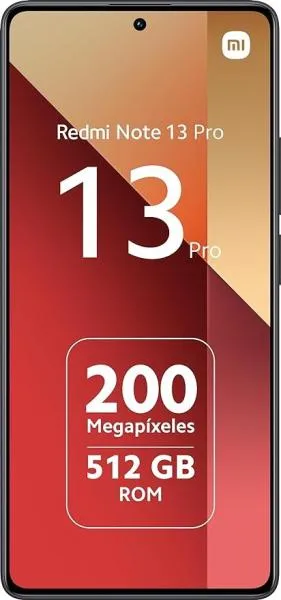
1. Specifications Comparison
| Feature | vivo X100 Pro | Xiaomi Redmi Note 13 Pro 4G | Practical Impact |
|---|---|---|---|
| Design | |||
| Dimensions | 164.1 x 75.3 x 8.9 mm | 161.1 x 75 x 8 mm | Redmi is slightly smaller and thinner, potentially more pocketable. |
| Weight | 221g | 188g | Redmi is noticeably lighter, reducing hand fatigue during extended use. |
| Build | Material information missing for both phones, limiting comparison. | ||
| Display | |||
| Size | 6.78" | 6.67" | Negligible size difference in real-world usage. |
| Type | LTPO AMOLED | AMOLED | Both offer vibrant colors and deep blacks. LTPO allows for dynamic refresh rate adjustment on the Vivo, potentially saving battery. |
| Resolution | 1260 x 2800 | 1080 x 2400 | Vivo has a sharper display (452 ppi vs 395 ppi), resulting in crisper text and images. |
| Peak Brightness | 3000 nits | 1300 nits | Vivo offers significantly higher peak brightness, ensuring excellent outdoor visibility. |
| Refresh Rate | 120Hz | 120Hz | Both offer smooth scrolling and animations. |
| Performance | |||
| Chipset | Mediatek Dimensity 9300 (4 nm) | Mediatek Helio G99 Ultra | Dimensity 9300 is significantly more powerful, enabling smoother multitasking and demanding gaming. |
| CPU | Octa-core (1x3.25 GHz Cortex-X4 & 3x2.85 GHz Cortex-X4 & 4x2.0 GHz Cortex-A720) | Octa-core (2x2.2 GHz Cortex-A76 & 6x2.0 GHz Cortex-A55) | Vivo's CPU architecture and clock speeds indicate a substantial performance advantage. |
| GPU | Immortalis-G720 MC12 | Mali-G57 MC2 | Vivo's GPU is considerably more powerful, delivering superior gaming and graphics performance. |
| RAM | 16GB | 8GB/12GB | Vivo offers more RAM in the specified configuration, improving multitasking and app loading times. Redmi offers a 12GB option in a different storage configuration. |
| Storage | 256GB | 256GB/512GB | Redmi offers a 512GB storage option, beneficial for users storing large files. |
| Camera | |||
| Video Capabilities | 8K@30fps, 4K@30/60fps (EIS) | 1080p@30/60fps | Vivo offers significantly better video recording capabilities, including 8K resolution and Electronic Image Stabilization (EIS) at higher resolutions. |
| Specific sensor details | Missing for both | Missing for both | Cannot compare image quality or camera features without sensor information. |
| Battery | |||
| Capacity | 5400 mAh | 5000 mAh | Vivo has a slightly larger battery, potentially offering longer battery life. |
| Charging speed | Not specified | Not specified | Cannot compare charging speeds without specific data. |
2. Key Differences Analysis
Vivo X100 Pro Advantages:
- Significantly more powerful: The Dimensity 9300 chipset offers a substantial performance advantage for demanding tasks and gaming.
- Sharper and brighter display: Higher resolution and peak brightness provide a superior visual experience.
- Superior video recording: 8K recording and EIS at higher resolutions offer more versatile video capabilities.
- More RAM in the specified configuration: Enhanced multitasking capabilities and smoother performance.
Xiaomi Redmi Note 13 Pro 4G Advantages:
- Lighter and slightly smaller: Easier to handle and carry.
- More storage options: 512GB option available for users needing ample storage space.
- Potentially lower price: While both are mid-range, the Redmi might be more budget-friendly given its less powerful specs.
3. User Profiles & Recommendations
Vivo X100 Pro: Ideal for users who prioritize performance, a premium display, and advanced video recording capabilities. Suitable for demanding tasks, gaming, and content creation.
Xiaomi Redmi Note 13 Pro 4G: Suitable for users seeking a lightweight, affordable phone for everyday tasks like browsing, social media, and casual photography. The 512 GB option is attractive for media consumption.
4. Decision Framework
Key Questions for Buyers:
- What is your budget? While both are mid-range, the Redmi is likely more affordable.
- What are your primary use cases? Gaming and content creation benefit from the Vivo's power, while casual use is well-served by the Redmi.
- Which features are most important? Prioritize display quality, performance, or battery life based on your needs.
Scenario-Based Recommendations:
- Heavy gamer: Vivo X100 Pro
- Casual user on a budget: Xiaomi Redmi Note 13 Pro 4G
- Content creator needing high-quality video: Vivo X100 Pro
My Choice: vivo X100 Pro
While lacking some specific details (camera sensors, build materials, charging speeds), the vivo X100 Pro is the clear winner for me. The significantly more powerful processor, brighter and sharper display, and superior video recording capabilities outweigh the Redmi's advantages in weight and storage options. I prioritize performance and a premium visual experience, and the X100 Pro delivers in those areas. The slightly larger battery is also a plus. While potentially more expensive, the X100 Pro offers a substantial upgrade in key areas that would enhance my daily usage. The Redmi Note 13 Pro 4G is a solid budget option, but the performance gap is too significant to ignore for my needs.
