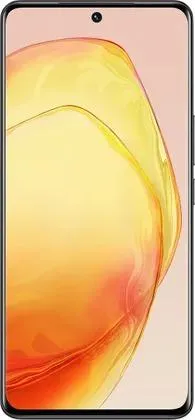
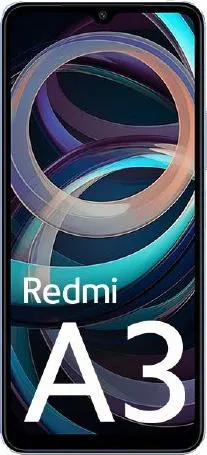
1. Specifications Comparison
| Feature | vivo V29 | Xiaomi Redmi A3 | Practical Impact |
|---|---|---|---|
| Design | |||
| Dimensions (mm) | 164.2 x 74.4 x 7.5 | 168.3 x 76.3 x 8.3 | The Redmi A3 is larger and thicker. |
| Weight (g) | 186 | 193 | The V29 is noticeably lighter. |
| Build Materials | Not specified | Not specified | Cannot compare build quality. |
| Display | |||
| Display Type | AMOLED, 1B colors, 120Hz, HDR10+ | IPS LCD, 90Hz, 500 nits (HBM) | The V29 offers significantly better contrast, color accuracy, and smoother scrolling thanks to AMOLED and 120Hz. Redmi A3's LCD will likely appear less vibrant. |
| Resolution | 1260 x 2800 | 720 x 1650 | The V29 has a much sharper display with significantly higher pixel density (453 vs 268 PPI). Images and text will be crisper on the V29. |
| Size (inches) | 6.78 | 6.71 | Negligible size difference. |
| Refresh Rate (Hz) | 120 | 90 | The V29 offers a smoother user experience, especially noticeable in scrolling and gaming. |
| Performance | |||
| Chipset | Snapdragon 778G 5G (6 nm) | Mediatek Helio G36 (12 nm) | The Snapdragon 778G is significantly more powerful, resulting in faster app loading, smoother multitasking, and better gaming performance. |
| CPU | Octa-core (1x2.4 GHz Cortex-A78 & 3x2.2 GHz Cortex-A78 & 4x1.9 GHz Cortex-A55) | Octa-core (4x2.2 GHz Cortex-A53 & 4x1.6 GHz Cortex-A53) | The V29's CPU architecture is more modern and powerful. |
| GPU | Adreno 642L | PowerVR GE8320 | The Adreno 642L provides a much better gaming and graphics rendering experience compared to the PowerVR GE8320. |
| RAM | 8GB | 4GB/6GB | More RAM in the V29 allows for better multitasking and smoother performance. |
| Storage | 256GB | 128GB | The V29 offers double the storage. |
| Camera | |||
| Rear Camera | Not specified | Not specified | Camera quality cannot be compared without details. |
| Front Camera | Not specified | Not specified | Camera quality cannot be compared without details. |
| Video Recording | 4K@30fps, 1080p@30fps | 1080p@30fps | The V29 can record in higher resolution (4K). |
| Battery | |||
| Capacity (mAh) | 4600 | 5000 | The Redmi A3 has a slightly larger battery capacity, but real-world battery life depends on other factors like display and chipset efficiency. |
2. Key Differences Analysis
vivo V29 Advantages:
- Significantly superior display: AMOLED with 120Hz refresh rate offers vibrant colors, deep blacks, and smooth scrolling.
- Much more powerful performance: Snapdragon 778G outperforms the Helio G36 in all aspects, enabling demanding tasks and gaming.
- Higher resolution display: Sharper visuals and text.
- Double the storage: More space for apps, photos, and videos.
- 4K video recording: Higher quality video capture.
- Lighter and slightly smaller: More comfortable to hold and carry.
Xiaomi Redmi A3 Advantages:
- Larger battery capacity: Potentially longer battery life, but real-world usage will vary.
- Lower price: Expected given the lower-end specifications.
3. User Profiles & Recommendations
vivo V29: Users who prioritize performance, display quality, and a premium feel. Suitable for gaming, media consumption, multitasking, and demanding applications.
Xiaomi Redmi A3: Budget-conscious users who prioritize basic functionality and long battery life. Suitable for casual use, calling, texting, and light browsing.
4. Decision Framework
Key Questions for Buyers:
- What is your budget? The Redmi A3 is significantly cheaper.
- What are your primary use cases? Demanding tasks and gaming favor the V29; basic usage favors the Redmi A3.
- How important is display quality? The V29 offers a vastly superior visual experience.
Scenario-Based Recommendations:
- Gamer: vivo V29
- Social Media Enthusiast: vivo V29
- Budget-Conscious User: Xiaomi Redmi A3
- Basic Phone User (Calls/Texts): Xiaomi Redmi A3
My Choice: vivo V29
While the Xiaomi Redmi A3 offers a lower price and larger battery, the vivo V29's significantly superior performance, display, and overall user experience make it the clear winner for me. The Snapdragon 778G, coupled with the AMOLED display and 120Hz refresh rate, will provide a much smoother and more enjoyable daily usage. The higher resolution and larger storage also contribute to a more premium and future-proof device. While battery life might be slightly less, the performance benefits outweigh this trade-off for my personal needs. I prioritize a responsive and visually appealing experience over marginally longer battery life.
