1. Specifications Comparison
| Feature | Tecno Spark 10 Pro | Xiaomi Redmi 13 | Practical Impact |
|---|---|---|---|
| Design | |||
| Dimensions (mm) | 168.4 x 76.2 x 8.4 | 168.6 x 76.3 x 8.3 | Virtually identical in size and feel. |
| Weight (g) | 208 | 205 | Negligible weight difference. |
| Build Materials | Not specified | Not specified | Cannot compare build quality and durability. |
| Display | |||
| Size (inches) | 6.8 | 6.79 | Negligible difference in screen real estate. |
| Resolution (px) | 1080 x 2460 | 1080 x 2460 | Identical resolution, sharpness, and detail levels. |
| Panel Type | IPS LCD | IPS LCD | Similar color accuracy and viewing angles. |
| Refresh Rate (Hz) | 90 | 90 | Equally smooth scrolling and animations. |
| Performance | |||
| Chipset | Mediatek Helio G88 | Mediatek Helio G91 | G91 offers slightly better CPU and GPU performance. |
| CPU | Octa-core (2x2.0 GHz Cortex-A75 & 6x1.8 GHz Cortex-A55) | Octa-core (2x2.0 GHz Cortex-A75 & 6x1.8 GHz Cortex-A55) | Similar CPU architecture but G91 is optimized for slightly better performance. |
| GPU | Mali-G52 MC2 | Mali-G52 MC2 | Similar GPU, but Redmi 13's may be slightly faster due to chipset advantages. |
| RAM (GB) | 8 | 6/8 (Variant Dependent) | 8GB RAM provides smoother multitasking on both; Redmi 13 offers a 6GB option for budget-conscious users. |
| OS | Android 13 | Android 14 | Redmi 13 benefits from newer OS features, security updates, and potentially longer software support. |
| Camera | |||
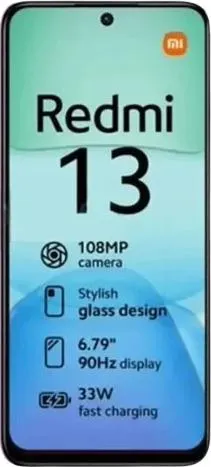
| Main Camera (MP) | 50 | 108 | Redmi 13 offers significantly higher resolution for potentially more detailed photos, especially in good lighting. |
| Front Camera (MP) | 32 | 13 | Spark 10 Pro has a much higher resolution front camera, beneficial for selfies and video calls. |
| Video Recording | 1440p@30fps | 1080p@30fps | Spark 10 Pro can record at a higher resolution, but Redmi 13 offers slow-motion video. Missing details about video stabilization on both. |
| Battery | |||
| Capacity (mAh) | 5000 | 5030 | Negligible difference in battery capacity. |
| Fast Charging (W) | 18 | 33 | Redmi 13 charges significantly faster. |
2. Key Differences Analysis
Tecno Spark 10 Pro Advantages:
- Higher resolution front camera: Significantly better for selfies and video calls.
- Higher resolution video recording: Captures more detail.
Xiaomi Redmi 13 Advantages:
- More Powerful Chipset: Slightly improved overall performance for demanding tasks and gaming.
- Newer Android Version: Access to the latest features and longer software support.
- Faster Charging: Significantly reduces charging time.
- Lower Price: Offers better value for money.
- More accurate Proximity sensor Using ultrasonic technology, is less likely to be affected by screen protectors unlike the Spark which uses infrared.
Trade-offs:
- Redmi 13: Lower resolution front camera despite having a higher resolution main camera.
3. User Profiles & Recommendations
Tecno Spark 10 Pro: Users who prioritize high-quality selfies and video calls, and who value higher resolution video recording.
Xiaomi Redmi 13: Users seeking overall value, faster charging, the latest Android features, and decent performance for everyday tasks and light gaming. Suitable for budget-conscious buyers. Best for someone who uses a screen protector.
4. Decision Framework
Key Questions for Buyers:
- What is your budget? The Redmi 13 is more affordable.
- Are high-quality selfies and video calls a priority? If yes, the Spark 10 Pro is a better choice.
- How important is fast charging? The Redmi 13's 33W charging is a significant advantage.
Scenario-Based Recommendations:
- Tight Budget: Redmi 13
- Selfie Enthusiast: Spark 10 Pro
- Power User (Gaming/Multitasking): Neither phone is ideal for heavy usage, but the Redmi 13 offers a slight performance edge.
My Choice: Xiaomi Redmi 13
While the Spark 10 Pro offers a compelling front camera and higher resolution video recording, the Redmi 13 provides a better overall package considering its lower price, faster charging, newer Android version, and slight performance advantage. The difference in main camera resolution (108MP vs 50MP) is also significant for general photography. The slightly better chipset also means that the Redmi 13 is likely to be supported for software updates for a longer period. For me, these factors outweigh the benefits of the Spark 10 Pro. I also prefer the more reliable proximity sensor in the Redmi 13.
