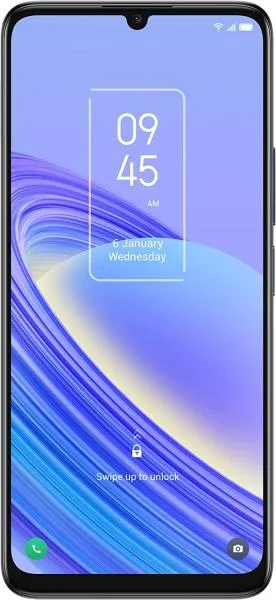
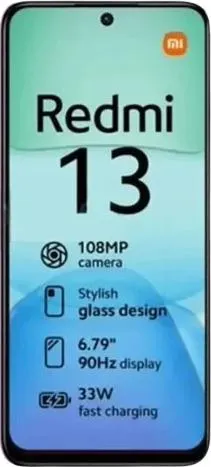
1. Specifications Comparison
| Feature | TCL 40 SE | Xiaomi Redmi 13 | Practical Impact |
|---|---|---|---|
| Design | |||
| Dimensions (mm) | 167.9 x 76.5 x 8.5 | 168.6 x 76.3 x 8.3 | Redmi 13 is slightly thinner but taller. Negligible difference in daily use. |
| Weight (g) | 190 | 205 | Redmi 13 is noticeably heavier, potentially impacting one-handed use. |
| Display | |||
| Display Size (inches) | 6.75 | 6.79 | Negligible size difference. |
| Resolution (pixels) | 720 x 1600 | 1080 x 2460 | Redmi 13 has a significantly sharper display, resulting in clearer text and images. |
| Display Type | IPS LCD, 90Hz | IPS LCD, 90Hz | Both are LCDs with the same refresh rate, offering smooth scrolling. However, Redmi 13 uses LTPS technology, potentially offering better color accuracy and power efficiency. |
| Pixel Density (PPI) | 260 | 396 | Redmi 13's higher PPI translates to a much sharper and more detailed display. |
| Performance | |||
| Chipset | Mediatek Helio G37 | Mediatek Helio G91 Ultra | Redmi 13's Helio G91 is a more powerful chipset, enabling smoother multitasking and better gaming performance. |
| CPU | Octa-core (4x2.3 GHz Cortex-A53 & 4x1.8 GHz Cortex-A53) | Octa-core (2x2.0 GHz Cortex-A75 & 6x1.8 GHz Cortex-A55) | Redmi 13's CPU architecture is more modern and efficient, leading to better performance. |
| GPU | PowerVR GE8320 | Mali-G52 MC2 | Redmi 13's GPU is more powerful, providing a smoother gaming and graphics-intensive app experience. |
| RAM | 4GB/6GB | 6GB/8GB | Redmi 13 offers more RAM in its base configuration, enabling better multitasking and app performance. |
| Camera | |||
| Main Camera (MP) | 50 | 108 | Redmi 13 boasts a much higher resolution main camera, potentially capturing more detail. However, megapixels alone don't guarantee image quality. |
| Selfie Camera (MP) | 8 | 13 | Redmi 13 has a higher resolution selfie camera. |
| Video Recording | 1080p@30fps | 1080p@30fps | Both offer similar video recording capabilities. Redmi 13 specs mention slow-motion at 120fps, but resolution isn't specified. |
| Battery | |||
| Capacity (mAh) | 5010 | 5030 | Negligible difference in battery capacity. |
| Fast Charging | 18W | 33W | Redmi 13 supports significantly faster charging, reducing downtime. |
2. Key Differences Analysis
Xiaomi Redmi 13 Advantages:
- Significantly better display: Sharper resolution and higher pixel density lead to a more enjoyable viewing experience.
- Superior performance: More powerful chipset, CPU, and GPU enable smoother multitasking, gaming, and overall responsiveness.
- Faster charging: 33W fast charging significantly reduces charging time compared to 18W.
- Higher resolution main camera: Potentially captures more detail in photos.
TCL 40 SE Advantages:
- Lighter weight: Potentially more comfortable for extended one-handed use.
- Potentially lower price: While prices can vary, TCL phones generally target a lower price point.
3. User Profiles & Recommendations
TCL 40 SE: Suitable for budget-conscious users who prioritize basic communication, web browsing, and light media consumption. Ideal for users who prefer a lighter phone.
Xiaomi Redmi 13: Suitable for users who value performance, a high-quality display, and faster charging. Good for mobile gaming, photography enthusiasts, and those who multitask frequently.
4. Decision Framework
Key Questions for Buyers:
- What is your budget? The TCL 40 SE is likely more affordable.
- What are your primary use cases? For basic tasks, the TCL 40 SE suffices. For demanding tasks, the Redmi 13 is better.
- Which features are most important to you? Prioritize display quality, performance, and charging speed? Choose the Redmi 13. Prioritize affordability and lighter weight? Choose the TCL 40 SE.
My Choice: Xiaomi Redmi 13
While the TCL 40 SE offers a lighter weight and potential cost savings, the Xiaomi Redmi 13 provides a significantly better overall user experience due to its superior display, performance, and faster charging. The difference in sharpness and responsiveness would greatly impact daily usage, making the Redmi 13 a more enjoyable and future-proof device. The faster charging is also a major convenience in today's fast-paced world. The slightly heavier weight is a minor trade-off for these substantial gains. Even if the Redmi 13 is slightly more expensive, the value proposition is stronger in the long run.
