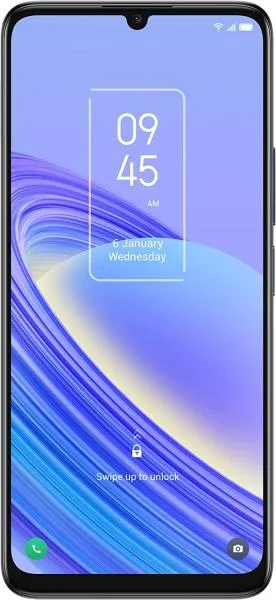
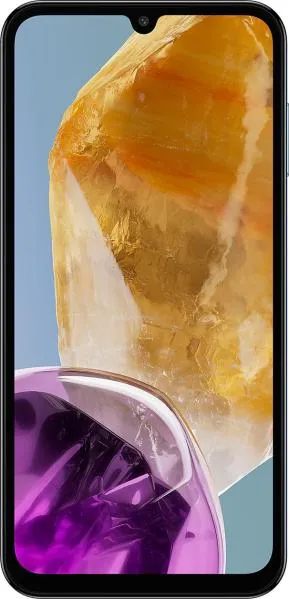
1. Specifications Comparison
| Feature | TCL 40 SE | Samsung Galaxy M15 | Practical Impact |
|---|---|---|---|
| Design | |||
| Dimensions (mm) | 167.9 x 76.5 x 8.5 | 160.1 x 76.8 x 9.3 | M15 slightly shorter and thicker. Negligible difference in daily use. |
| Weight (g) | 190 | 217 | TCL 40 SE noticeably lighter, more comfortable for extended use. |
| Build | Not specified | Not specified | Cannot compare build quality without materials information. |
| Display | |||
| Display Type | IPS LCD | Super AMOLED | AMOLED offers deeper blacks, more vibrant colors, and potentially better power efficiency. LCD may be brighter in direct sunlight. |
| Size (inches) | 6.75 | 6.5 | TCL 40 SE offers a slightly larger screen for media consumption. |
| Resolution | 720 x 1600 | 1080 x 2340 | M15 significantly sharper display with higher pixel density (396 ppi vs 260 ppi), resulting in clearer text and images. |
| Refresh Rate | 90Hz | 90Hz | Both offer smooth scrolling and animations. |
| Performance | |||
| Chipset | Mediatek Helio G37 (12nm) | Mediatek Dimensity 6100+ (6nm) | M15 has a significantly more powerful and efficient processor, leading to smoother multitasking, better gaming performance, and improved battery life. |
| CPU | Octa-core (4x2.3 GHz Cortex-A53 & 4x1.8 GHz Cortex-A53) | Octa-core (2x2.2 GHz Cortex-A76 & 6x2.0 GHz Cortex-A55) | M15's CPU architecture is more modern and powerful. |
| GPU | PowerVR GE8320 | Mali-G57 MC2 | M15 has a more powerful GPU, better for gaming and graphically demanding tasks. |
| RAM | 4GB | 4GB | Same RAM capacity. Multitasking performance will depend more on chipset and software optimization. |
| Camera | |||
| Main Camera | 50MP | 50MP | Resolution similar, but sensor quality and image processing will likely differ. Cannot compare without more details. |
| Other Cameras | 2MP Depth, 2MP Macro, 8MP Selfie | 5MP Wide, 2MP Macro, 13MP Selfie | M15 offers a wider angle lens and a higher resolution selfie camera. |
| Video | 1080p@30fps | 1080p@30fps with EIS | M15 includes Electronic Image Stabilization (EIS) for smoother video recording. |
| Battery | |||
| Capacity | 5010mAh | 6000mAh | M15 boasts a larger battery capacity, likely translating to longer battery life. |
| Fast Charging | 18W | 25W | M15 supports faster charging. |
2. Key Differences Analysis
TCL 40 SE Advantages:
- Lighter and potentially more affordable: Easier to hold and potentially less expensive.
- Slightly Larger Screen: More immersive for media consumption.
Samsung Galaxy M15 Advantages:
- Significantly better performance: Smoother user experience, better gaming, and improved efficiency due to a superior chipset.
- Sharper Display: Higher resolution and AMOLED technology result in a more visually appealing experience.
- Larger Battery and Faster Charging: Longer battery life and quicker charging times.
- 5G Connectivity: Provides access to faster mobile data speeds where available. This is a significant advantage.
- Electronic Image Stabilization: Smoother video recording.
Trade-offs:
- Price: The Samsung Galaxy M15 is likely more expensive given its superior specifications.
3. User Profiles & Recommendations
TCL 40 SE: Budget-conscious users who prioritize basic communication, light media consumption, and a large display. Best for:
- Casual social media browsing
- Making calls and texting
- Light web browsing
Samsung Galaxy M15: Users who value performance, a great display, long battery life, and 5G connectivity. Best for:
- Mobile gaming
- Demanding applications
- Media consumption with high quality
- Users who need fast data speeds
4. Decision Framework
Key Questions for Buyers:
- What is your budget? The TCL 40 SE is a budget option, while the M15 is a mid-range device.
- What are your primary use cases? For basic tasks, the TCL 40 SE might suffice. For demanding tasks and gaming, the M15 is better.
- How important is battery life and charging speed? The M15 offers a clear advantage in this area.
Scenario-Based Recommendations:
- Student on a tight budget: TCL 40 SE
- Power user who needs performance and 5G: Samsung Galaxy M15
- Casual user who prioritizes battery life: Samsung Galaxy M15
My Choice: Samsung Galaxy M15
While I lack specific pricing information, the Samsung Galaxy M15 is the superior device due to its significantly better performance, sharper display, larger battery with faster charging, and 5G connectivity. The performance difference alone would greatly impact the daily user experience, making the M15 a more future-proof and enjoyable device to use. Even if the M15 has a higher price, the value proposition leans heavily in its favor for most users beyond those strictly on the tightest budgets. The inclusion of 5G makes the M15 a much better long-term investment.
