
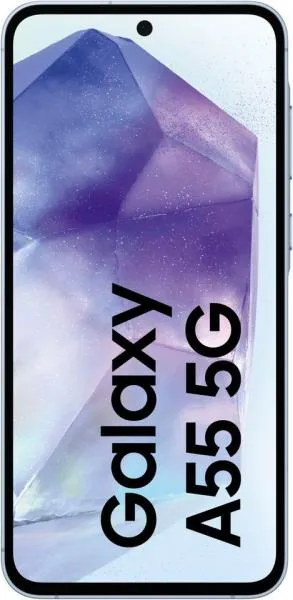
1. Specifications Comparison
| Feature | Sony Xperia 10 V | Samsung Galaxy A55 | Practical Impact |
|---|---|---|---|
| Design | |||
| Dimensions (mm) | 155 x 68 x 8.3 | 161.1 x 77.4 x 8.2 | Xperia 10 V is noticeably smaller and lighter, easier for one-handed use and pocket portability. |
| Weight (g) | 159 | 213 | Xperia 10 V is significantly lighter, reducing hand fatigue during extended use. |
| Display | |||
| Size (inches) | 6.1 | 6.6 | A55 offers a larger screen for more immersive media consumption and multitasking. |
| Resolution (px) | 1080 x 2520 | 1080 x 2340 | Similar sharpness despite different aspect ratios; Xperia 10 V is slightly sharper due to smaller screen size. |
| Type | OLED | Super AMOLED | Both offer excellent color reproduction and deep blacks. Super AMOLED generally has higher brightness potential. |
| Refresh Rate (Hz) | Not specified | 120 | A55's 120Hz refresh rate provides smoother scrolling and animations, enhancing the overall user experience. Lack of information on the Xperia 10 V prevents direct comparison in this area. |
| Performance | |||
| Chipset | Snapdragon 695 5G (6 nm) | Exynos 1480 (4 nm) | A55's Exynos 1480, built on a smaller process node, likely offers better performance and power efficiency. |
| CPU | Octa-core (2x2.2 GHz Kryo 660 Gold & 6x1.7 GHz Kryo 660 Silver) | Octa-core (4x2.75 GHz Cortex-A78 & 4x2.0 GHz Cortex-A55) | A55 has higher clock speeds and a more powerful CPU architecture, translating to faster app loading and multitasking. |
| GPU | Adreno 619 | Xclipse 530 | A55's GPU likely offers superior graphics performance for gaming and demanding applications. Direct comparison is difficult without benchmarks. |
| RAM | 6GB | 8GB/12GB | A55 offers more RAM in some configurations, allowing for smoother multitasking and better performance with memory-intensive applications. |
| Camera | |||
| Main Camera (MP) | 48 | 50 | Both offer high-resolution main cameras, A55 slightly higher. Image quality depends on sensor and processing, not just megapixels. |
| Video Recording | 1080p@30fps | 4K@30fps | A55 offers significantly better video recording capabilities with 4K resolution. |
| DXOMARK Score | 78 | 108 | A55 scores significantly higher in DXOMARK tests, indicating superior overall camera quality. |
| Battery | |||
| Capacity (mAh) | 5000 | 5000 | Both have the same battery capacity, but real-world battery life depends on software optimization and hardware efficiency. |
2. Key Differences Analysis
Sony Xperia 10 V Advantages:
- Compactness and Light Weight: Significantly smaller and lighter, making it ideal for one-handed use and portability.
- OLED Display: Offers vibrant colors and deep blacks.
Samsung Galaxy A55 Advantages:
- Superior Performance: More powerful processor and GPU deliver smoother performance for demanding tasks and gaming.
- Higher Refresh Rate Display: 120Hz provides a smoother and more responsive user experience.
- Better Camera System: Higher resolution sensors, 4K video recording, and higher DXOMARK score suggest superior image and video quality.
- Longer Software Support: Expected to receive more OS updates than the Xperia 10 V.
3. User Profiles & Recommendations
Sony Xperia 10 V:
- Ideal User: Users prioritizing portability and one-handed usability above all else. Those who consume media casually and prefer a compact device.
- Use Cases: Everyday tasks like browsing, social media, and light gaming. Suitable for users who don't require the highest performance or camera quality.
Samsung Galaxy A55:
- Ideal User: Users who want a well-rounded device with good performance, a great camera, and a smooth display.
- Use Cases: Demanding tasks like gaming, video editing, and multitasking. Content creation, photography enthusiasts.
4. Decision Framework
Key Questions for Buyers:
- What is your budget? While both are mid-range, the A55 can be more expensive depending on the configuration.
- What screen size do you prefer? Do you prioritize a larger screen for media consumption or a smaller screen for one-handed use?
- What are your performance and camera needs? Are you a heavy gamer or photographer? Or do you primarily use your phone for basic tasks?
My Choice: Samsung Galaxy A55
While I appreciate the Xperia 10 V's compact size, the Samsung Galaxy A55 offers a more compelling overall package. The significantly improved performance, smoother display, better camera system, and longer software support outweigh the size advantage for me. The A55's versatility makes it a better long-term investment for a wider range of users. I prioritize performance and future-proofing, and the A55 delivers in those areas. While the Xperia 10 V's compact form factor is attractive, the A55's advantages in key areas make it a more compelling choice for my needs.
