
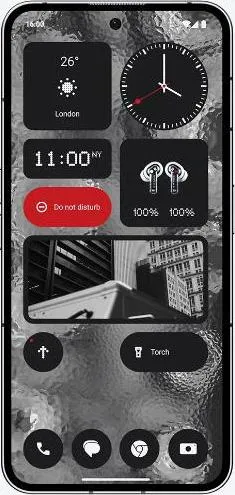
1. Specifications Comparison
| Feature | Sony Xperia 10 V | Nothing Phone (2) | Practical Impact |
|---|---|---|---|
| Design | |||
| Dimensions (mm) | 155 x 68 x 8.3 | 162.1 x 76.4 x 8.6 | Xperia 10 V is noticeably smaller and thinner, making it more pocketable and easier to handle one-handed. |
| Weight (g) | 159 | 201.2 | Xperia 10 V is significantly lighter, reducing hand fatigue during extended use. |
| Build | Material specifications are missing for both phones, limiting a complete comparison. | ||
| Display | |||
| Size (inches) | 6.1 | 6.7 | Phone (2) offers a larger display for more immersive media consumption and multitasking. |
| Resolution | 1080 x 2520 | 1080 x 2412 | Similar sharpness despite different aspect ratios. Phone (2)'s wider aspect ratio might be better for media. |
| Type | OLED | LTPO OLED | Both offer excellent contrast and colors. Phone (2)'s LTPO panel allows for a dynamic refresh rate up to 120Hz, resulting in smoother scrolling and animations and potentially better battery life. |
| Refresh Rate | Not specified | 120Hz | A higher refresh rate on the Phone (2) makes interactions feel smoother and more responsive. |
| Performance | |||
| Chipset | Snapdragon 695 5G | Snapdragon 8+ Gen 1 | Phone (2) boasts a significantly more powerful processor, enabling much faster performance for demanding tasks and gaming. |
| CPU | Octa-core (2x2.2 GHz Kryo 660 Gold & 6x1.7 GHz Kryo 660 Silver) | Octa-core (1x3.0 GHz Cortex-X2 & 3x2.5 GHz Cortex-A710 & 4x1.80 GHz Cortex-A510) | The Phone (2)'s CPU architecture and clock speeds provide a substantial performance advantage. |
| GPU | Adreno 619 | Adreno 730 | Phone (2)'s GPU offers considerably better graphics performance for gaming and visually intensive applications. |
| RAM | 6GB/8GB | 8GB/12GB | More RAM in higher-end Phone (2) configurations enables better multitasking and smoother performance with numerous apps open. |
| Camera | |||
| Main Camera | 48MP (Sony IMX582) | 50MP (Sony IMX890) | Phone (2) utilizes a larger, newer sensor likely capable of capturing more detail and better low-light performance. |
| Ultrawide | 8MP | 50MP | Phone (2) has a vastly superior ultrawide camera in terms of resolution and likely image quality. |
| Telephoto | 8MP | None | Xperia 10 V offers optical zoom, while Phone (2) lacks a dedicated telephoto lens. |
| Video | 1080p@30fps | Up to 4K@60fps | Phone (2) offers superior video recording capabilities with higher resolution and frame rates. |
| Battery | |||
| Capacity | 5000 mAh | 4700 mAh | Xperia 10 V has a slightly larger battery capacity, potentially offering longer battery life, although real-world usage will depend on factors like the display refresh rate and processor efficiency. |
2. Key Differences Analysis
Sony Xperia 10 V Advantages:
- Smaller and Lighter: Significantly more compact and easier for one-handed use.
- Potentially Longer Battery Life: Slightly larger battery capacity. However, the lack of refresh rate information for the Xperia makes it difficult to definitively conclude this.
- Dedicated Telephoto Lens: Offers optical zoom capability missing on the Phone (2).
Nothing Phone (2) Advantages:
- Significantly More Powerful: The Snapdragon 8+ Gen 1 provides a substantial performance advantage for demanding tasks and gaming.
- Superior Display: LTPO OLED with 120Hz refresh rate offers smoother visuals and potentially better battery efficiency.
- Better Camera System: Higher resolution main and ultrawide cameras likely produce superior image quality. More advanced video recording capabilities.
3. User Profiles & Recommendations
Sony Xperia 10 V: Ideal for users who prioritize:
- Compactness and one-handed usability: Its smaller size and lighter weight make it perfect for those who prefer a phone that easily fits in their pocket and is comfortable to hold.
- Battery life: The larger battery may offer extended usage between charges. However, this is dependent on usage patterns and the unspecified refresh rate of the Xperia's display.
- Simplicity: Users who prefer a straightforward Android experience without added customizations.
Nothing Phone (2): Ideal for users who prioritize:
- Performance: Gamers, power users, and those who demand smooth multitasking will appreciate the significantly faster processor and higher refresh rate display.
- High-quality camera: Content creators and photography enthusiasts will benefit from the improved camera system.
- Unique Design and Features: Users attracted to the distinctive Glyph Interface and its associated functionalities.
4. Decision Framework
Key Questions for Buyers:
- What is your budget? The Phone (2) is priced higher than the Xperia 10 V.
- What are your primary use cases? (e.g., gaming, photography, social media, basic communication)
- Do you prioritize performance or portability? The Phone (2) excels in performance, while the Xperia 10 V is more compact and lightweight.
My Choice: Nothing Phone (2)
While I appreciate the Xperia 10 V's compact form factor and potentially longer battery life, the Nothing Phone (2)'s superior performance, display, and camera system are more compelling to me. The Snapdragon 8+ Gen 1 offers a significant leap in processing power, ensuring smooth performance for years to come. The 120Hz LTPO display provides a noticeably smoother and more responsive user experience. The improved camera system, especially the high-resolution ultrawide lens, is a significant advantage for photography enthusiasts. While the Phone (2) is larger and heavier, I find the performance and feature upgrades worth the trade-off. The unique design elements of the Phone (2) are also a plus, although subjective.
