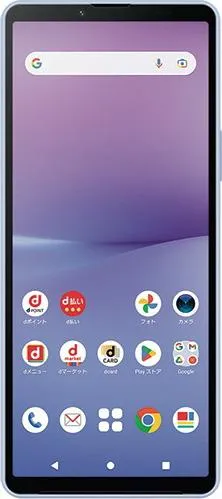
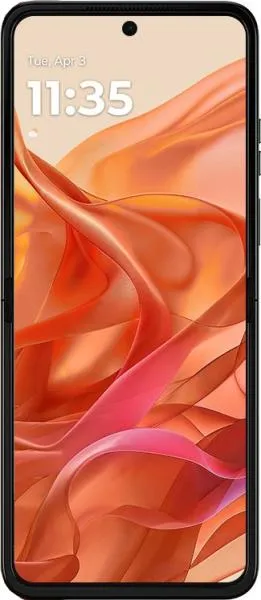
1. Specifications Comparison
| Feature | Sony Xperia 10 V | Motorola Razr 50 | Practical Impact |
|---|---|---|---|
| Design | |||
| Dimensions (mm) | 155 x 68 x 8.3 | 171.3 x 74 x 7.3 | Razr 50 is significantly wider and taller when unfolded, but thinner when folded. Xperia 10 V is more pocketable in its standard form. |
| Weight (g) | 159 | 188.4 | Xperia 10 V is noticeably lighter, reducing hand fatigue during extended use. |
| Foldable | No | Yes | Razr 50 offers a compact folded size for portability, but a larger screen when unfolded for media consumption. |
| Display | |||
| Size (inches) | 6.1 | 6.9 | Razr 50's larger display provides a more immersive experience for media and multitasking. |
| Resolution (px) | 1080 x 2520 | 1080 x 2640 | Similar pixel density due to size difference, but Razr 50's slightly taller aspect ratio may be better for some content. |
| Type | OLED | Foldable LTPO AMOLED | Razr 50's LTPO panel allows for dynamic refresh rate adjustment, potentially saving battery. Foldable screen introduces a crease but allows for compact storage. |
| Refresh Rate (Hz) | Not specified | 120 | Razr 50's 120Hz refresh rate delivers smoother animations and scrolling compared to the Xperia 10 V's unspecified rate (likely 60Hz). |
| Performance | |||
| Chipset | Snapdragon 695 5G (6 nm) | Dimensity 7300X (4 nm) | Razr 50's Dimensity 7300X offers significantly better performance for demanding tasks and gaming due to a more powerful CPU and GPU. The 4nm process also suggests better power efficiency. |
| CPU | Octa-core (2x2.2 GHz Kryo 660 Gold & 6x1.7 GHz Kryo 660 Silver) | Octa-core (4x2.5 GHz Cortex-A78 & 4x2.0 GHz Cortex-A55) | Razr 50's CPU architecture and higher clock speeds result in faster processing and smoother multitasking. |
| GPU | Adreno 619 | Mali-G615 MC2 | Razr 50's GPU provides a significant performance advantage for gaming and graphically intensive applications. |
| RAM | 6GB/8GB | 8GB/12GB | Razr 50 offers more RAM in its higher-end configuration, enabling better multitasking and app performance. |
| Camera | |||
| Main Camera (MP) | 48 | 50 | While megapixel count isn't everything, Razr 50's slightly higher resolution main camera potentially captures more detail. More significant is that the Razr has OIS and the faster aperture for better low light photos. |
| Video Recording | 1080p@30fps | 4K@30fps with EIS | Razr 50 significantly outperforms in video recording with 4K resolution and Electronic Image Stabilization (EIS) for smoother footage. |
| Battery | |||
| Capacity (mAh) | 5000 | 4200 | Xperia 10 V has a larger battery capacity, suggesting longer battery life. However, Razr 50's LTPO display and more efficient processor could offset this difference. |
2. Key Differences Analysis
Sony Xperia 10 V Advantages:
- Lighter and More Compact: Easier to carry and use one-handed.
- Larger Battery Capacity: Potentially longer battery life.
- Lower Price: Offers a more budget-friendly option. Side note - at time of this query, the Razr was actually cheaper on Amazon.
Motorola Razr 50 Advantages:
- Foldable Design: Compact when folded, larger screen when unfolded.
- Significantly Better Performance: Smoother multitasking, gaming, and app usage.
- Higher Quality Display: 120Hz refresh rate and LTPO technology for smoother visuals and potential power savings.
- Superior Camera Features: 4K video recording, potentially better low-light performance due to OIS. More camera features including a wide angle lens.
Trade-offs:
- Razr 50: Foldable design introduces potential durability concerns and a crease in the display. Higher price point. Smaller battery capacity despite more efficient components.
- Xperia 10 V: Lower performance limits demanding tasks and gaming. Lower resolution video recording capabilities. Basic display technology.
3. User Profiles & Recommendations
Sony Xperia 10 V: Ideal for users who prioritize battery life, portability, affordability, and primarily use their phone for basic tasks like calling, texting, browsing, and light media consumption.
Motorola Razr 50: Best suited for users who value a unique foldable design, a large high-quality display, strong performance for demanding tasks and gaming, and advanced camera features. Good for those who want a large screen but also high portability.
4. Decision Framework
Key Questions for Buyers:
- What is your budget? The Xperia 10 V is more affordable.
- How important is portability versus screen size? The Razr 50 offers a compact folded size but a larger screen when unfolded. The Xperia 10 V is always the same, more pocketable size.
- What are your primary phone usage patterns? The Razr 50 is better for demanding tasks and media consumption, while the Xperia 10 V is sufficient for basic use.
My Choice: Motorola Razr 50
While the Sony Xperia 10 V offers a compelling combination of battery life, portability, and affordability, the Motorola Razr 50 better suits my needs. I value the superior performance offered by the Dimensity 7300X and the immersive experience of the larger, 120Hz LTPO display. The foldable design, while presenting a potential durability trade-off, provides a unique combination of portability and large screen real estate that appeals to me. The improved camera features, particularly 4K video recording, are also significant advantages. While I acknowledge the higher price and smaller battery capacity, the performance and form factor benefits of the Razr 50 outweigh these compromises for my personal use case. The fact that the Razr was cheaper at the time of this query is a deciding factor as well.
