
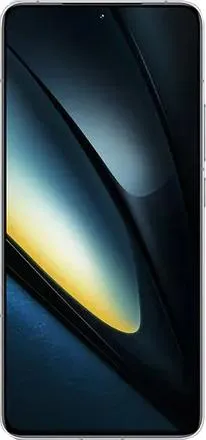
1. Specifications Comparison
| Feature | Samsung Galaxy Z Flip5 | Xiaomi Poco F6 Pro | Practical Impact |
|---|---|---|---|
| Design | |||
| Form Factor | Foldable | Standard | Flip5 offers portability and novelty; Poco F6 Pro offers a traditional form factor. |
| Dimensions (mm) | 165.1 x 71.9 x 6.9 | 160.9 x 75 x 8.2 | Flip5 is significantly more compact when folded, but thicker when unfolded. Poco F6 Pro is thinner overall but larger in hand. |
| Weight (g) | 187 | 209 | Flip5 is noticeably lighter, improving one-handed use and portability. |
| Display | |||
| Display Type | Foldable Dynamic AMOLED 2X | AMOLED | Flip5's folding screen offers unique use cases like flex mode and a smaller footprint when closed. Poco F6 Pro has a larger, traditional display. |
| Size (inches) | 6.7 | 6.67 | Negligible difference in screen real estate. |
| Resolution | 1080 x 2640 | 1440 x 3200 | Poco F6 Pro offers significantly sharper visuals due to higher resolution (QHD+ vs. FHD+). |
| Peak Brightness (nits) | 1750 | 4000 | Poco F6 Pro boasts much higher peak brightness, ensuring better visibility in direct sunlight. |
| Refresh Rate (Hz) | 120 | 120 | Both offer smooth scrolling and animations. |
| Performance | |||
| Chipset | Snapdragon 8 Gen 2 (4 nm) | Snapdragon 8 Gen 2 (4 nm) | Both phones offer top-tier performance with minimal differences in CPU clock speeds. |
| CPU | Octa-core (1x3.36 GHz Cortex-X3 & 2x2.8 GHz Cortex-A715 & 2x2.8 GHz Cortex-A710 & 3x2.0 GHz Cortex-A510) | Octa-core (1x3.2 GHz Cortex-X3 & 2x2.8 GHz Cortex-A715 & 2x2.8 GHz Cortex-A710 & 3x2.0 GHz Cortex-A510) | Flip5 has slightly faster prime core clock speed, potentially offering a slight edge in demanding tasks but likely imperceptible in daily use. |
| GPU | Adreno 740 | Adreno 740 | Identical GPUs, ensuring comparable gaming and graphics performance. |
| RAM | 8GB | 12GB/16GB | Poco F6 Pro offers more RAM, enabling better multitasking and potentially smoother performance with numerous apps open. |
| Storage | 512GB | 512GB/1TB | Poco F6 Pro offers a 1TB storage option for users needing ample space. |
| Battery | |||
| Capacity (mAh) | 3700 | 5000 | Poco F6 Pro has significantly larger battery capacity, likely translating to longer battery life. |
| Camera | |||
| Video Capabilities | Up to 4K@60fps, 720p@960fps | Up to 8K@24fps, 720p@1920fps | Poco F6 Pro supports higher resolution video recording (8K) and higher frame rate slow-motion (1920fps). Specific sensor details and image quality are not provided for comparison. |
2. Key Differences Analysis
Samsung Galaxy Z Flip5 Advantages:
- Portability: The foldable design offers unmatched portability.
- Novelty: The unique form factor and flex mode provide distinct user experiences.
Xiaomi Poco F6 Pro Advantages:
- Performance: More RAM options for smoother multitasking and potential for larger storage.
- Display: Higher resolution and significantly brighter screen for better visual experience.
- Battery: Substantially larger battery capacity for extended usage.
- Video Recording: Superior video recording capabilities with higher resolution and slow-motion options.
3. User Profiles & Recommendations
Samsung Galaxy Z Flip5: Ideal for users prioritizing portability and style, willing to compromise on battery life and raw performance for a unique form factor. Suitable for social media enthusiasts who utilize flex mode for hands-free video recording and viewing.
Xiaomi Poco F6 Pro: Best suited for power users, gamers, and multimedia enthusiasts who demand top-tier performance, a long-lasting battery, and a brilliant display. Excellent for users who prioritize value for money in a traditional smartphone form factor.
4. Decision Framework
Key Questions for Buyers:
- Form Factor Priority: Do you prioritize ultimate portability and a unique foldable design or a traditional smartphone experience with a larger screen?
- Performance Needs: Do you require the absolute best performance and multitasking capabilities, or is a good level of performance sufficient?
- Budget & Value: Considering the price range, which phone offers the best balance of features and performance for your needs?
My Choice: Xiaomi Poco F6 Pro
While the Z Flip5's foldable design is intriguing, the Poco F6 Pro offers a more well-rounded package for my needs. The significantly brighter and sharper display, larger battery, superior performance due to higher RAM options, and enhanced video recording capabilities outweigh the Flip5's portability advantage for me. I value a long-lasting battery and a great media consumption experience, which the Poco F6 Pro delivers. The price difference, if any within the "medium price" range, would likely further solidify my choice.
