1. Specifications Comparison
| Feature | Samsung Galaxy Tab S9 FE | Xiaomi Poco M6 Pro | Practical Impact |
|---|---|---|---|
| Design | |||
| Dimensions | 254.3 x 165.8 x 6.5 mm | 161.1 x 75 x 8 mm | Tab S9 FE is significantly larger, meant for tablet use; Poco M6 Pro is a standard smartphone size. |
| Weight | 523g | 179g | Tab S9 FE is much heavier due to its larger size. Poco M6 Pro is more portable for everyday use. |
| Build Materials | Not specified | Not specified | Build quality and durability cannot be compared without further information. |
| Display | |||
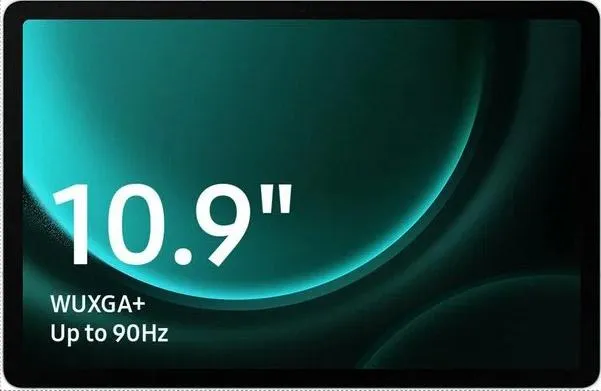
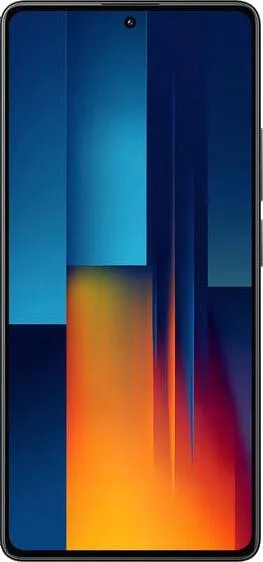
| Display Type | IPS LCD, 90Hz | AMOLED, 120Hz | Tab S9 FE's LCD may offer better color accuracy in some situations; Poco M6 Pro's AMOLED provides deeper blacks and higher contrast. 120Hz on the Poco M6 Pro will result in smoother animations and scrolling compared to 90Hz on the Tab S9 FE. |
| Size | 10.9 inches | 6.67 inches | Tab S9 FE offers a much larger screen for media consumption and multitasking; Poco M6 Pro is more pocketable. |
| Resolution | 1440 x 2304 | 1080 x 2400 | Tab S9 FE has a sharper display (249 ppi vs 395 ppi). However, the difference might not be noticeable in everyday use on the smaller Poco M6 Pro screen. |
| Peak Brightness | Not specified | 1300 nits | Poco M6 Pro's superior peak brightness ensures better visibility in direct sunlight. Tab S9 FE's unspecified brightness limits comparison. |
| Performance | |||
| Chipset | Exynos 1380 (5nm) | Mediatek Helio G99 Ultra | Both are mid-range chipsets, but Exynos 1380 generally benchmarks higher, suggesting slightly better performance on the Tab S9 FE, particularly in graphics-intensive tasks. |
| CPU | Octa-core (4x2.4 GHz Cortex-A78 & 4x2.0 GHz Cortex-A55) | Octa-core (2x2.2 GHz Cortex-A76 & 6x2.0 GHz Cortex-A55) | Slight differences in core configuration. Practical performance difference might be minimal for average users. |
| GPU | Mali-G68 MP5 | Mali-G57 MC2 | Tab S9 FE has a more powerful GPU, beneficial for gaming and other graphically demanding tasks. |
| RAM | 8GB | 12GB | Poco M6 Pro offers more RAM, enabling better multitasking and smoother performance with multiple apps open. |
| Storage | 256 GB | 512 GB | Poco M6 Pro offers double the storage, allowing for more apps, photos, and videos. |
| Battery | |||
| Capacity | 8000 mAh | 5000 mAh | Tab S9 FE has a significantly larger battery, expected to provide much longer battery life, especially considering its larger display. |
| Other | |||
| OS | Android 13 | Android 13 | Both run on the same base OS. Long-term software updates are unclear without knowing the manufacturers' policies. |
| NFC | No | Yes | Poco M6 Pro allows for contactless payments and data transfer via NFC. This is a significant advantage for many users. |
| USB | USB Type-C 2.0, magnetic connector | USB Type-C 2.0, OTG | Both use USB-C. The magnetic connector on the Tab S9 FE might be convenient for charging and accessory connection. OTG on Poco M6 allows connection to peripherals like USB drives. |
| Video Capabilities | 4K@30fps, 1080p@30fps | 1080p@30/60fps (EIS) | Tab S9 FE can record in 4K, offering higher resolution videos. Poco M6 Pro is limited to 1080p but offers EIS (Electronic Image Stabilization) for smoother video recording. |
2. Key Differences Analysis
Samsung Galaxy Tab S9 FE Advantages:
- Larger, sharper display: Better for media consumption, multitasking, and creative tasks.
- More Powerful GPU: Advantageous for gaming and demanding applications.
- Significantly larger battery: Longer usage time between charges.
- Higher resolution video recording: 4K video capture capability.
Xiaomi Poco M6 Pro Advantages:
- More portable and lightweight: Easier to carry and use one-handed.
- Higher refresh rate display: Smoother scrolling and animations.
- More RAM and storage: Better multitasking and more space for files.
- Brighter display: Easier to see outdoors in sunlight.
- NFC: Enables contactless payments.
3. User Profiles & Recommendations
Samsung Galaxy Tab S9 FE: Ideal for users who prioritize a large screen for media consumption, drawing, note-taking, or productivity on the go. Students, artists, and professionals who need a portable workstation would benefit.
Xiaomi Poco M6 Pro: Suitable for users who prefer a compact and affordable smartphone for everyday use. Its strong performance, ample storage, and good battery life make it a versatile option for social media, browsing, and light gaming.
4. Decision Framework
Key Questions for Buyers:
- What is your primary use case? (Media consumption, productivity, gaming, communication)
- Do you prioritize portability or screen size?
- What is your budget? (While both are mid-range, actual prices may vary).
Scenario-based Recommendations:
- Student needing a device for note-taking and media consumption: Samsung Galaxy Tab S9 FE.
- Professional needing a portable workstation for presentations and document editing: Samsung Galaxy Tab S9 FE.
- Casual user needing a reliable phone for social media, browsing, and calls: Xiaomi Poco M6 Pro.
- Gamer on a budget: Consider the Tab S9 FE for its more powerful GPU but weigh the portability factor.
My Choice: Xiaomi Poco M6 Pro
While the Samsung Galaxy Tab S9 FE offers a compelling large screen experience and powerful GPU, I would choose the Xiaomi Poco M6 Pro. My primary need is a portable and reliable smartphone for everyday tasks. The Poco M6 Pro's compact size, smoother 120Hz display, larger RAM and storage, NFC functionality, and brighter screen outweigh the benefits of the Tab S9 FE for my usage. The Tab S9 FE is clearly a tablet designed for different use cases, and while its larger battery is tempting, the sheer size and weight make it less practical for my daily routine. Finally, the inclusion of NFC for mobile payments is a crucial feature for me that the Tab S9 FE lacks.
