1. Specifications Comparison
| Feature | Samsung Galaxy Tab S9 FE | Xiaomi Poco M6 4G | Practical Impact |
|---|---|---|---|
| Design | |||
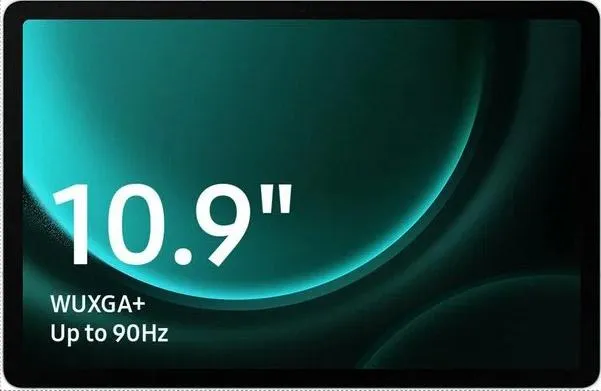
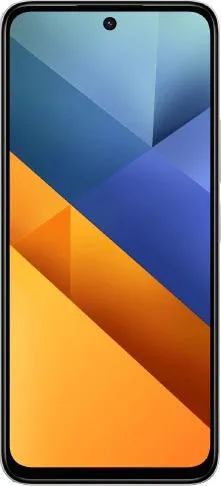
| Dimensions | 254.3 x 165.8 x 6.5 mm | 168.6 x 76.3 x 8.3 mm | Tab S9 FE is significantly larger, reflecting its tablet nature. Poco M6 4G is a standard smartphone size. |
| Weight | 523 g | 205 g | Tab S9 FE is much heavier, less portable for one-handed use. |
| Build | Material information missing for both, limiting comparison. | ||
| Display | |||
| Size | 10.9" | 6.79" | Larger display on Tab S9 FE offers more immersive content consumption but reduced portability. |
| Type | IPS LCD, 90Hz | IPS LCD, 90Hz, 550 nits (HBM) | Both offer smooth scrolling. Poco M6 4G specifies peak brightness (HBM), suggesting better outdoor visibility, though exact values for Tab S9 FE are unknown. |
| Resolution | 1440 x 2304 | 1080 x 2460 | Higher resolution on Tab S9 FE results in sharper images and text, especially noticeable on a larger screen. |
| PPI | 249 | 396 | Higher PPI on Poco M6 4G means sharper images despite smaller size; difference less noticeable in real-world usage due to Tab S9 FE's larger viewing distance. |
| Performance | |||
| Chipset | Exynos 1380 (5nm) | Mediatek Helio G91 Ultra (12nm) | Exynos 1380, built on a smaller process node, is likely more power-efficient and potentially more powerful than the Helio G91 Ultra. |
| CPU | Octa-core (4x2.4 GHz Cortex-A78 & 4x2.0 GHz Cortex-A55) | Octa-core (2x2.0 GHz Cortex-A75 & 6x1.8 GHz Cortex-A55) | Tab S9 FE's CPU configuration suggests better performance for demanding tasks. |
| GPU | Mali-G68 MP5 | Mali-G52 MC2 | Tab S9 FE's GPU likely offers significantly better gaming and graphics performance. |
| RAM | 8GB | 8GB | Same RAM capacity suggests similar multitasking capabilities. |
| Storage | 256GB | 256GB | Same storage capacity. |
| Battery | |||
| Capacity | 8000 mAh | 5030 mAh | Significantly larger battery in Tab S9 FE likely provides much longer battery life, expected for a tablet. |
| Other | |||
| OS | Android 13 | Android 14 | Poco M6 4G ships with a newer Android version out-of-the-box. |
| NFC | No | Yes | Poco M6 4G supports contactless payments and data transfer via NFC. |
| USB | USB Type-C 2.0, magnetic connector | USB Type-C | Magnetic connector on Tab S9 FE might be convenient for charging but limits data transfer speeds compared to a standard USB Type-C (version unspecified for Poco M6 4G). |
| Price | Medium | Low | Poco M6 4G is expected to be more affordable. |
2. Key Differences Analysis
Samsung Galaxy Tab S9 FE Advantages:
- Larger, higher-resolution display: More immersive for media consumption and multitasking.
- Significantly more powerful: Better for gaming, demanding apps, and content creation.
- Much longer battery life: Ideal for extended use without frequent charging.
Xiaomi Poco M6 4G Advantages:
- More portable: Easier to carry and use one-handed.
- More affordable: Offers good value for its price.
- NFC support: Enables contactless payments.
- Newer Android version: Potentially longer software support.
3. User Profiles & Recommendations
Samsung Galaxy Tab S9 FE: Ideal for users who prioritize media consumption, productivity on the go, gaming, and creative tasks. Suitable for students, artists, and anyone who needs a large screen for work or entertainment.
Xiaomi Poco M6 4G: Suitable for budget-conscious users who need a reliable smartphone for everyday tasks like communication, social media, and web browsing. Good for users who prioritize portability and value.
4. Decision Framework
Key Questions:
- What is your primary use case? (Media consumption, productivity, gaming, basic communication)
- What is your budget?
- How important is portability?
Scenario-Based Recommendations:
- Student needing a device for note-taking and media consumption: Samsung Galaxy Tab S9 FE
- Budget-conscious user needing a reliable phone for calls and social media: Xiaomi Poco M6 4G
- Gamer who values performance: Samsung Galaxy Tab S9 FE
My Choice: Samsung Galaxy Tab S9 FE
While the Poco M6 4G offers excellent value, I would choose the Samsung Galaxy Tab S9 FE. The significantly superior performance, larger and sharper display, and much longer battery life outweigh the benefits of portability and lower price for my personal needs. I prioritize a device that can handle demanding tasks, provide an immersive media experience, and last a full day without needing a charge. The lack of NFC is a minor inconvenience compared to the significant performance and usability advantages of the Tab S9 FE. I also often use my devices for creative work and note taking, both tasks that strongly favor a larger screen. Finally, I am willing to pay more for a device that provides a substantially better user experience in these key areas.
