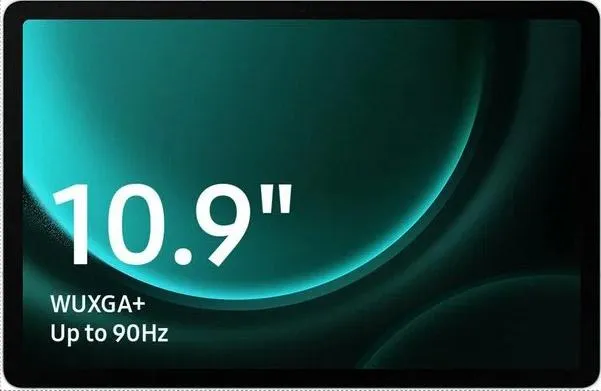
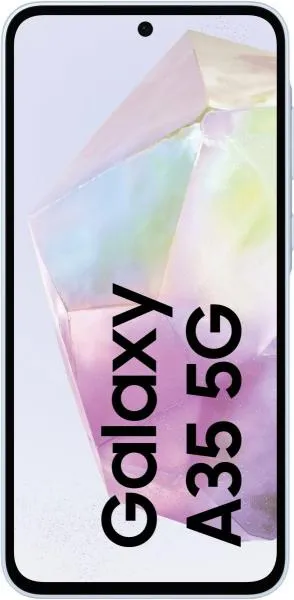
1. Specifications Comparison
| Feature | Samsung Galaxy Tab S9 FE | Samsung Galaxy A35 | Practical Impact | |||||
|---|---|---|---|---|---|---|---|---|
| Design | ||||||||
| Dimensions | 254.3 x 165.8 x 6.5 mm | 161.7 x 78 x 8.2 mm | Tab S9 FE significantly larger; A35 is a more pocketable phone. | |||||
| Weight | 523g | 209g | Tab S9 FE much heavier, impacting portability; A35 is easier to hold and carry. | |||||
| Display | ||||||||
| Size | 10.9" | 6.6" | Tab S9 FE better for media consumption and multitasking; A35 for one-handed use. | |||||
| Type | IPS LCD, 90Hz | Super AMOLED, 120Hz, 1000 nits (HBM) | A35 offers richer colors, deeper blacks, smoother scrolling, and better outdoor visibility. | |||||
| Resolution | 1440 x 2304 | 1080 x 2340 | Tab S9 FE has a slightly sharper display due to higher resolution and larger size. | |||||
| PPI | 249 | 390 | A35 has a noticeably sharper display due to higher pixel density. | |||||
| Performance | ||||||||
| Chipset | Exynos 1380 (5 nm) | Exynos 1380 (5 nm) | Identical performance expected. | |||||
| CPU | Octa-core (4x2.4 GHz Cortex-A78 & 4x2.0 GHz Cortex-A55) | Octa-core (4x2.4 GHz Cortex-A78 & 4x2.0 GHz Cortex-A55) | Identical CPU performance. | |||||
| GPU | Mali-G68 MP5 | Mali-G68 MP5 | Identical graphics performance. | |||||
| RAM | 8GB | 8GB | Same RAM capacity, should offer similar multitasking capabilities. | |||||
| Storage | 256GB | 128GB/256GB | A35 offers more storage configuration flexibility. | |||||
| Battery | ||||||||
| Capacity | 8000 mAh | 5000 mAh | Tab S9 FE likely to have significantly longer battery life. | |||||
| Other | ||||||||
| OS | Android 13 | Android 14 | A35 ships with a newer OS version offering potential feature and security advantages. | |||||
| NFC | No | Yes | A35 allows for contactless payments and data transfer. | |||||
| USB | USB Type-C 2.0, magnetic connector | USB Type-C 2.0, OTG | A35's OTG allows connecting peripherals like USB drives. Tab S9 FE's magnetic connector might be proprietary for keyboard accessories. | |||||
| Sensors | accelerometer, gyro, compass, proximity (accessories only), Fingerprint (side-mounted) | accelerometer, gyro, compass, Fingerprint (under display) | Proximity sensor limitation on Tab S9 FE could impact functionality without specific accessories. | Video | 4K@30fps, 1080p@30fps | 4K@30fps (EIS), 1080p@30fps (EIS), 1080p@60fps (EIS) | A35 offers video stabilization (EIS) for smoother footage. |
2. Key Differences Analysis
Tab S9 FE Advantages:
- Larger Display: Better for media consumption, multitasking, and creative tasks.
- Longer Battery Life: Significantly larger battery capacity.
- Higher Resolution: Slightly sharper image quality.
A35 Advantages:
- More Portable: Smaller, lighter, and easier to carry.
- Superior Display Quality: AMOLED technology with higher refresh rate and brightness.
- Newer OS: Android 14 with longer software support lifespan expected.
- NFC: Enables contactless payments and other NFC functionalities.
- More Affordable: Starting with a lower storage option potentially lowers the entry price.
- Video Stabilization: Results in smoother video footage.
3. User Profiles & Recommendations
Tab S9 FE: Users who prioritize a large screen for media consumption, productivity, drawing, note-taking, and don't mind the larger size and weight. Students, artists, and professionals who need a portable workstation.
A35: Users who prefer a compact, pocketable phone with a great display and smooth performance. Individuals who value portability, modern features like NFC, and a good balance of performance and battery life.
4. Decision Framework
Key Questions for Buyers:
- What screen size do you need? Large screen for media and productivity or a pocketable phone for everyday use?
- How important is portability? Do you need a device that's easy to carry around or will it primarily be used at home/office?
- What is your budget? While both are mid-range, the A35 might offer a lower entry price point.
My Choice: Samsung Galaxy A35
While the Tab S9 FE offers a larger display and longer battery life, I would choose the Samsung Galaxy A35. The A35's AMOLED display with 120Hz refresh rate, coupled with its significantly more portable form factor, makes it a more appealing device for everyday use. The inclusion of NFC for mobile payments and a newer version of Android, promising longer software updates, further strengthens its position. Although the Tab S9 FE boasts a slightly sharper screen due to its larger size and resolution, the A35's higher pixel density ultimately delivers a noticeably sharper and more vibrant viewing experience. For me, the advantages of portability, display quality, and modern features outweigh the benefits of a larger screen and longer battery life offered by the Tab S9 FE. Finally, the potential for a lower entry price with the 128GB A35 model makes it a more compelling value proposition.
